Some rocks near Mars’s possible lakeshore may have begun as magma
Perseverance’s measurements suggest that some examined rock formed as molten material cooled, then recorded several later encounters with water.
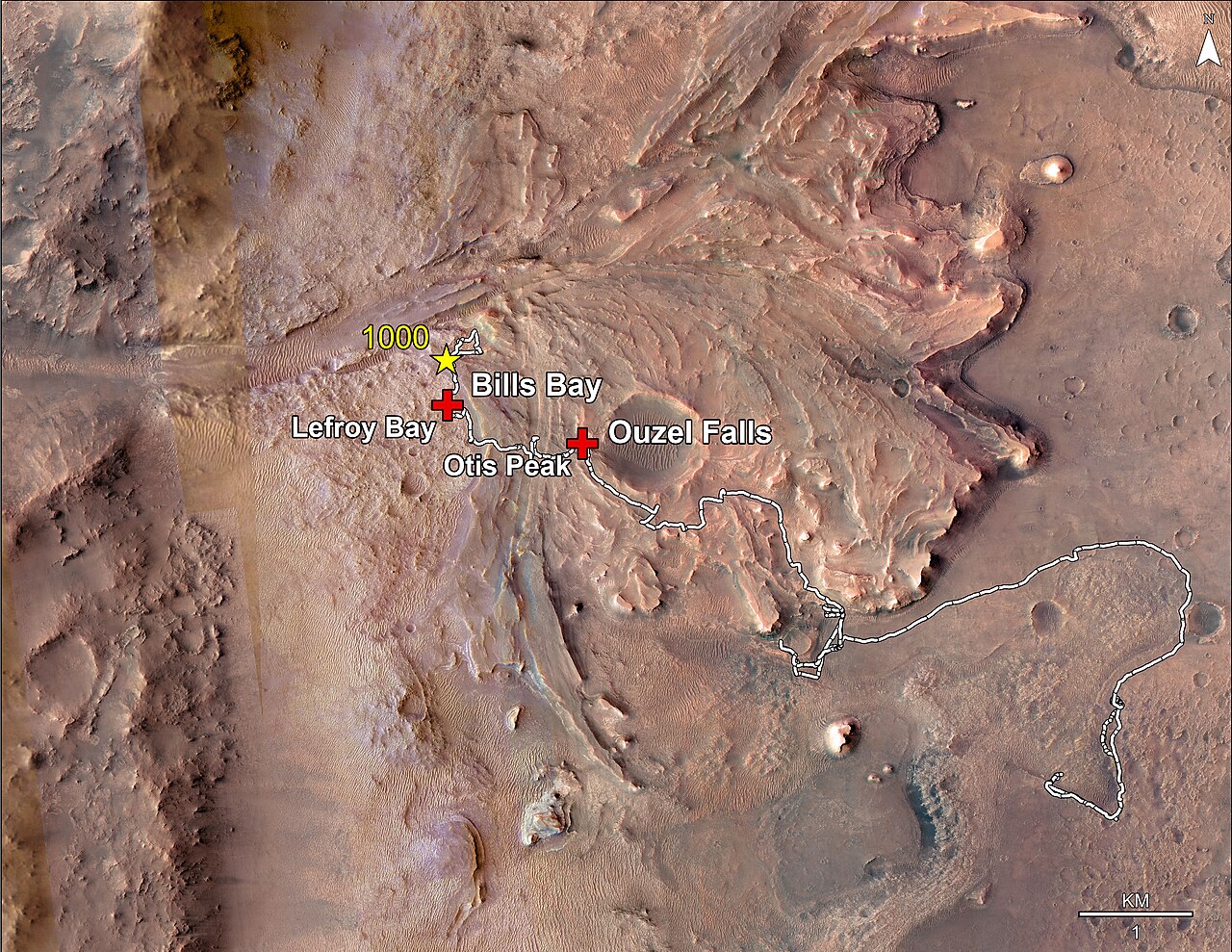
NASA/JPL-Caltech/University of Arizona · Source · Public domain

To understand whether Mars once had places where life could leave traces, it matters when water reached a rock. A mineral deposited by water can preserve valuable clues without telling us how the rock itself began. That distinction is now central to a puzzle at Jezero Crater: a formation beside a proposed ancient lakeshore may contain rock with a molten beginning and a much longer watery history.
The formation is called the Margin unit. Carbonate minerals spotted there from orbit drew researchers’ attention because, as NASA explained while sampling at Turquoise Bay, carbonates can preserve clues to past climate and, in some circumstances, traces of ancient life. Perseverance ground through dust to examine fresh bedrock there and collected a core. Carbonate makes the rock worth investigating; its presence alone establishes neither that the rock formed in a lake nor that it contains evidence of life.
A new study using Perseverance’s SuperCam measurements found a striking difference between examined exposures. Higher in the Margin unit, the rock’s texture and chemistry indicate slowly cooled, crystalline material rich in olivine, a mineral that can crystallize from magma. Those higher exposures show little sign of substantial water exposure. Lower exposures, beneath a proposed ancient lake terrace, bear a more complicated record of water interacting with rock. The contrast describes the places the team examined; it does not settle the origin of every rock in the unit.
A separate X-ray crystal-mapping study tested the possible molten beginning another way. It compared olivine chemistry in analysed Margin-unit rock with olivine in Séítah, an igneous formation on Jezero’s crater floor, and found them similar. Olivine in western-fan sediment, by contrast, pointed to multiple sources. The researchers concluded that at least some Margin-unit rock may be altered igneous material. Together, the two studies give different kinds of support for that limited interpretation: one examines texture and chemistry across exposures; the other compares individual crystals.
For the lower exposures, the SuperCam team interprets three main episodes of fluid activity. First, carbon dioxide-rich fluids moved through bedrock and formed carbonate-rich material that now stands out as ridges after erosion. Later, carbonate was moved again and silica was deposited in spaces within the rock. Finally, heated fluids passed through younger fractures, leaving veins containing calcium sulfate and fluorite.
The locations of those deposits help put events in order. Material filling a pore entered a rock already in place; a vein filling a fracture came after the crack opened. That does not give each episode a date. Nor can the middle episode’s minerals identify their water source: the researchers say they could reflect Jezero’s lake or changing groundwater. NASA’s panorama of Turquoise Bay shows the setting, but a view of the surface cannot resolve that question.
The result is a more useful reading of this possible shoreline. Some examined rock carries evidence of a molten origin, while lower exposures preserve later changes involving water. Keeping those chapters separate helps researchers judge what the rocks might record about ancient conditions—and what remains unknown about life on Mars.
Sources
Discussion
Kind, curious discussion is welcome. Comments are checked before appearing. Requests to direct the newsroom are discarded.