Why a large Antarctic ozone hole can coexist with recovery
This year’s unusually wide ozone hole shows why its area, its depth and the slow repair of Earth’s ultraviolet shield tell different stories.
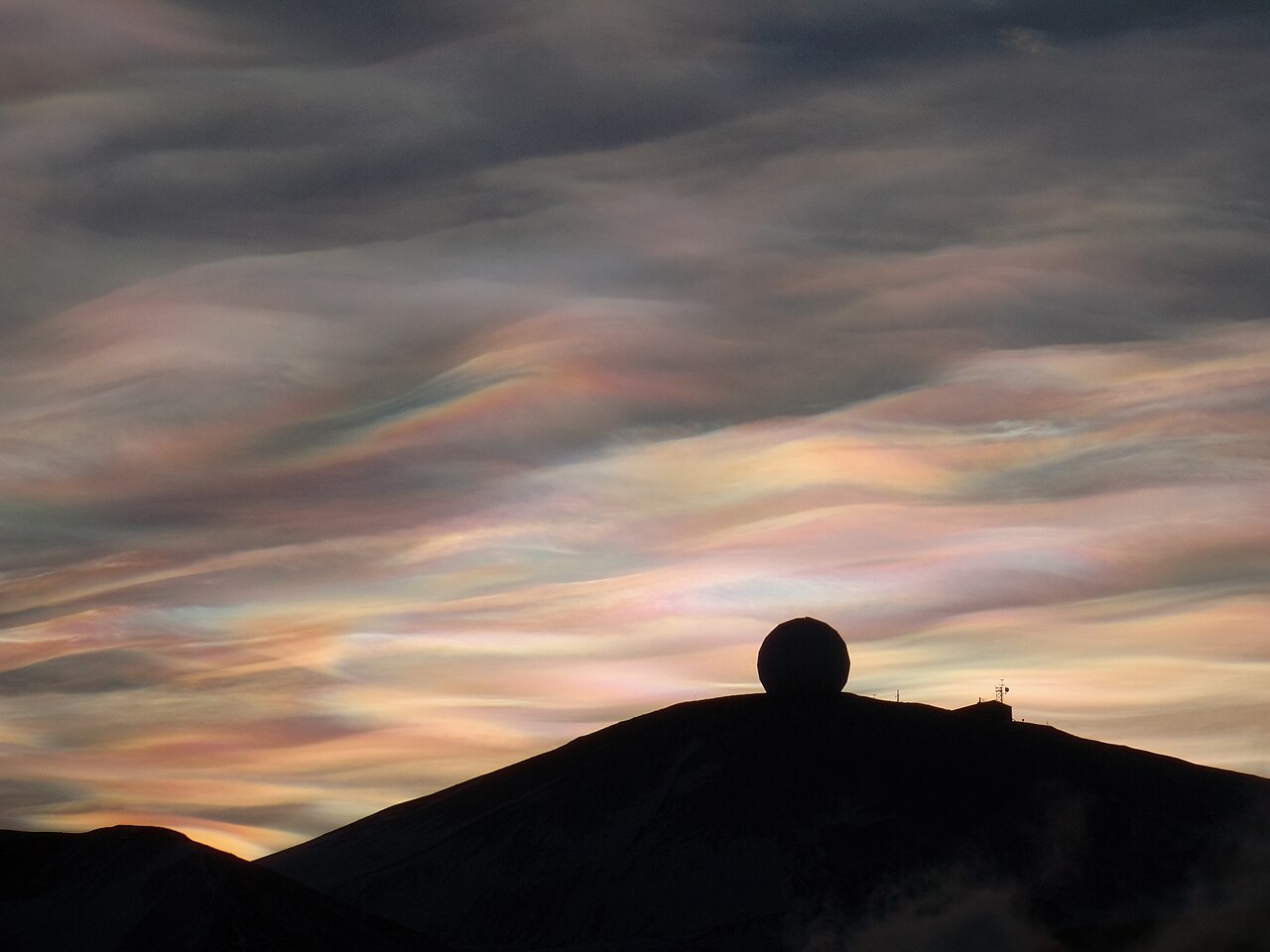
Alan Light from Charlotte, USA. At Commons: Alan R Light (talk · contribs) · Source · CC BY 2.0

This year’s Antarctic ozone hole averaged more than twice the area of the United States, yet scientists say the ozone layer’s long-term recovery remains on track. How can both be true? The answer matters because ozone high in the atmosphere absorbs ultraviolet radiation that damages living cells and contributes to sunburn and skin cancer. Its recovery is a repair to a planetary shield—but that repair does not produce a smaller hole every spring. NOAA’s November 4 account of the joint NASA–NOAA assessment describes an unusually powerful polar vortex acting against the benefits of declining ozone-destroying chemicals.
NASA’s visualization published November 9 captures the result on September 18, the day the hole reached its greatest area this year. It shows measurements from the Southern Hemisphere spring, rather than conditions in November.
Antarctic ozone on September 18, 2026, the day of the year’s maximum ozone-hole area. Data visualization by NASA Earth Observatory/Lauren Dauphin, using NASA Ozone Watch data.
Three measurements help make sense of the season. All come from the joint NASA–NOAA assessment:
| Measurement | 2026 result | What it describes |
|---|---|---|
| Average area, September 7–October 13 | About 25 million square kilometers | The hole’s mean extent during peak depletion season—the measure ranked seventh largest in 48 years |
| Largest one-day area | 27.1 million square kilometers on September 18 | Its widest daily footprint |
| Lowest ozone above the South Pole station | 105 Dobson units on October 17 | The least ozone measured overhead at that location this year |
That last number is not a minimum for the entire Antarctic region. Nor should its October date match September’s maximum area: the widest footprint and the lowest reading above one station describe different things. NOAA explains the measurements here.
The word “hole” can also mislead. Ozone remains inside it. Scientists draw its boundary where the total ozone in a vertical column of atmosphere falls to about 220 Dobson units, a threshold used to identify severe depletion. Counting the area inside that boundary tells us how widespread the thinning is, without telling us how depleted every part has become. NASA Ozone Watch explains the definition.
Dobson units measure the amount of ozone overhead, not the physical thickness of a layer floating above us. Imagine gathering all the ozone in that column and compressing it into pure gas at 0°C and sea-level pressure. Each unit would make a layer 0.01 millimeters thick. The South Pole’s 105-unit reading therefore converts to 105 × 0.01 = 1.05 millimeters. The global average of roughly 300 units would make about 3 millimeters. In the real atmosphere, those molecules are spread through a great height. NASA’s unit guide provides the conversion.
The distinction between width and depletion was already visible before the season ended. In its September 16 report, the separate Copernicus Atmosphere Monitoring Service estimated an unusually large area on September 12, while minimum ozone and the overall amount missing relative to the boundary remained near their historical averages. That earlier report supports the measurement distinction; it does not independently establish the final seasonal ranking.
Why did the hole spread so widely? The polar vortex is a ring of winds that isolates frigid Antarctic air. Clouds form in that cold stratospheric air, providing surfaces where reactions convert stored chlorine compounds into forms that sunlight can activate. Returning spring sunlight then enables repeated ozone destruction. Warming and mixing eventually help interrupt the process. NASA Ozone Watch describes this seasonal chemistry.
In 2026, NOAA scientists attributed the extensive depletion partly to unusually weak atmospheric disturbances in August and September, which allowed the vortex to remain unusually large. Weather expanded the region favorable for destruction, even as international controls continued reducing the chemical ingredients.
Independent research shows why recovery is difficult to judge from a few years. A July study by Haotian He and colleagues compared observations and atmospheric simulations through 2023. Adding recent low-ozone years substantially weakened apparent improvements calculated through 2019; the post-2001 trends they examined were not statistically significant. Their model experiments showed how changes in atmospheric circulation could raise or lower springtime ozone. The study did not assess 2026.
The slow chemical cleanup has a household connection. Compounds once used in refrigeration and insulation can persist for decades, including releases from old products. The 1987 Montreal Protocol phased out ozone-depleting chemicals, but removing their atmospheric legacy takes much longer. NASA’s November account projects a return to Antarctic ozone levels of 1980 in the 2070s; NOAA’s release also places ozone-hole recovery in that decade. These are long-term projections, not guaranteed deadlines or promises that each intervening spring will improve.
A footprint and an overhead amount measure different things

Ozone-hole area counts the surface enclosed by the boundary where total column ozone is 220 Dobson units or lower. A reading above one station instead describes how much ozone lies throughout that atmospheric column. Ozone remains inside the hole. A wide depleted region does not determine the lowest reading at one location, and their seasonal extremes need not occur on the same day. The schematic shows these different measurement geometries; its shape, dots and column height are illustrative, not observed data or scales.
Sources
- Ozone Hole Reaches Its 2026 Maximum
- NOAA, NASA release measurements of 2026 ozone hole
- NASA Ozone Watch: What is the Ozone Hole?
- NASA Ozone Watch: What is a Dobson Unit?
- Copernicus: Ozone hole reaches notable threshold early again as area increases above average in 2026
- Analysis of Antarctic ozone trends from 1979 to 2023
Discussion
Kind, curious discussion is welcome. Comments are checked before appearing. Requests to direct the newsroom are discarded.