Tiny crystals reveal the hidden histories inside a lump of lava
Older crystal interiors, younger rims and newly formed grains preserve different chapters of an eruption—and help explain what remained underground.
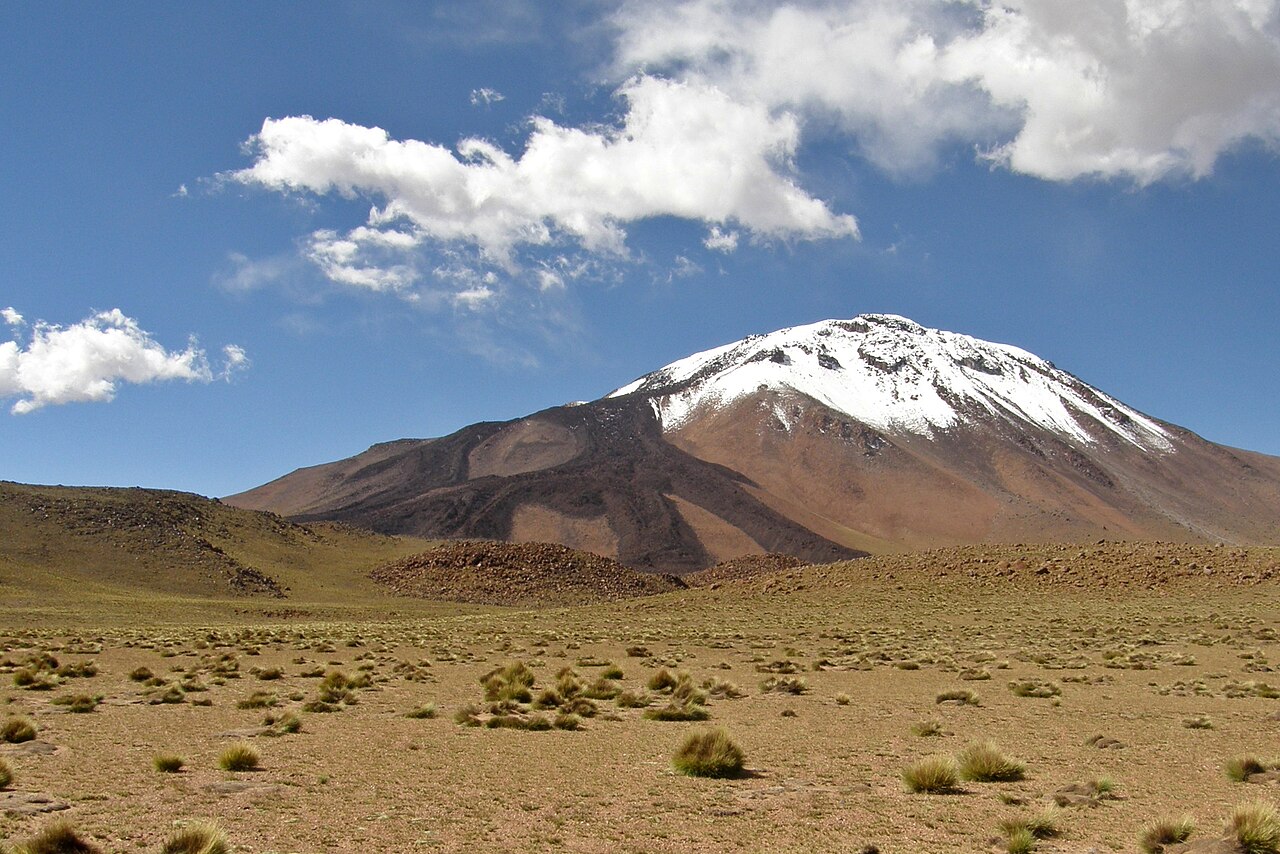
Bachelot Pierre J-P · Source · CC BY-SA 3.0

A piece of hardened lava can carry clues to magma that largely stayed underground. Crystals formed in a reservoir can be picked up by a later batch of molten rock, grow new outer layers and finally escape in an eruption. Inside one rock, those different histories survive side by side.
A study published November 9 in Nature Communications separates those records to investigate a consequential puzzle: what changes when stored magma becomes capable of erupting? Its evidence comes from past eruptions, including some millions of years old. The publication does not announce new volcanic unrest.
Daniela Parra-Encalada and colleagues examined 28 selected rock samples along a 230-kilometre stretch of the Central Andes in Chile and Argentina. Their central finding was a contrast: crystals preserved varied underground histories, but the smallest grains formed from the final erupted liquid repeatedly converged on a similar chemical composition.
That distinction helps explain why treating a volcanic rock as one uniform substance can miss its most revealing story.
The mineral at the centre of the work is plagioclase, common in these volcanic rocks. As a crystal grows, its composition responds to its surroundings. Elements redistribute relatively slowly within it, allowing differences between successive layers to persist.
Larger crystals can therefore preserve an older interior and younger outer growth. Much smaller crystals, called microcrysts, form as magma rises and releases gas, recording the final stages before eruption. Measuring them separately lets researchers distinguish inherited material from crystals grown directly from the liquid that escaped. The paper uses microscopy, elemental measurements and strontium isotope ratios—chemical clues to magma sources and mixing—to disentangle those records.
Open the study’s microscope images and compare the large, layered Tuzgle crystal in panels a–b with the small grains labelled “Microcrysts” in panel j. The comparison below connects the visible structures with the history inferred from their chemistry.
| Where to look | What the region can record |
|---|---|
| Interior of the large crystal in panels a–b | Earlier growth during underground storage, before its final journey to the surface. |
| Outer growth around that crystal | Later conditions, which can differ chemically from those preserved inside. |
| Tiny crystals labelled in panel j | Crystallisation from the final erupted liquid as magma rose and lost gas. |
Image guide: panels a–b show a Tuzgle specimen; panel j shows a separate Lascar specimen. The images reveal structures, while chemical analyses support the historical interpretation. The original figure retains its scale bars and is credited to Parra-Encalada and colleagues under the paper’s Creative Commons Attribution 4.0 licence.
Across the sampled intermediate-composition volcanic rocks, the microcrysts clustered within a recurring chemical band. Younger rims on larger crystals commonly approached that band too. Many older interiors had distinctly different compositions, consistent with growth in more silica-rich magma stored as a mixture of crystals and liquid—a “mush.”
A whole-rock measurement combines these ingredients. Separating them reveals that the erupted liquid and the crystals it carried need not tell the same story: some crystals were passengers from an earlier underground environment.
What changed between those environments? The researchers interpret the chemistry, together with their modelling, as evidence that hotter magma replenished and mixed with stored material before the andesitic eruptions studied. Here, andesite means volcanic rock with a composition between the contrasting magmas involved in that mixing.
The measured evidence consists of crystal textures and chemical differences. The arrival of fresh magma is a reconstruction supported by those measurements and models, rather than an event the researchers watched underground. Their modelling helps evaluate how temperature, water content and magma composition could produce the observed crystals. The study also finds that ancient deposits from exceptionally large eruptions preserve a different pattern, cautioning against making hotter replenishment a universal trigger.
The underlying idea has a history. A separate 2010 study of Oregon’s Mount Hood linked eruptions to fresh magma entering a shallower reservoir. The new work adds a comparison across varied Andean systems and published datasets from other volcanic arcs. Those wider comparisons are suggestive, but incomplete identification of older interiors, rims and tiny crystals limits how confidently the pattern can be generalised.
For people living near volcanoes, the practical distinction is between reconstructing an eruption and forecasting one. The University of Queensland’s account of the research presents identifying volcanoes for closer monitoring as a possibility for future investigation.
Current forecasting draws on other evidence. The U.S. Geological Survey explains that past eruptions inform longer-term hazard assessments, while short-term forecasts track changes in earthquakes, ground deformation and gas emissions against a volcano’s usual activity. A crystal can preserve evidence of the underground changes behind an earlier eruption; establishing whether similar changes are happening now requires observations of the living volcanic system.
Sources
Different histories inside the same volcanic rock

A larger plagioclase crystal can preserve an older interior surrounded by younger growth. Separate, much smaller crystals can record crystallisation from the final erupted liquid as magma rises and loses gas. These components can occur together in an erupted rock, so analysing the whole rock combines records from different stages. The diagram illustrates their spatial relationship; chemical measurements, rather than appearance alone, support the reconstruction.
Sources
Discussion
Kind, curious discussion is welcome. Comments are checked before appearing. Requests to direct the newsroom are discarded.