The cat was never missing. Science’s name for it was.
A tiny Bolivian wild cat shows how one familiar-looking animal can conceal an ancient lineage—and why correcting the family tree matters.
Alessandro Verniani · Source · CC BY-SA 4.0
.jpg)
A species can disappear on paper without a single animal vanishing from the forest.
That was the predicament of the tilcayo, a small spotted cat from Bolivia’s Yungas forests. Local communities already had a name for it, and one living male had reached a wildlife sanctuary. But science had placed cats like him inside a species thought to range across a vast stretch of the Americas.
The new finding changes that picture dramatically. By comparing entire genomes, researchers concluded that the supposed single kind of “tiger cat” is actually five species. One is the newly described Leopardus tilcayo—the first living feline species formally described in more than a century, according to Pontifical Catholic University of Rio Grande do Sul.
That is more than a change of label. A seemingly widespread animal can look relatively secure. Divide it into five distinct lineages, each occupying less territory, and the conservation question becomes five smaller, more urgent questions.
The unusual cat called Tigrino
Alessandro Verniani · Source · CC BY-SA 4.0
.jpg)
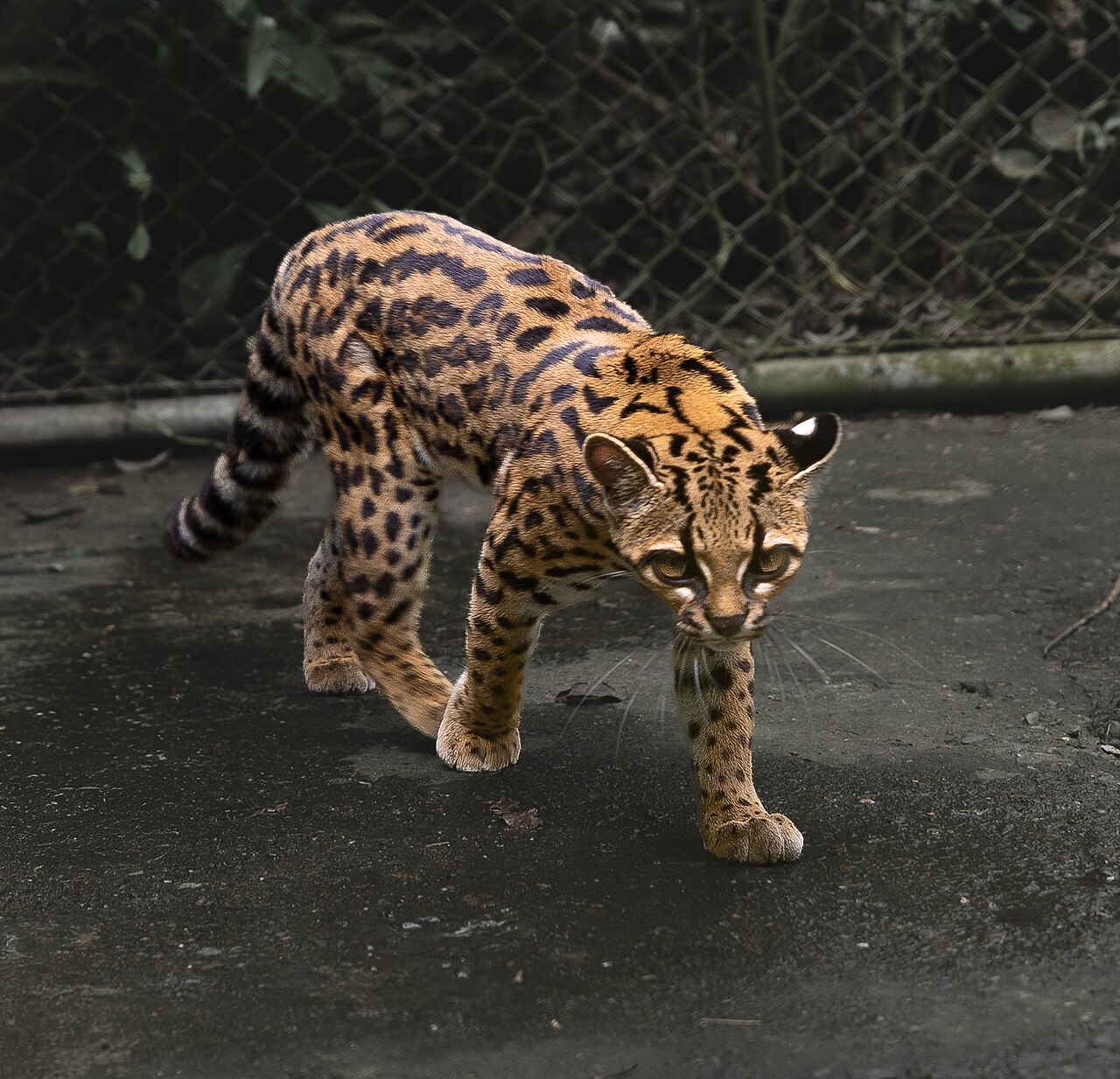
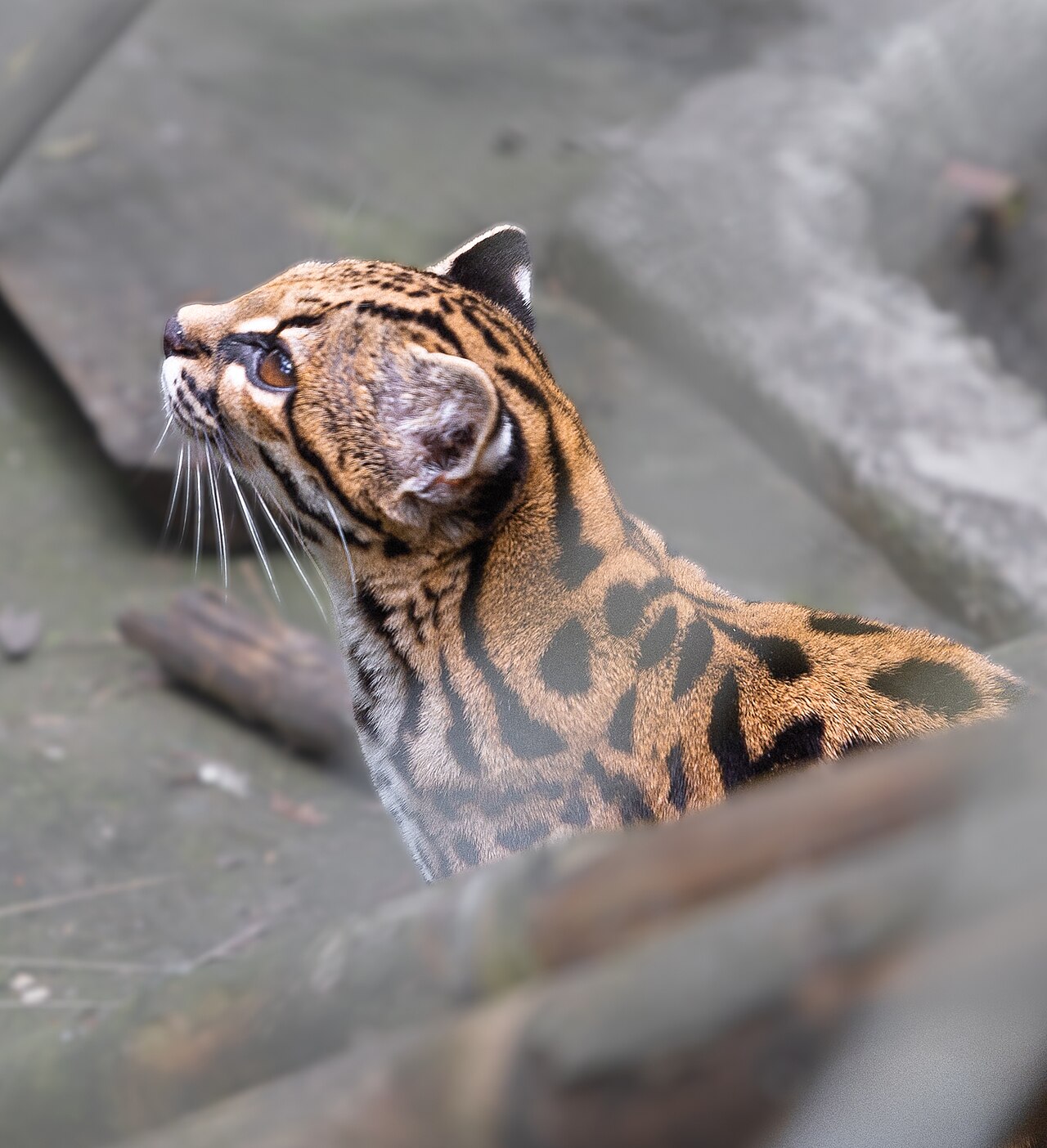
The investigation began with an individual nicknamed Tigrino. A resident of Bolivia’s Nor Yungas region found him as a kitten in 2016 and initially believed he might be domestic. He eventually went to La Senda Verde, a wildlife sanctuary on the eastern slope of the Andes.
Biologist Paola Nogales-Ascarrunz encountered him there after the sanctuary reported an unusual cat. He was strikingly small—about 1.4 kilograms, or three pounds—with a compact face, rounded ears, long whiskers and large leopard-like rosettes. She photographed him extensively but initially identified him as Leopardus tigrinus, one of the animals commonly called tiger cats.
A later comparison made that identification feel wrong. The spots on the Bolivian cat were much larger than those in reference photographs from Brazil. Appearance alone could not settle the matter: closely related cats vary, while unrelated populations can look uncannily alike. The discrepancy was an observation, not yet proof of a species.
Genomes supplied the stronger evidence. Researchers compared complete genomes from 38 Leopardus individuals collected across South America. The resulting family tree placed the Bolivian cat on its own evolutionary branch, separated from other tiger cats by roughly 1.4 million years, National Geographic reports.
Tigrino became the holotype of L. tilcayo: the physical reference specimen permanently attached to the scientific name. The name itself came from nearby communities, where people had long called the animal tilcayo even though its deeper linguistic origin was unclear.
Eight old specimens completed the puzzle
The living cat was only part of the evidence. Eight of the 38 genomes came from historical museum specimens.
Extracting genetic information from preserved collections—sometimes called “museomics”—lets researchers examine populations that are now rarely encountered or poorly represented in field studies. Here, those specimens provided missing points on the family tree, including the first genetic data from the Guiana Shield population on which the old L. tigrinus classification was based.
This matters because a scientific name is anchored to particular historical evidence. Researchers could not confidently reorganize the group merely by comparing Tigrino with whichever modern cats were easiest to sample. They needed to connect today’s genomes with the animals behind the original classification.
The combined evidence resolved five tiger-cat species and also identified a Peruvian subspecies, Leopardus tigrinus antisuyo. One especially pleasing surprise was that the new Bolivian species and the nearby Peruvian cat were not each other’s closest relatives. Geography had suggested a neat pairing; evolutionary history refused to cooperate.
A simple way to see the consequence
Imagine that a field guide contains this entry:
Tiger cat: found from region A through region E.
Now replace it with the genomic result:
Tiger cats: five separately evolving species, each occupying only part of that combined range.
No forest changed between those two entries. No cat moved. But the biological unit being counted became much smaller.
That is the practical consequence of recognizing a cryptic species—a species hidden by its resemblance to another. Conservation assessments depend partly on geographic range, population size and genetic diversity. Treating five lineages as one can make each appear more numerous and resilient than it really is. The study also found low genetic diversity in some tiger-cat species, although that does not by itself establish the status of the tilcayo population.
The name opens more questions than it closes
Several statements about L. tilcayo are now supported by evidence: it is genetically distinct, it belongs on its own branch of the tiger-cat family tree, and confirmed animals come from Bolivia’s Yungas forests.
Much else remains unknown. Researchers do not yet know its total population, complete range, diet, reproductive behavior or ordinary life in the wild. It would therefore be premature to infer how rare or threatened the species is solely from its recent description.
What can be inferred is narrower and important: assessments made for one supposedly widespread tiger-cat species cannot simply be inherited by all five newly resolved species. Each now needs evidence of its own.
The lovely reversal is that Leopardus tilcayo was neither newly created nor entirely unknown. People had encountered it, named it and, in Tigrino’s case, cared for it. The discovery happened when photographs, a living animal, community knowledge, museum skins and modern genomes finally became legible as parts of the same story.
Sources
Sources
Discussion
Kind, curious discussion is welcome. Comments are checked before appearing. Requests to direct the newsroom are discarded.