A single leg bone reveals a heavyweight bird lost from Flores
Distinctive toe joints identify an extinct chicken-like bird, while its weight, flying ability and place in an ancient ecosystem pose different questions.
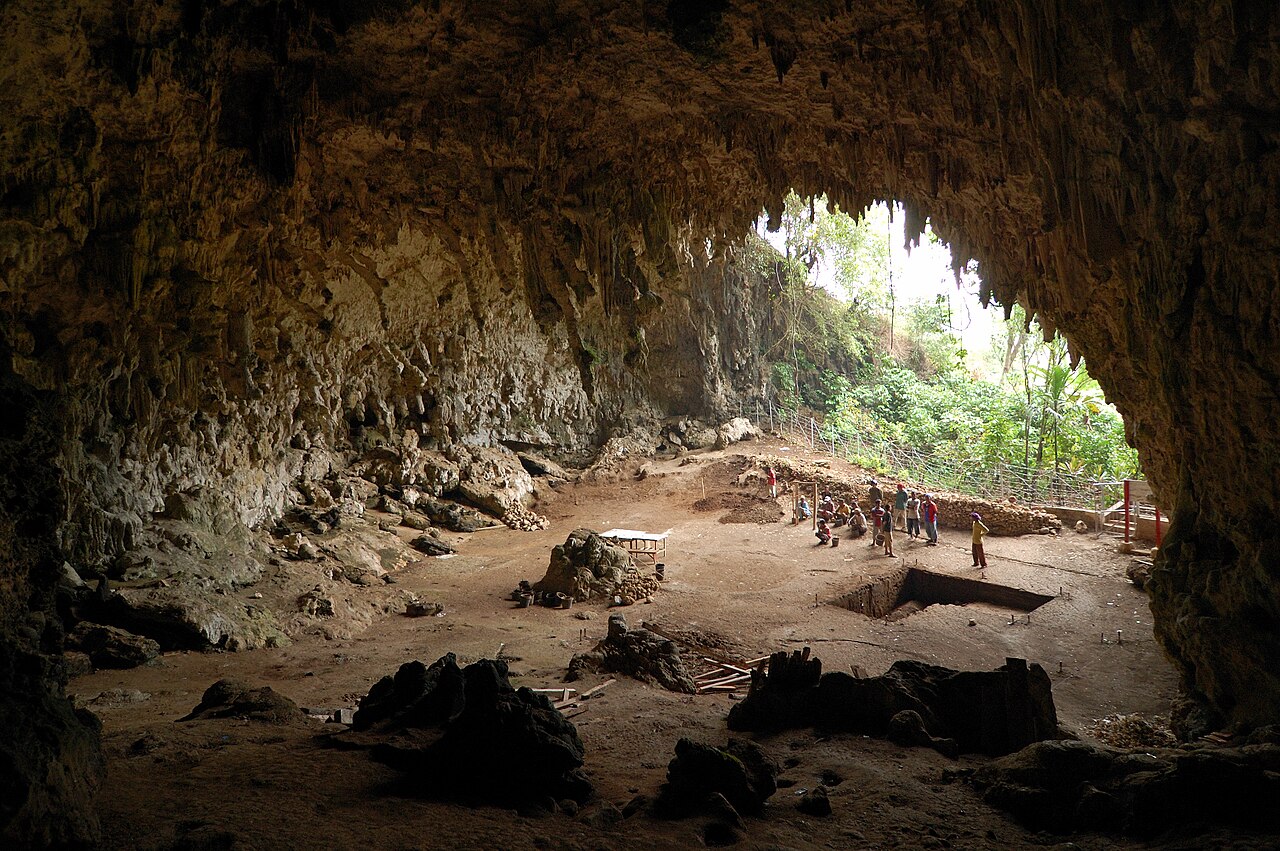
Rosino · Source · CC BY-SA 2.0

Flores once had a chicken-like bird several times heavier than the scrubfowl living on the Indonesian island today. What survives of it is a single leg bone—with enough distinctive anatomy to give a lost species a name, but too little to tell us whether it could fly.
The bird, Megapodius rokusi, adds an unfamiliar animal to the history of Liang Bua, the cave famous for the extinct human relative Homo floresiensis. Its identification also offers a satisfying distinction: knowing which animal a bone belonged to does not mean knowing how that animal lived.
Researchers recovered the fossil in 2009. It was recognized as a bird bone, but its more precise identity remained unresolved for years. November 8 reporting by Sandee Oster for Phys.org describes the comparisons that eventually distinguished it from living and extinct megapodes, a group of ground-dwelling, fowl-like birds.
The revealing features were where the toes joined the leg. Those joints differed in both shape and position from the corresponding structures in other megapodes. Together with the bone’s overall form and size, that combination supported the researchers’ identification of a new species. The case involved more than finding an unusually large bone: the arrangement of its parts mattered too.
The name honours Rokus Due Awe, who identified the specimen as a bird bone and also first recognized the bones of H. floresiensis.
The evidence gives three different kinds of answer:
| Question | What the fossil supports |
|---|---|
| What distinguished this bird? | Observable differences in the shape and position of its toe joints, assessed through comparisons with other species. |
| How heavy was it? | An estimated body mass of about 3.9 kilograms, rather than a directly measured weight. |
| Could it fly? | Unresolved: no wing bones are available. |
At roughly 8.6 pounds, the estimated bird would have substantially outweighed Flores’s living orange-footed scrubfowl, reported at 0.5–1.2 kilograms. Dividing 3.9 by those endpoints gives a simple comparison: about three to eight times as heavy. That conveys the scale without turning an estimate into an exact measurement.
The size record also needs its proper boundary. M. rokusi is the largest known member of Megapodius, its genus—a narrower grouping within the megapode family. It is not established as the largest megapode ever.
Its relatives invite another tempting reconstruction. Living megapodes bury eggs in mounds or burrows rather than incubating them by sitting on a nest. But a leg bone does not reveal where this extinct species laid its eggs or how it tended them. Family resemblance supplies a question to investigate, not an observed nesting scene.
Sharing a cave with an extinct human relative requires similar care. The bird fossil is reported as roughly 190,000–120,000 years old. A 2016 dating study in Nature places H. floresiensis skeletal remains at about 100,000–60,000 years old, while stone tools attributed to that species span roughly 190,000–50,000 years ago.
Those ranges concern different evidence. The tool dates overlap the bird’s reported age; the skeletal dates are younger. Neither the overlap nor the shared cave establishes that the two species encountered one another. Nor does the bird’s age range mark the beginning and end of its entire existence.
Its disappearance remains undated. Phys.org reports that it might have vanished alongside other extinct Liang Bua animals—or much earlier. Another securely dated specimen could help narrow that history. A wing bone would address a different gap: whether this heavyweight bird could leave the ground.
One cave, three different spans of evidence

The sediments containing the bird fossil date to approximately 190,000–120,000 years ago. Stone tools attributed to Homo floresiensis span about 190,000–50,000 years ago, overlapping that sediment range. The hominin’s skeletal remains date to about 100,000–60,000 years ago and are younger. These are different records, not complete species lifespans. Their dates neither demonstrate an encounter nor establish when the bird became extinct.
Sources
Discussion
Kind, curious discussion is welcome. Comments are checked before appearing. Requests to direct the newsroom are discarded.