Mindoro’s forest rats reveal islands within an island
Rats from two Philippine mountains show how a single island can contain separate evolutionary worlds—and how scientists uncover that history.
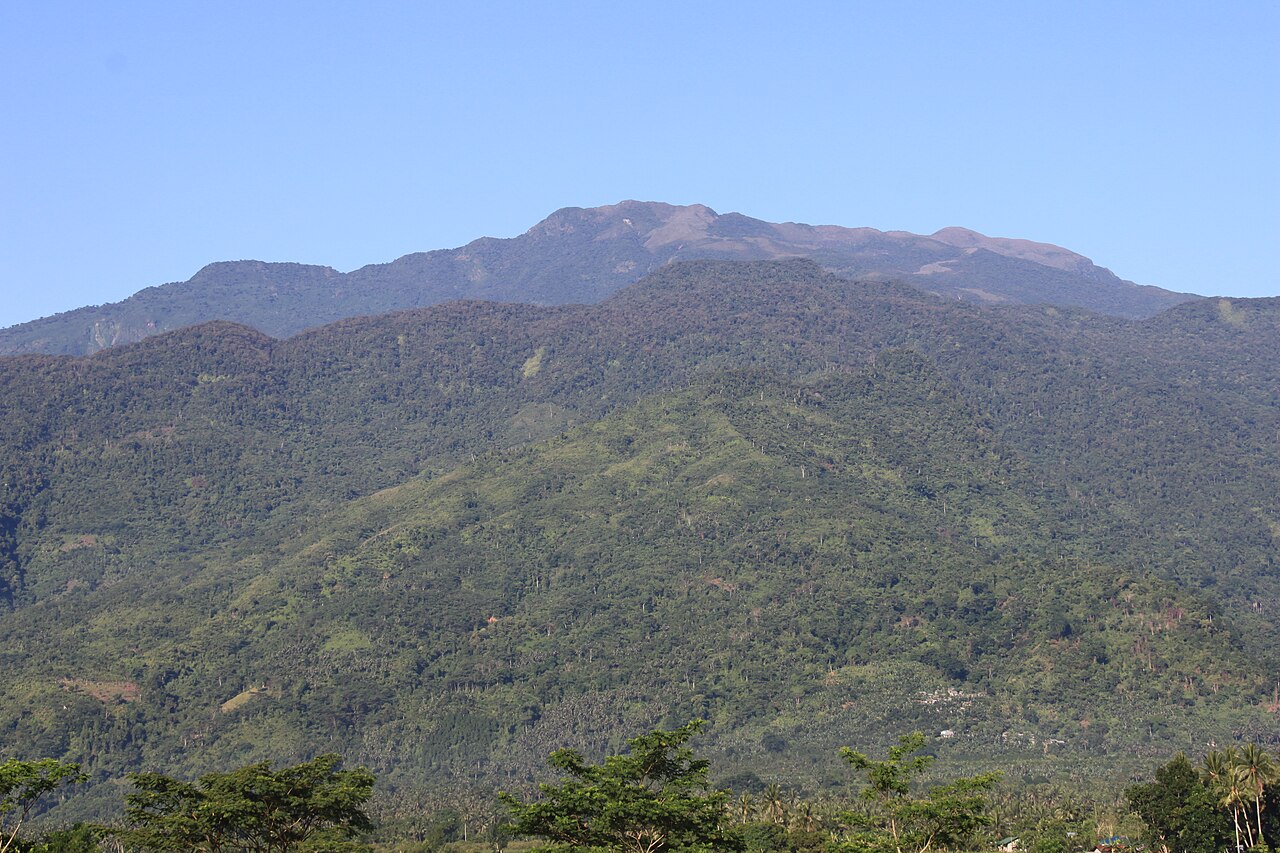
Mil Del · Source · CC BY-SA 3.0

An island’s coastline is not its only boundary. On Mindoro in the Philippines, small forest rats living on separate mountains have become distinct species, with lower ground between them. Their story changes how we can read a landscape: land that connects two peaks on a map may separate the animals living above it.
In a November 9 account, the University of the Philippines describes two newly identified rats belonging to the genus Crunomys, one from Mount Halcon and the other from Mount Masulong. The announcement draws on work that began years earlier, including 40 specimens collected during surveys in 2013.
The animals share a distinctive build: stout bodies, small eyes, broad hind feet and unusually short tails. Every specimen was caught on the ground. Within that resemblance, however, the researchers found a consistent division.
Halcon’s rats generally had darker brown fur flecked with orange, shorter tails, and broader feet with thicker claws. Masulong’s tended toward orange-brown fur and differed in skull and tooth measurements. These were clues worth investigating, rather than a verdict delivered by coat colour.
Variation is ordinary within a species. Establishing that the mountains held two species required evidence that the differences reflected separate evolutionary lineages.
According to the university’s account, the anatomical differences were accompanied by differences in mitochondrial DNA, a small portion of an animal’s genetic material. Comparisons across more than 1,000 regions of DNA from cell nuclei supported the distinction, as did statistical analyses used to assess species boundaries. Appearance and different genetic tests pointed toward the same division.
That answers the question of what the animals are. Their relationship addresses another question: how did two related rats come to occupy separate mountains on one island?
The researchers identified them as sister species—each other’s closest relatives. That relationship supports a reconstruction in which one ancestral lineage reached Mindoro and later split there. Finding two species on an island would not, by itself, establish that history: two already distinct species could also have arrived separately. The family tree is what connects the identification to an account of evolution within Mindoro.
The proposed journey to the island remains less certain. In the university’s account, mammalogist Lawrence Heaney suggests that an ancestor could have arrived accidentally on vegetation or a hollow log swept to sea during a storm. Rafting is a possible mechanism, not an observed voyage by these rats’ ancestors.
Once established, their descendants faced a changing mountain landscape. Heaney proposes that repeated cold and warm periods shifted suitable habitat down and up the slopes, sometimes bringing populations into greater contact and sometimes isolating them. Today, the mountain populations are separated by lower-elevation habitats and show no evidence of recent genetic exchange, the university reports.
That distinction matters. The rats and their DNA provide evidence available now; the sequence of habitat changes that helped separate their ancestors is a historical explanation of that evidence.
Mindoro already had another example. A June 2025 paper in Zootaxa formally described three forest mice in the genus Apomys. Together with a previously known Mindoro species, they form a related group found only on the island. Fur, skulls and genetic evidence distinguish its four members.
The paper estimates that their common ancestor reached Mindoro from Luzon about 4.7 million years ago, with diversification beginning around 2.7 million years ago. Those are reconstructed dates, rather than directly observed events. They also make clear that evidence of mammals diversifying on Mindoro predates the latest announcement. The mice and rats represent different biological cases, although researchers overlap between the projects.
Why is Mindoro’s size part of the story? The university describes an older proposal that islands might need roughly 100,000 square kilometres to support the formation of new nonflying mammal species. Mindoro occupies just under 10,000. That proposed threshold was a hypothesis to investigate, not a biological law.
The mountain rats help explain why area alone can miss something important. A relatively small island can still hold populations apart. Mindoro’s coastline encloses both species, but their evolutionary history follows a finer geography: separate mountains, different habitats and long stretches of time.
Connected land, separated habitats

Mount Halcon and Mount Masulong are both on Mindoro. Each holds a different rat species, and lower-elevation habitats separate the mountain populations. Continuous land does not necessarily mean continuous suitable habitat. The shapes are illustrative and do not represent elevations, distances or species ranges.
Sources
Discussion
Kind, curious discussion is welcome. Comments are checked before appearing. Requests to direct the newsroom are discarded.