The tiny fruits on a strawberry help its flesh grow
Experiments link fertilized seeds to the growth of a strawberry’s fleshy base, while new maps show that its early response is uneven.
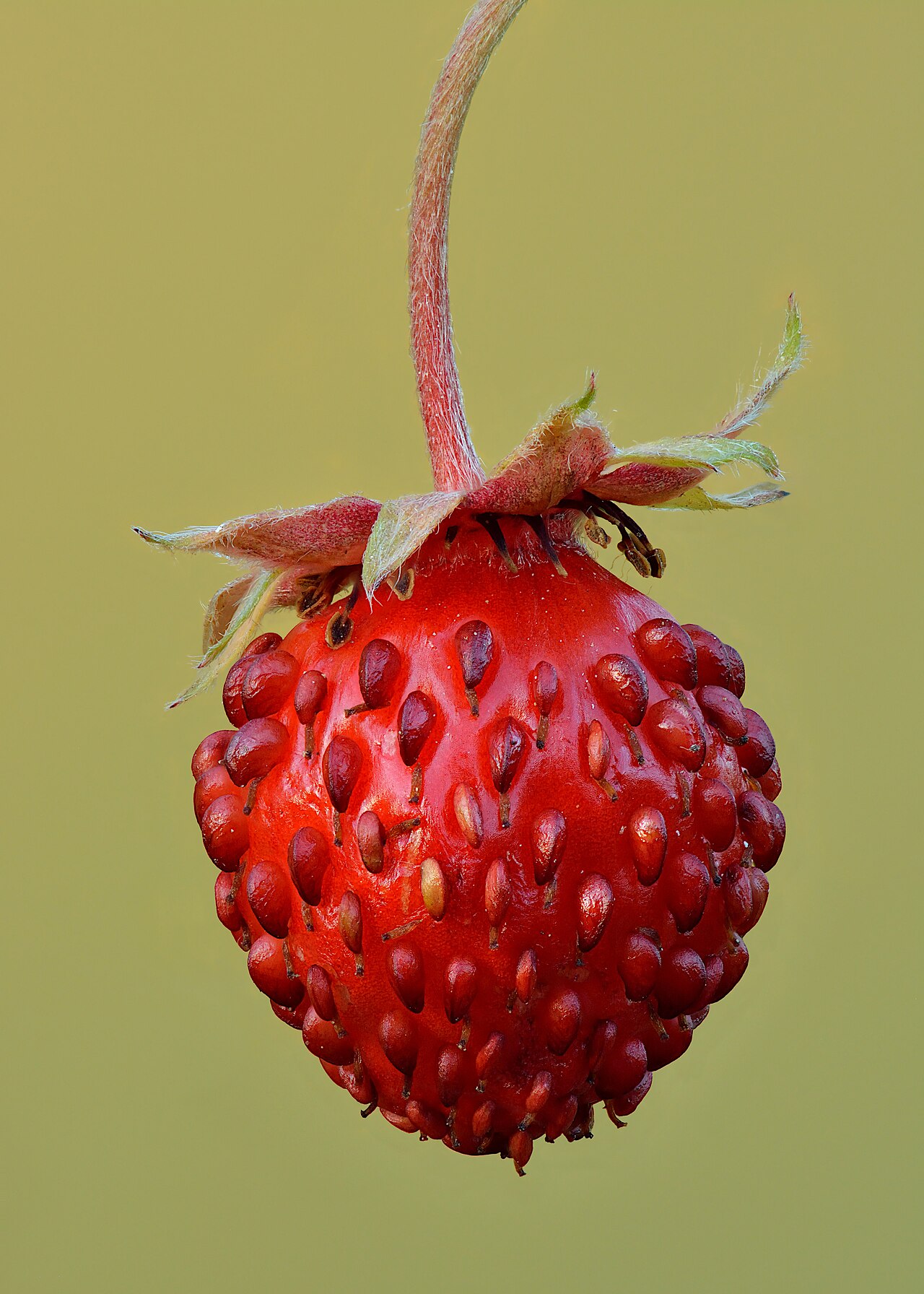
Ivar Leidus · Source · CC BY-SA 4.0

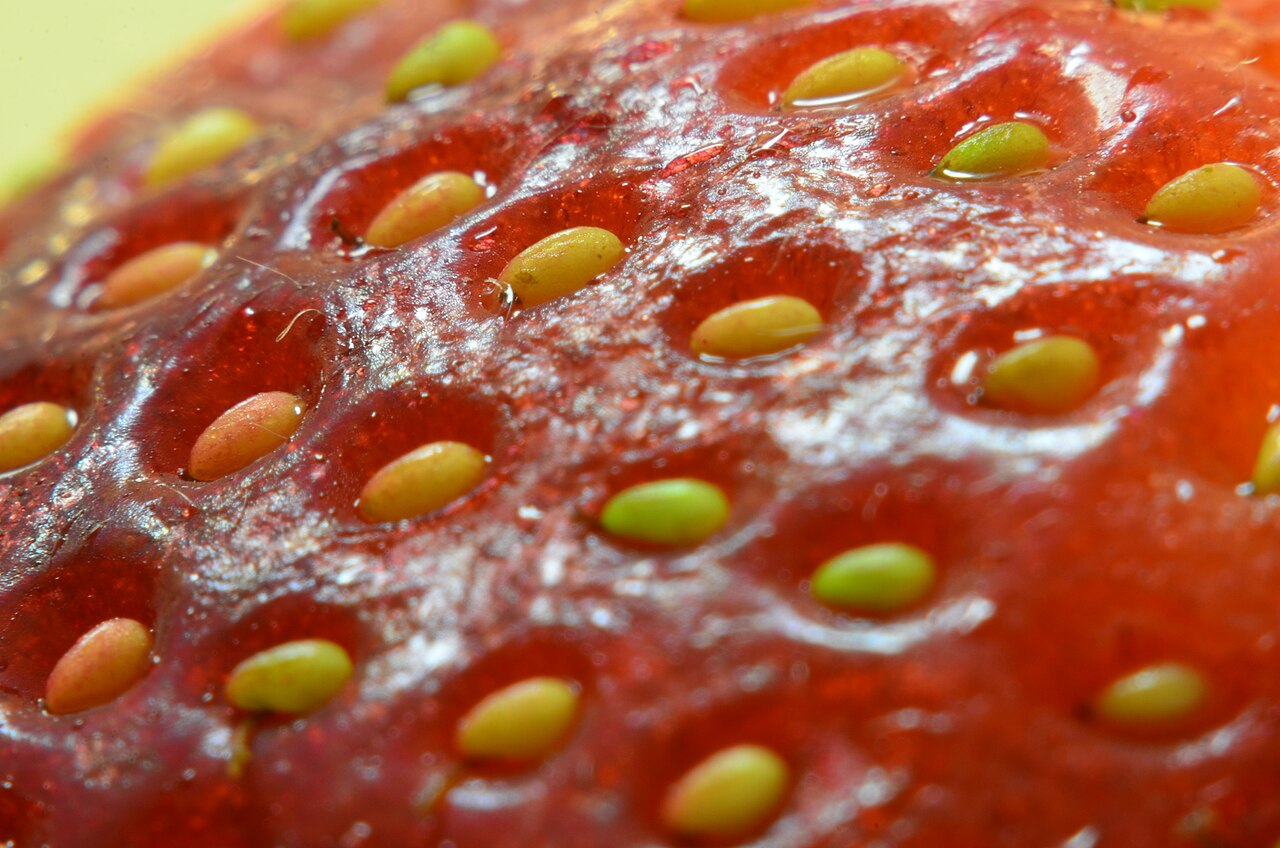
The specks on a strawberry help make the juicy part possible. Each speck is a tiny fruit containing a seed. The flesh underneath is something else: the flower’s enlarged base, called the receptacle. That familiar arrangement gives scientists a way to ask how fertilization inside the tiny fruits sets the flesh growing.
The first clue came from taking the specks away. In experiments recounted in earlier strawberry research, removing the surface fruits after pollination stopped the receptacle from developing. Applying auxin, a plant growth hormone, restored its growth. The paired results made a case that the developing surface fruits supply a growth signal. They could not show which cells made it.
Researchers then looked inside the young seeds of woodland strawberry. Markers for genes involved in making auxin pointed chiefly to the endosperm, a tissue that develops after fertilization. The 2018 study identified it as a major early source of auxin. In other words, the signal associated with growing flesh could be traced to a particular part of the developing seed, rather than simply to the speck as a whole.
A later experiment tested how consequential that seed tissue is. Disrupting a gene active in young endosperm reduced signs of auxin production and impaired both seed and fruit development. Added plant hormones enlarged the affected fruit and seeds, but the seeds eventually died. That partial rescue supports a role for hormone signaling while showing that the gene’s contribution to normal development cannot be reduced to auxin alone.
What does the flesh do with the signal? A study published September 23 followed woodland strawberry through early fruit growth, combining maps of gene activity with chemical measurements and a marker of cells’ response to auxin. Those views matter for different reasons. Measuring auxin helps locate the hormone; a response marker shows where cells register its signal. Finding either one in a place does not, by itself, prove why that place grows.
Together, the maps revealed an uneven auxin pattern in the developing receptacle. Patterns involving two auxin transport components, FvePIN1 and FvePIN5, correlated with that unevenness at different times. The finding offers clues about how the pattern arises, but the correlation does not establish a precise route taken by the hormone.
The researchers also tested a possible part of the receptacle’s response. They reduced, knocked out and increased the activity of FveARF6, a gene involved in auxin signaling. The results support a positive role for that gene in fruit development. Changing its activity and observing the effects adds evidence beyond a map showing where a gene is active.
One earlier result keeps this account from becoming too tidy: knocking out an auxin-making gene called FveYUC10 lowered free auxin in young fruit without an obvious change in fruit form. No single gene in these studies serves as a complete switch for strawberry flesh. What the experiments now explain is how fertilization and auxin signaling help begin early receptacle growth in woodland strawberry. They do not yet establish the hormone’s exact route or a way to determine the final shape of a cultivated berry.

Sources
- A spatiotemporal single-cell transcriptomic atlas reveals fertilization-induced auxin signaling driving strawberry fruit set and development
- Reporter gene expression reveals precise auxin synthesis sites during fruit and root development in wild strawberry
- Mechanism of fertilization-induced auxin synthesis in the endosperm for seed and fruit development
Discussion
Kind, curious discussion is welcome. Comments are checked before appearing. Requests to direct the newsroom are discarded.