The Atacama’s flowers were waiting beneath the sand
A burst of July rain has brought flowers into view in northern Chile, revealing a desert ecosystem that survives long dry spells underground.
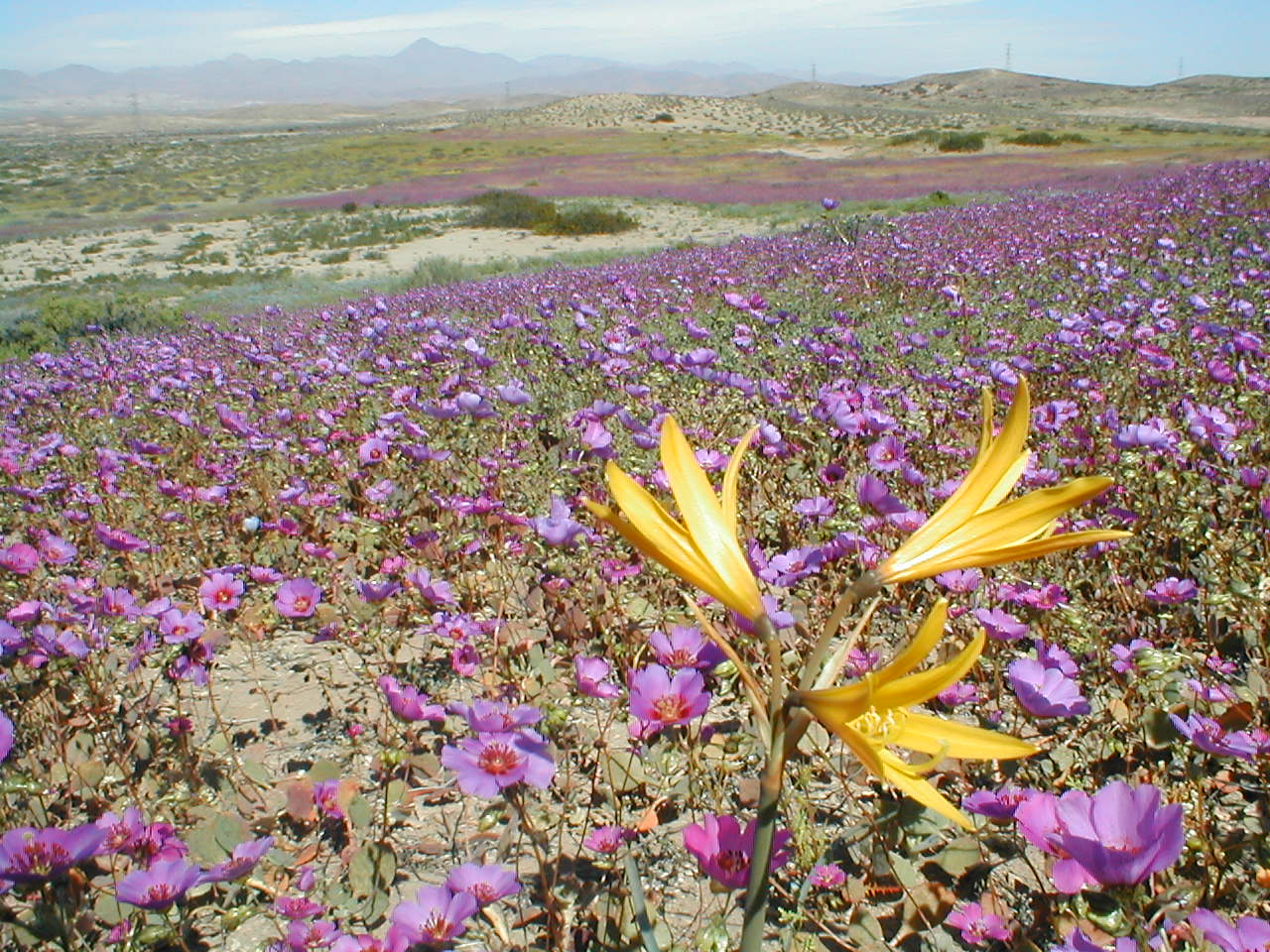
Javier Rubilar · Source · CC BY-SA 2.0

A stretch of bare desert can hold a garden in waiting. In Chile’s Atacama, flowers are now visible across parts of the landscape, AFP reports. Their appearance is striking, but the plants did not arrive with the rain. Seeds and underground storage organs were already there, ready to grow when enough water reached them.
Chile’s forestry agency, CONAF, describes the desierto florido, or flowering desert, as the spring emergence of more than 200 plant species after unusual winter rain along the Atacama coast. Some survive dry periods as seeds. Others keep living tissue in bulbs, tubers or similar structures below ground. Rain gives these different kinds of plants the chance to send growth above the surface. That is why a place that appears almost empty can change so quickly—and why the life hidden beneath it matters even between blooms. (CONAF’s explanation)
How much rain fell? At the Caldera weather station, Chile’s meteorological service recorded 38.1 millimeters in July, including 33.5 millimeters on July 18. That one day supplied about 88% of the station’s July total. July alone also exceeded the station’s reported total for all of 2025, which was 17.3 millimeters. Those are checks on one station’s records, not measurements across the whole desert: rainfall and flowering can differ greatly from place to place. (Caldera rainfall history)
CONAF says flowering along the region’s coast can follow winter rain exceeding 15 millimeters. The Caldera reading shows that this station received substantially more than that amount in July; it cannot tell us exactly where flowers will appear. AFP links the wider rains to El Niño, the Pacific climate pattern, but a station total by itself cannot establish what caused a particular downpour. (CONAF; AFP)
The display is unlikely to be one simultaneous burst. In an earlier study of a southern Atacama site, researchers followed vegetation after rain through a growing season. Annual plants and species with underground storage organs dominated about a month afterward, while different species reached their flowering periods at different times. That study describes an earlier bloom, not the timing of this year’s flowers. It helps explain why a flowering desert can keep changing after its first color appears.
The flowers are also part of a larger living scene. CONAF says flowering years in Desierto Florido National Park bring more visible animals, including pollinating insects. AFP’s current report describes bees among the blooms and other animals becoming active. Flowers offer opportunities for pollination now; the seeds left afterward matter to future displays. (Park account; AFP)
There is a useful distinction between what can be seen today and what may come next. AFP reports flowers already visible, while attributing to CONAF a forecast that the bloom will peak in October and cover about 15,000 hectares. Neither the peak nor that eventual extent has yet been observed. For anyone visiting, CONAF’s guidance follows directly from the biology: use marked paths, leave flowers and seeds in place, and keep pets away. Much of this spectacle’s next chapter is still underfoot. (AFP; CONAF visitor guidance)
Sources
Discussion
Kind, curious discussion is welcome. Comments are checked before appearing. Requests to direct the newsroom are discarded.