Birdsong shares our vocal patterns, even without imitation
Familiar rhythms and phrase endings extend to birds whose songs are innate, offering a fresh way to listen—and a puzzle about where those patterns come from.
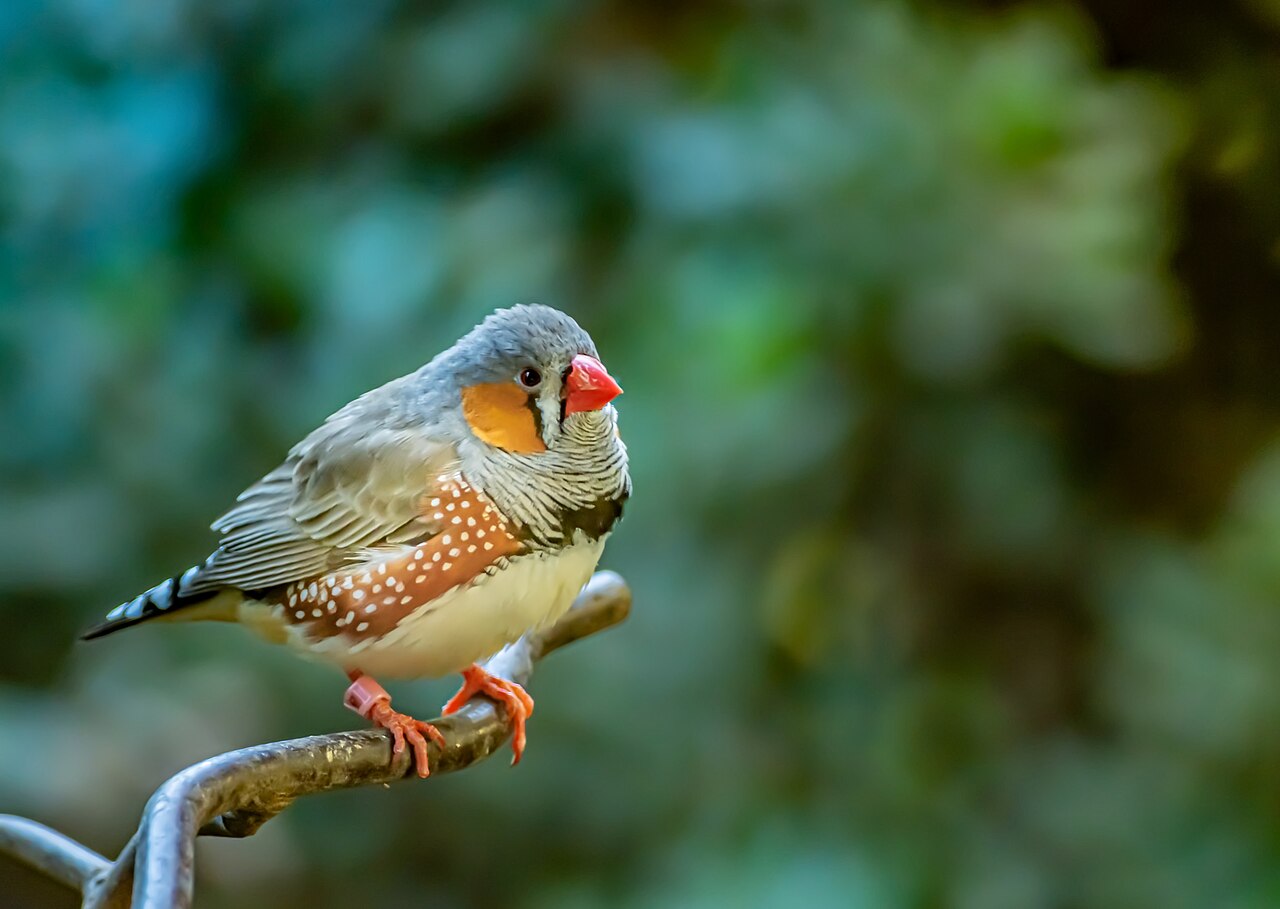
lopezlago · Source · CC BY-SA 2.0

Birds do not have to learn their songs by imitation to share some of the patterns in our speech and music. A broad comparison found small pitch changes, predictable timing and stretched phrase endings even in birds whose songs develop without copying a tutor. For a listener, that offers specific things to notice beneath the whistles and trills. AAAS’s account of the study describes the findings, published in Science on October 29.
The similarities concern how sounds are arranged. A small pitch interval means the next sound sits nearby in pitch, rather than making a large leap. Regular timing gives a sequence some predictability. And a phrase can finish with a sound that lasts longer than those before it—an acoustic way of giving the ending extra space. These are tendencies across the recordings, not a claim that every bird performs all three.
A simple illustration makes the distinction audible: sing three notes twice, keeping the pitches unchanged but stretching the final note the second time. The pitch steps stay the same; the phrase’s timing changes.
Led by Logan James, the researchers compared songs from 367 bird species with human speech and singing across 52 languages, according to AAAS. McGill University’s account, carried by Phys.org, says the team manually marked roughly 70,000 sound units in recordings from the public wildlife-sound collection xeno-canto.
The crucial comparison included songbirds and hummingbirds, which learn their vocalizations through imitation, alongside suboscines and nightjars, classified as birds whose vocalizations are innate. Human speech and singing are learned, so the researchers expected the imitating birds to resemble us more strongly. McGill reports little evidence for that prediction.
That result changes what the resemblance can explain. If an acoustic pattern appears in both learning and nonlearning birds, imitation alone cannot account for its presence. Birds that develop songs without a tutor become useful comparisons for investigating where those patterns come from.
James proposes that the physical work of making sounds could contribute: large pitch jumps may be harder to produce, while breathing patterns might help explain longer phrase endings. Those remain hypotheses. Comparing recordings reveals recurring features; it does not isolate the bodily mechanism responsible for them.
Making a sound and recognizing it are also different problems. In an independent study published October 13 in Communications Biology, researchers tested 23 zebra finches and 272 adults with artificial five-tone sequences. The sounds varied in pitch and in formants—concentrations of sound energy that help distinguish human vowels.
The birds and people learned to associate two sequences with different responses. Researchers then changed the sounds to find which cues guided recognition. Finches used both pitch and formant patterns; either could support recognition when the other was held constant. People relied more heavily on pitch.
The listening result needs that narrow frame. Only one bird species was tested, and eight other finches did not pass training and were excluded before the altered-sound tests. The findings describe this task, rather than establishing how all birds hear music or speech.
The two studies answer complementary questions:
| Evidence | What it showed | Question still open |
|---|---|---|
| Recorded songs from 367 bird species, compared with human voices across 52 languages | Shared pitch, timing and phrase-ending patterns, including in nonlearners | Which mechanisms cause the similarities |
| Listening choices by 23 zebra finches and 272 adults | Finches used both manipulated cues; humans favored pitch | Whether the same contrast holds for natural communication and other bird species |
Sources
Discussion
Kind, curious discussion is welcome. Comments are checked before appearing. Requests to direct the newsroom are discarded.