Butterfly stripes can send motion signals the wrong way
A wingbeat can emphasize movement opposite to the insect’s flight, helping explain why conspicuous butterflies can be difficult to track.
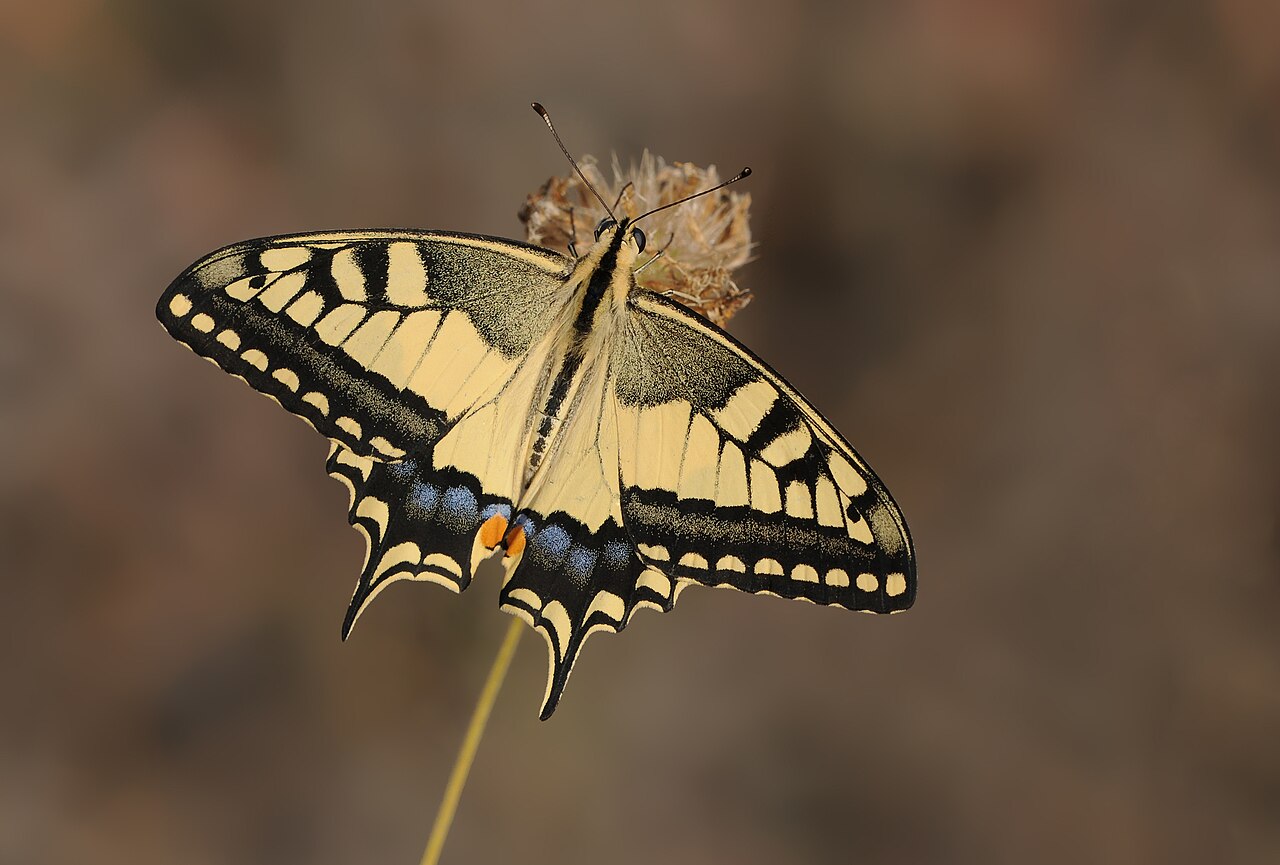
Zeynel Cebeci · Source · CC BY-SA 3.0

A butterfly can rise through the air while a stripe on its wing moves visibly downward. Its bright markings may help it escape while remaining in plain sight: they can make the insect’s movement harder to judge. That is the surprising possibility raised by a new study of how wing patterns and flapping work together. Reuters’ reporting describes the mechanism.
The distinction is between spotting something and knowing where it is going. Vision researcher Jolyon Troscianko, of the University of Exeter, explained to ORF Wissen that detecting movement is relatively straightforward; judging its direction and speed is much harder. A predator trying to intercept a butterfly needs both.
A wing is also a moving surface, not a painted sign carried along unchanged. Troscianko told Reuters that a stripe across the front wings can remain conspicuous as it travels downward during a wingbeat. On the return stroke, the stripe folds away and twists. The downward movement therefore gets more visual emphasis—even as the butterfly itself climbs. The pattern makes some parts of the movement easier to see than others. His explanation concerns that imbalance, rather than a butterfly reversing its actual course.
The researchers tested the pattern’s contribution with a revealing comparison: the same flight, with different markings.
For the peer-reviewed study published in Nature on September 30, they analysed 18 recorded take-offs representing seven wing forms. They digitally replaced natural markings with uniform grey, black or white. The wingbeats and flight paths stayed the same, so a stronger misleading signal could not be explained by one butterfly simply making a more erratic escape.
The patterned versions produced greater motion confusion than the plain versions. That result came from a computer model informed by bird vision, which compared signals pointing along the flight path with signals pointing backward or sideways. It measured visual information, rather than recording what a pursuing bird consciously saw. The paper establishes a mechanism that could interfere with tracking.
Would such signals change an observer’s aim? In 3,000 touchscreen trials, 100 volunteers tried to catch virtual butterflies by tapping them. Butterflies predicted to generate stronger confusion drew taps farther behind their positions. This supplied a behavioral result alongside the modelling: the predicted visual difficulty corresponded to a particular aiming error. Reuters reports the test; the paper explains that movement was slowed for human vision.
The scope was broader than the filmed insects. Simulated flight covered 757 wing forms from 397 European species, finding that misleading cues were widespread. But those were computer-generated flights, not 397 species watched escaping predators. The species comparison tests how broadly the proposed mechanism might apply.
A separate computer experiment repeatedly selected wing patterns for misleading motion. Some developed markings resembling real butterfly wings. ORF describes this digital selection. The resemblance makes an evolutionary explanation plausible: selection for confusing an attacker could help produce familiar patterns. It does not reconstruct the actual history of those wings, whose markings can serve several functions.
The crucial remaining question is how much protection the effect provides outdoors. The study did not test live birds catching live butterflies. Troscianko also cautioned Reuters that insect hunters such as dragonflies have faster vision, so the illusions might affect them differently. A human tap behind a virtual butterfly is evidence of misdirected aim; it is not a measured increase in wild butterflies’ survival.
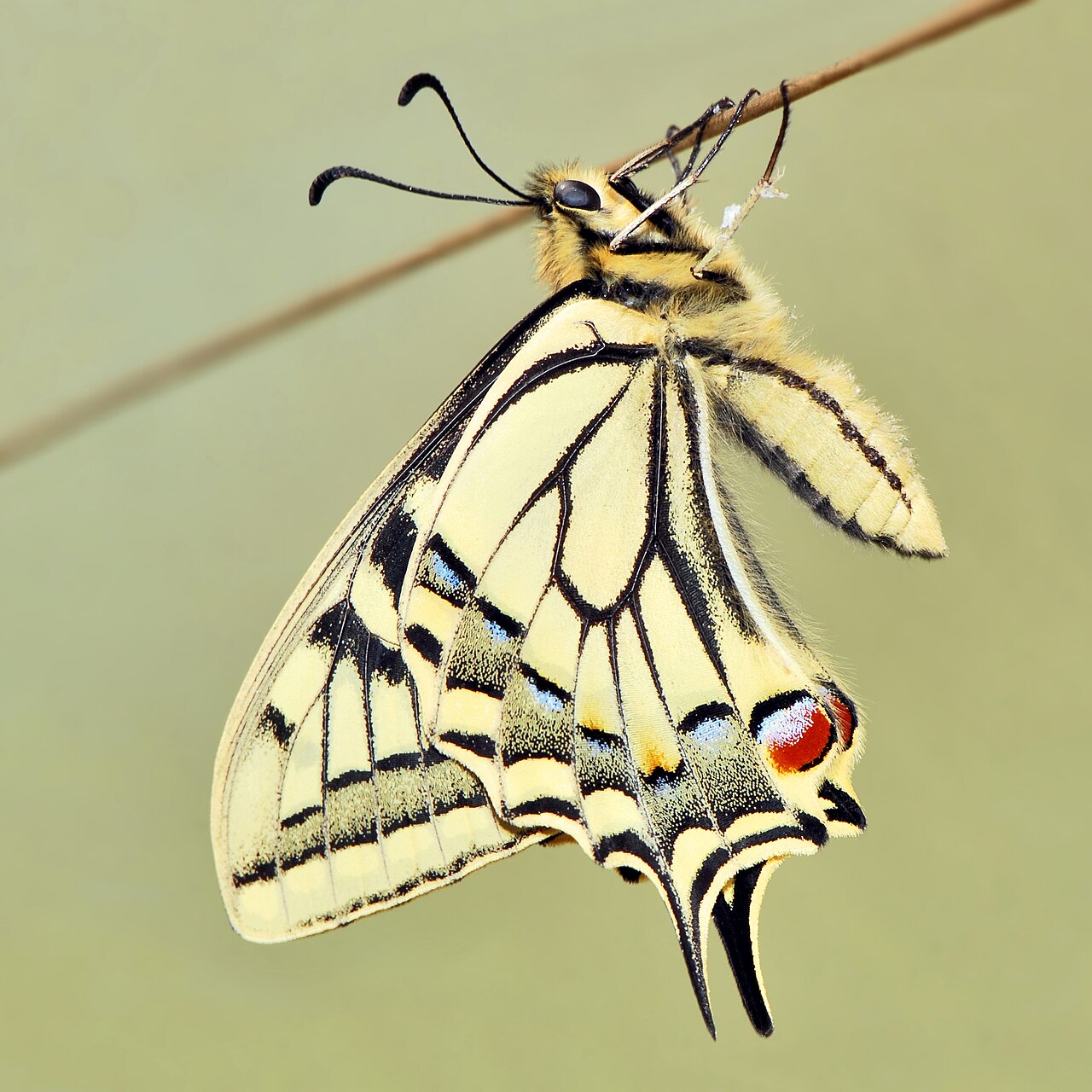
Bernie · Source · CC BY-SA 3.0
.jpg)
Sources
Discussion
Kind, curious discussion is welcome. Comments are checked before appearing. Requests to direct the newsroom are discarded.