A burned wall beneath Paris may redraw the map of ancient Lutetia
A Gaulish fortification under the Hôtel-Dieu strengthens the case for an Iron Age settlement on the Île de la Cité, but its date and identity remain unresolved.
Lionel Allorge · Source · CC BY-SA 3.0

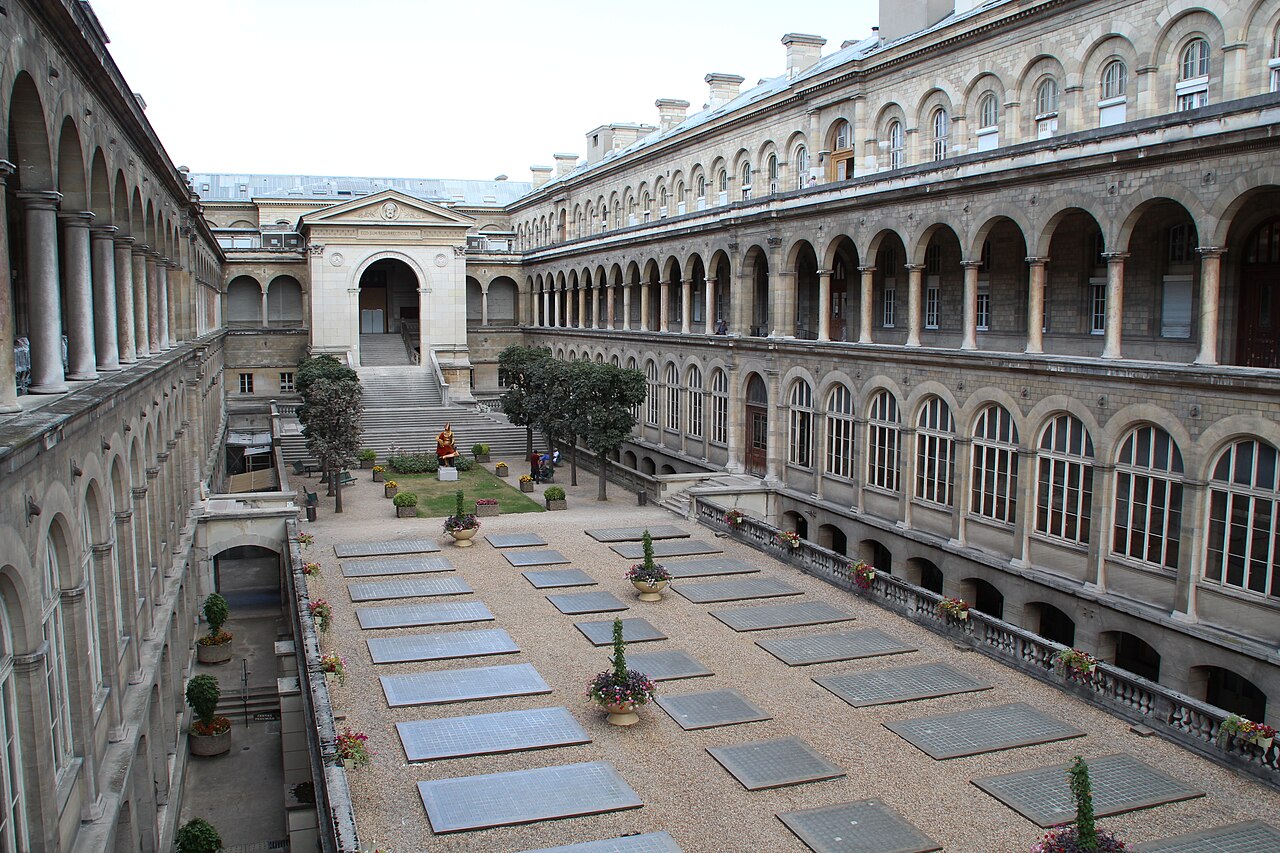
A hospital redevelopment in central Paris has exposed something more consequential than another layer of the old city: a possible piece of the fortified settlement that existed before Roman Paris.
Beneath the Hôtel-Dieu on the Île de la Cité, archaeologists found a stone-and-timber wall extending for roughly 20 metres. Beside it were burned wooden remains, carbonized seeds and a Gaulish spearhead. If continuing work confirms that the structure belonged to the Parisii people’s settlement of Lutetia, it would give Paris a physical connection to a place previously known mainly through the writings of Julius Caesar.
That possibility is exciting. It is not yet a conclusion.
What the ground actually contains
The wall’s construction is the first important clue. Its stone facing incorporates horizontal pieces of wood, a technique associated with some fortified Gaulish settlements, or oppida, near the end of the Iron Age. Behind it, excavators identified an artificial platform of sand and gravel nearly two metres thick. The French Culture Ministry reports that specialists are investigating whether the wall was defensive, supported the platform, or served both purposes.
Fire altered the structure severely. The wall bears combustion marks, while a wooden building in front of it burned along with numerous seeds. These are observations: there was a substantial late-Iron-Age-style structure here, and part of the surrounding site experienced an intense fire.
The initial radiocarbon results are less precise than a dramatic historical identification would require. Samples of wood produced a range from 200 to 10 BCE. That interval includes 52 BCE, when Caesar’s forces campaigned against a Gaulish coalition around Lutetia, but it also covers nearly two centuries.
Radiocarbon dating therefore supports an Iron Age context. It does not identify a particular year, actor or event.
Caesar offers a test, not an answer key
In Caesar’s account, Lutetia was an oppidum of the Parisii on an island in the Seine. During the campaign of 52 BCE, the Gauls burned the settlement and destroyed its bridges as Roman forces approached, according to the official archaeological summary of the battle. The relevant narrative appears in Book 7 of Caesar’s Gallic War.
The new remains make several parts of that account testable: Was there a fortified Gaulish site on this island? Was it destroyed by fire around the middle of the first century BCE? How did it relate to the river and possible bridge approaches?
But Caesar was a commander writing about his own war. Archaeology does not have to fit his story. A burned building might belong to another episode, and a fortified wall might have existed before or after the campaign he described. Establishing a closer connection will require tighter dating and a clearer reconstruction of the site’s construction, use and abandonment.
Why the location matters
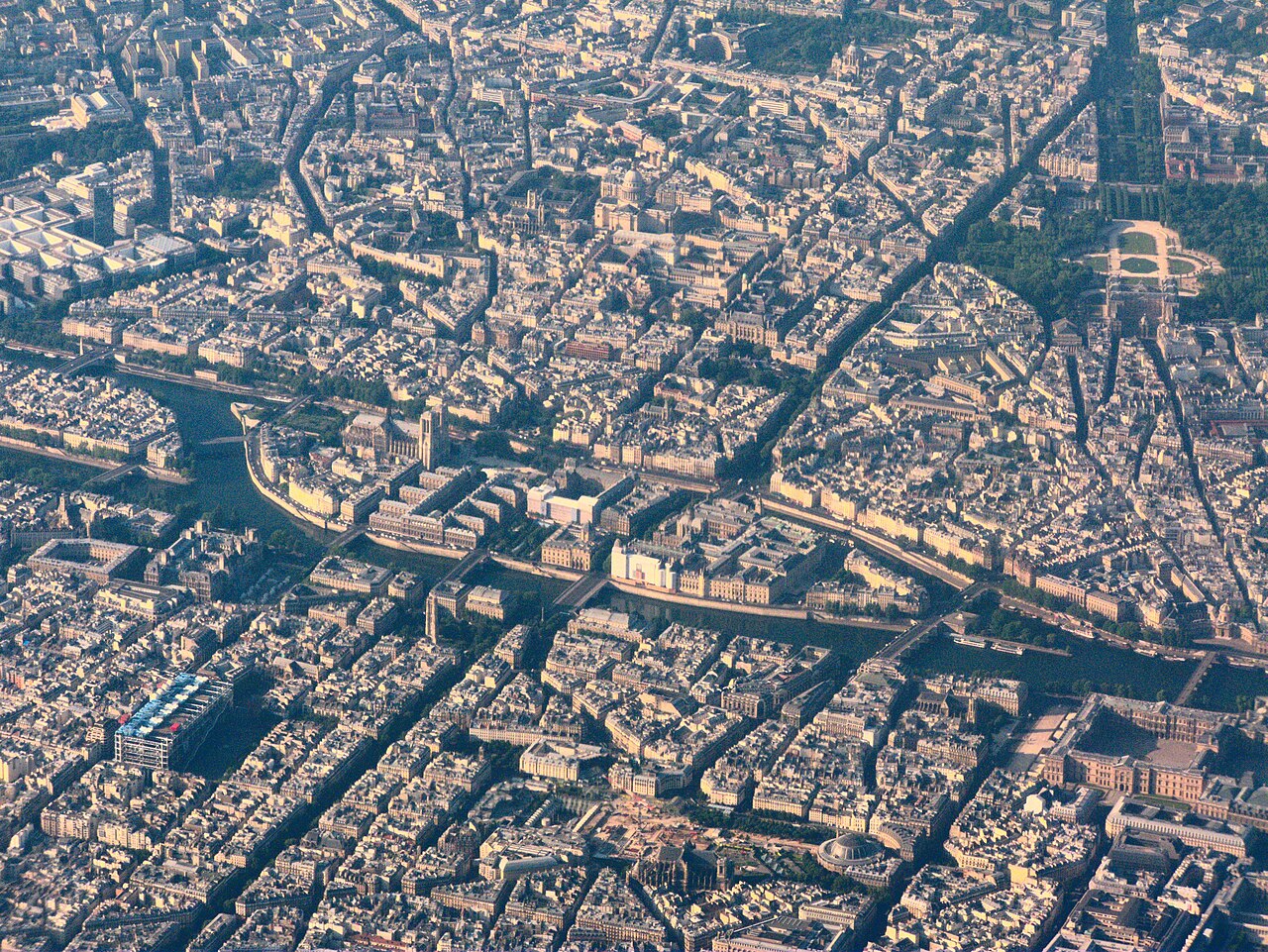
The Île de la Cité has long seemed an intuitive birthplace for Paris, yet material evidence for an organized Gaulish occupation there was notably scarce. An official overview written before this discovery explained that earlier excavations had found neither a Gaulish fortification nor a corresponding destruction layer or urban settlement.
The ancient river landscape also differed from the modern one. Today’s solid-looking island developed from a more complicated collection of landforms whose edges were later reshaped. Researchers have consequently considered other locations, including Nanterre and now-vanished islands or tongues of land.
The Hôtel-Dieu wall changes that debate because it supplies substantial evidence in the traditionally proposed location. It does not erase alternative sites or prove that every reference to Lutetia concerned precisely the same ground.
A useful way to follow the investigation is to keep three columns: observed, measured and inferred. The wall, burned seeds and spearhead were observed. The broad radiocarbon interval was measured. Identification as Lutetia’s rampart—and association with the fire described by Caesar—remains inferred.
A discovery made possible by building work
The excavation began in February 2026 as part of the hospital complex’s restructuring. It covers 1,250 square metres across two courtyards and is being conducted jointly by the City of Paris archaeological service and Inrap, according to the City of Paris.
This is preventive archaeology: when development may damage remains, the French state can require a diagnostic survey, an excavation or a change to the project. France conducts about 2,200 such diagnostics and 450 preventive excavations in an average year, the Culture Ministry says.
The fragile wall is not expected to remain in place. Plans instead call for detailed digital documentation, including photogrammetry and a three-dimensional reconstruction, as well as a mould for a partial physical reconstruction incorporating some original facing stones.
Paris may eventually gain a convincing material anchor for its Gaulish origin story. For now, the more revealing result is the evidence trail itself: masonry, timber, fire and dating gradually narrowing a historical possibility without pretending the unanswered parts have disappeared.
David.Monniaux · Source · CC BY-SA 3.0

What the evidence establishes—and where inference begins

Archaeologists directly observed a stone-and-timber wall, burned material, seeds, a spearhead and an artificial platform. Field measurements put the wall at about 20 metres and the platform near two metres thick; radiocarbon samples span 200–10 BCE. The year 52 BCE falls within that broad interval, but overlap alone cannot identify the structure as Lutetia’s rampart or connect its fire to Caesar’s campaign.
Sources
Discussion
Kind, curious discussion is welcome. Comments are checked before appearing. Requests to direct the newsroom are discarded.