Aboriginal children less likely to avoid court in NSW, study finds
A substantial gap remains even among eligible police matters, while the research leaves important questions about its causes unresolved.
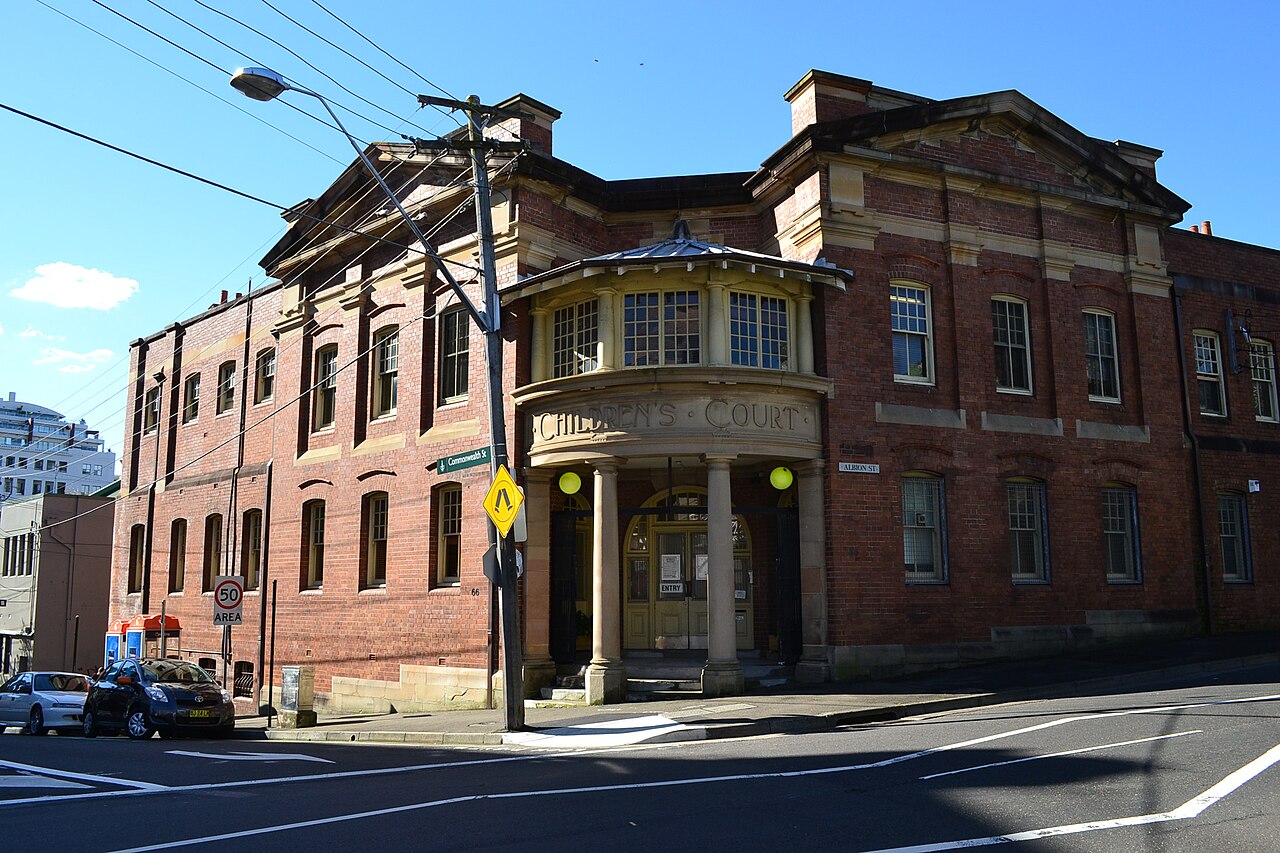
Sardaka (talk) 09:24, 10 August 2011 (UTC) · Source · CC BY 3.0

For a child accused of an offence, a police decision can mean a court appearance—or an alternative that addresses what happened without starting court proceedings. New South Wales research finds that Aboriginal children were substantially less likely to receive those alternatives, even when their alleged offences qualified for consideration.
Between April 2022 and March 2025, police diverted 46% of eligible matters involving Aboriginal children from court, compared with 76% involving non-Aboriginal children, according to the NSW Bureau of Crime Statistics and Research, known as BOCSAR. The findings were released on November 10.
That is a 30-percentage-point gap: roughly 30 fewer diversions for every 100 eligible matters in the Aboriginal group. These are rates for police matters, not percentages of all children in either community, and they should not be read as counts of distinct children.
The distinction matters because the research examines decisions within a system that already provides alternatives to court. It is not simply comparing offences covered by diversion legislation with offences excluded from it.
The Young Offenders Act provides three routes:
| Route | What it involves |
|---|---|
| Warning | Police deal with the matter through a warning instead of commencing court proceedings. |
| Caution | A formal caution provides another way to deal with the matter outside court. |
| Youth Justice Conference | A structured meeting brings together the young person, support people, a trained convenor and the victim, if they wish to participate, to agree on an outcome plan. |
The reported 46% and 76% figures combine these routes. A conference can produce concrete obligations: an apology, actions addressing harm to the victim, or steps connecting the young person with their community. A referral is not the same as a completed conference or a completed plan. Youth Justice NSW explains the process.
Eligibility, however, does not guarantee a particular response. BOCSAR says police may consider differences within eligible matters, including offence seriousness, bail status and previous justice-system contact.
The researchers’ statistical analysis accounted for about 72% of the overall gap using these and other recorded characteristics. After adjustment, Aboriginal children remained approximately eight percentage points more likely to have their matters proceed to court. That is the difference left after taking the measured characteristics into account—not a finding that the children or circumstances were identical. BOCSAR’s explanation identifies information the records did not capture well, including admissions and cooperation with police.
An unexplained gap does not identify its own cause. BOCSAR says discrimination is a possible explanation, but the study cannot determine whether it contributed or by how much. Equally, accounting statistically for previous police contact does not establish that those earlier encounters were themselves free of unequal treatment.
The Aboriginal Legal Service drew a stronger conclusion. Its acting chief executive, Sharif Deen, told ABC News that the findings pointed to bias and racism in NSW policing. That is the service’s assessment; the study does not establish individual officers’ motives. ABC said it had contacted NSW Police for comment, but its report contained no police response.
Previous contact also cannot explain the entire pattern. Among eligible matters at a child’s first formal police contact, approximately 10% involving Aboriginal children proceeded to court, compared with 5% involving non-Aboriginal children. BOCSAR says around 80% of that five-point gap remained unexplained by the available information. First formal contact removes differences in earlier formal offending history from this comparison; it does not make every other circumstance equivalent.
These findings describe a historical period, rather than outcomes under today’s rules. The records end in March 2025, before a later amendment to children’s criminal proceedings and young-offender legislation received assent on December 3, 2025. The study therefore cannot show whether subsequent changes altered the disparity.
There is another distinction for families: police commencing proceedings does not necessarily close every later diversion option. The Judicial Commission’s current guidance explains that the Children’s Court can itself issue cautions or refer suitable matters to conferences. The measured gap concerns access to diversion at the police stage; it does not establish every child’s eventual court outcome.
Sources
Sources
- BOCSAR: Aboriginal children less likely to receive a police diversion from court
- NSW Police less likely to divert Aboriginal children from court compared to non-Aboriginal children, data shows
- Youth Justice NSW: What is a Youth Justice Conference?
- Children (Criminal Proceedings) and Young Offenders Legislation Amendment Bill 2025
- Judicial Commission of NSW: Children’s Court — criminal jurisdiction
Discussion
Kind, curious discussion is welcome. Comments are checked before appearing. Requests to direct the newsroom are discarded.