Kabul’s Bala Hissar holds more than one age
The citadel’s standing walls, buried remains and modern conservation work reveal why restoring a monument also means keeping its different histories readable.
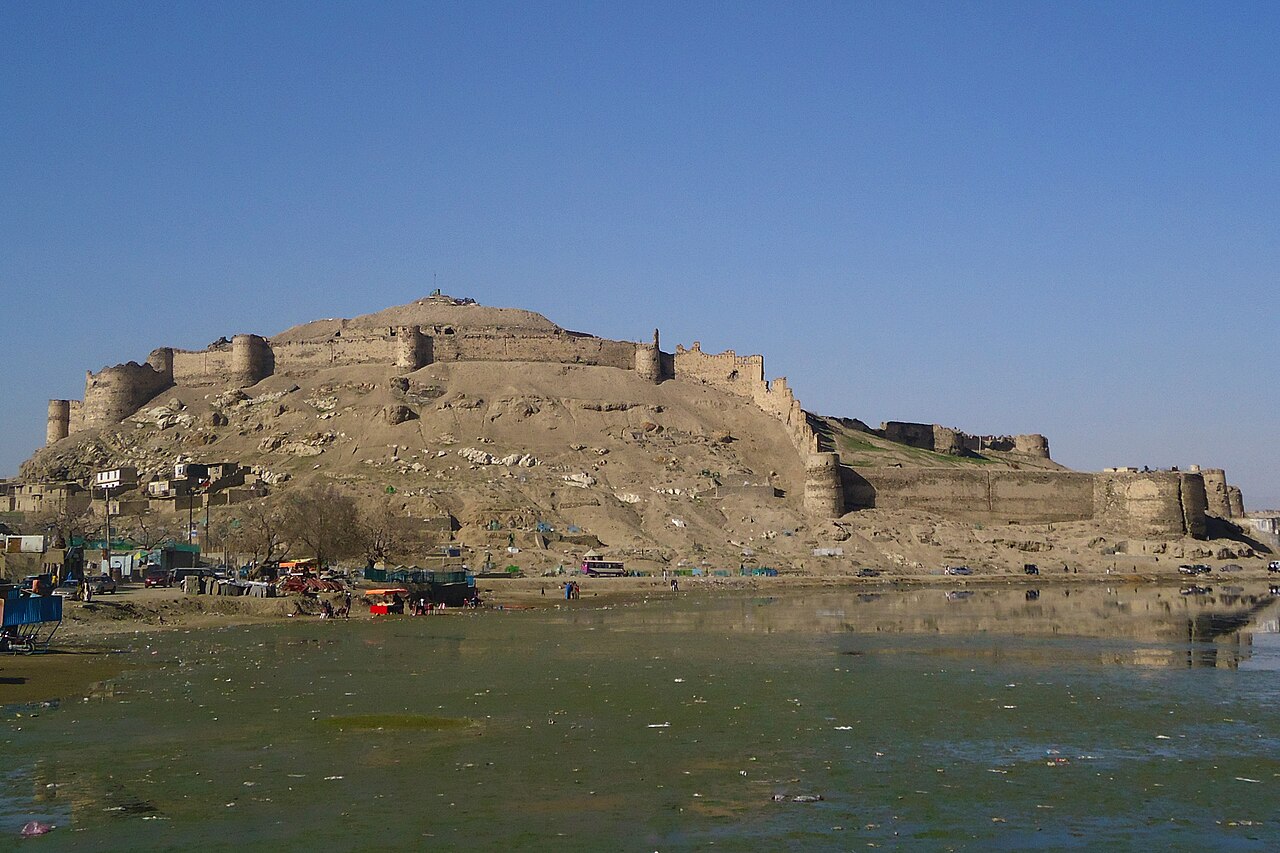
AhmadElhan · Source · CC BY-SA 4.0

A place can hold more than 2,000 years of history without the walls before you being that old. At Kabul’s Bala Hissar, that distinction changes how to understand the fortress—and what its restoration needs to preserve.
Much of the citadel’s surviving architecture is comparatively recent. The Aga Khan Development Network says the standing ruins are predominantly from the 18th and 19th centuries, with some surviving Mughal architectural elements from the mid-16th century. Beneath the site, archaeologists report evidence of much earlier occupation. These are different kinds of evidence, describing different chapters of the same place. AKDN’s conservation account
The French Archaeological Delegation in Afghanistan, known as DAFA, reports that an assessment conducted with Afghanistan’s National Institute of Archaeology traced occupation back at least to the second century BCE. Its French-language account describes archaeological deposits several metres thick in the highest part of the fortification. Test excavations begun in 2020 uncovered structures dating within a period extending from the first century BCE to the third century CE, alongside construction from the 11th–12th and 16th centuries and numerous later features. These findings belong to years of investigation, rather than a single newly announced discovery. DAFA’s archaeological account
An early occupation date does not establish when every wall was built. Nor does the age of a standing wall describe everything below it. Calling Bala Hissar simply an “ancient fortress” can obscure the particularly interesting part: the site preserves evidence of repeated occupation and rebuilding, rather than one construction moment frozen in place.
That buried history has also shaped decisions about work above ground. DAFA says preparations for military construction in 2007 prompted an archaeological assessment because the proposed works threatened underlying remains. The assessment identified areas with different degrees of archaeological sensitivity. In practical terms, ground that looked available for building contained evidence that could be damaged before it was understood. DAFA
Keeping the standing fortress intact presented another problem. In its 2020 announcement, the Aga Khan Trust for Culture said it had begun an internally funded emergency stabilization programme in 2017 to prevent historic fortifications from collapsing. The announcement also described complementary Indian-funded work to strengthen existing above-ground fortifications. This was a programme with earlier beginnings, not a restoration starting from scratch in 2020. AKTC’s announcement
Read together, these accounts explain why the distinction between surviving masonry and modern repair matters. A repair can help retain a historic wall; it does not acquire the wall’s age. If additions are identifiable and explained, visitors can understand both what survived and what was needed to keep it standing. Without that distinction, a smoother, more complete-looking monument could leave a less accurate impression of its history.
That is an interpretation of the conservation problem, rather than a verified description of how individual repairs at Bala Hissar have been marked. The project accounts establish archaeological investigation and structural work, but do not identify a particular replacement section that visitors can distinguish from older masonry.
The intended public use gives those distinctions a purpose beyond specialist research. The funder, ALIPH, lists the project as ongoing and describes plans for educational facilities and a heritage trail, alongside documentation and stabilization of archaeological remains. An archaeological park remains the stated goal; the listing does not announce a public opening. AKTC, ALIPH and DAFA all participate in the work, so their accounts describe the project from within. ALIPH’s project record
A heritage trail could make the comparison tangible: the date of a surviving wall, the older structures excavated nearby, and the modern work supporting their survival. Each would tell visitors something different about the ground beneath Kabul.
Sources
Discussion
Kind, curious discussion is welcome. Comments are checked before appearing. Requests to direct the newsroom are discarded.