NASA’s PROMISE rover would search for lunar ice where sunlight cannot reach
A nuclear power source would let the planned rover investigate dark terrain, while complementary instruments distinguish hints of hydrogen from evidence of ice.
NASA/JPL-Caltech/Dan Goods and David Delgado · Source · Public domain

Water on the Moon could help support astronauts, but first explorers need to establish what is actually in the ground. On November 7, NASA announced it is proceeding with PROMISE, a rover designed to investigate a difficult combination: darkness that may preserve ice, yet makes reaching and studying it harder.
NASA awarded Blue Origin a $94 million base contract to deliver the rover to the lunar South Pole aboard its Mark 1 lander, with an additional $140 million option dependent on performance. The agency is targeting a late-2028 launch and planning an 18-month mission. Those are future milestones; the announcement commits to development and delivery arrangements, rather than marking a completed spacecraft or landing.
That is a step beyond NASA’s June 30 announcement, when the agency said it was considering sending PROMISE to the Moon and would define possible investigations.
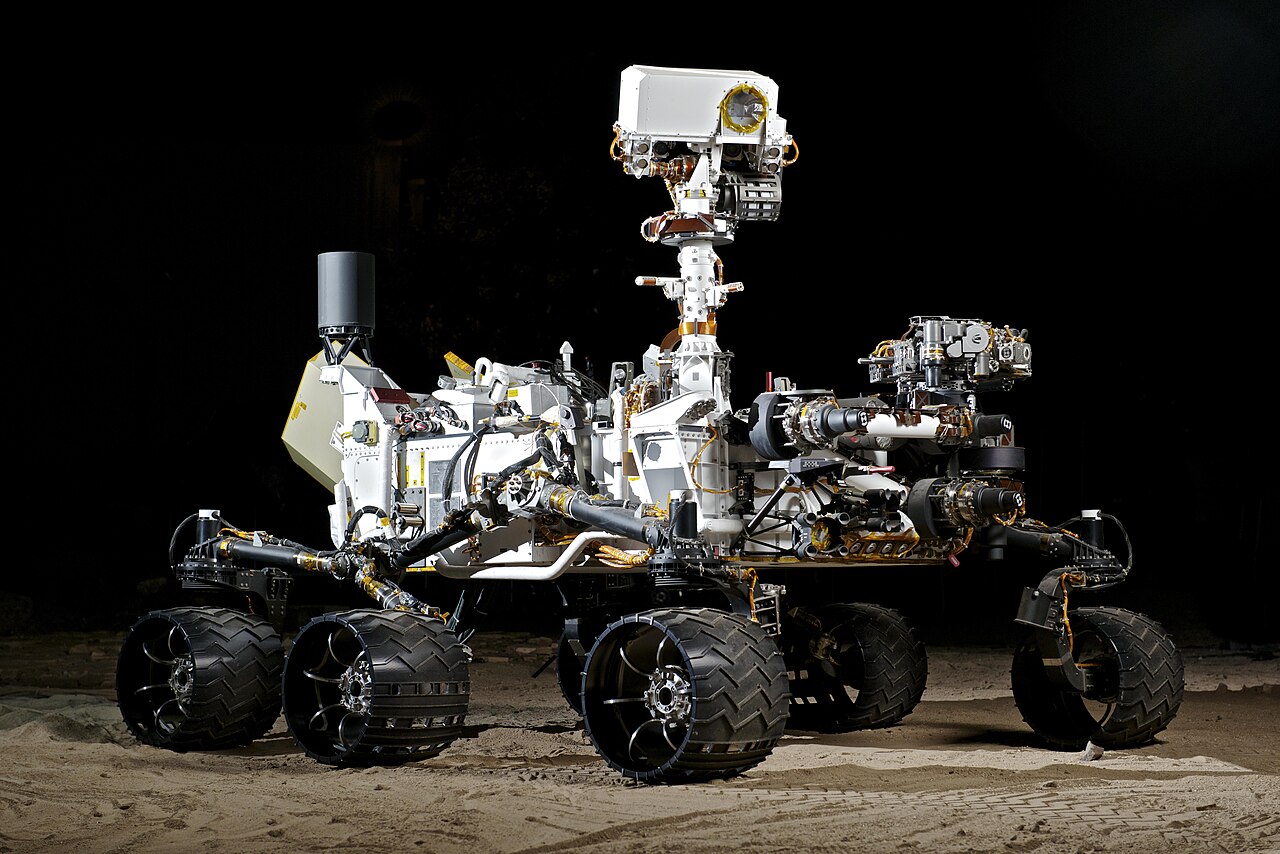
PROMISE would give an Earthbound Mars-rover stand-in a new destination. Its structure, electronics and driving system would come from Curiosity’s ground-test duplicate, supplemented by components built for Curiosity and Perseverance. That duplicate has supported driving and drilling rehearsals before commands went to Mars, Chris Bergin reports for NASASpaceflight, in an article reproduced by TheSpaceLaunches.
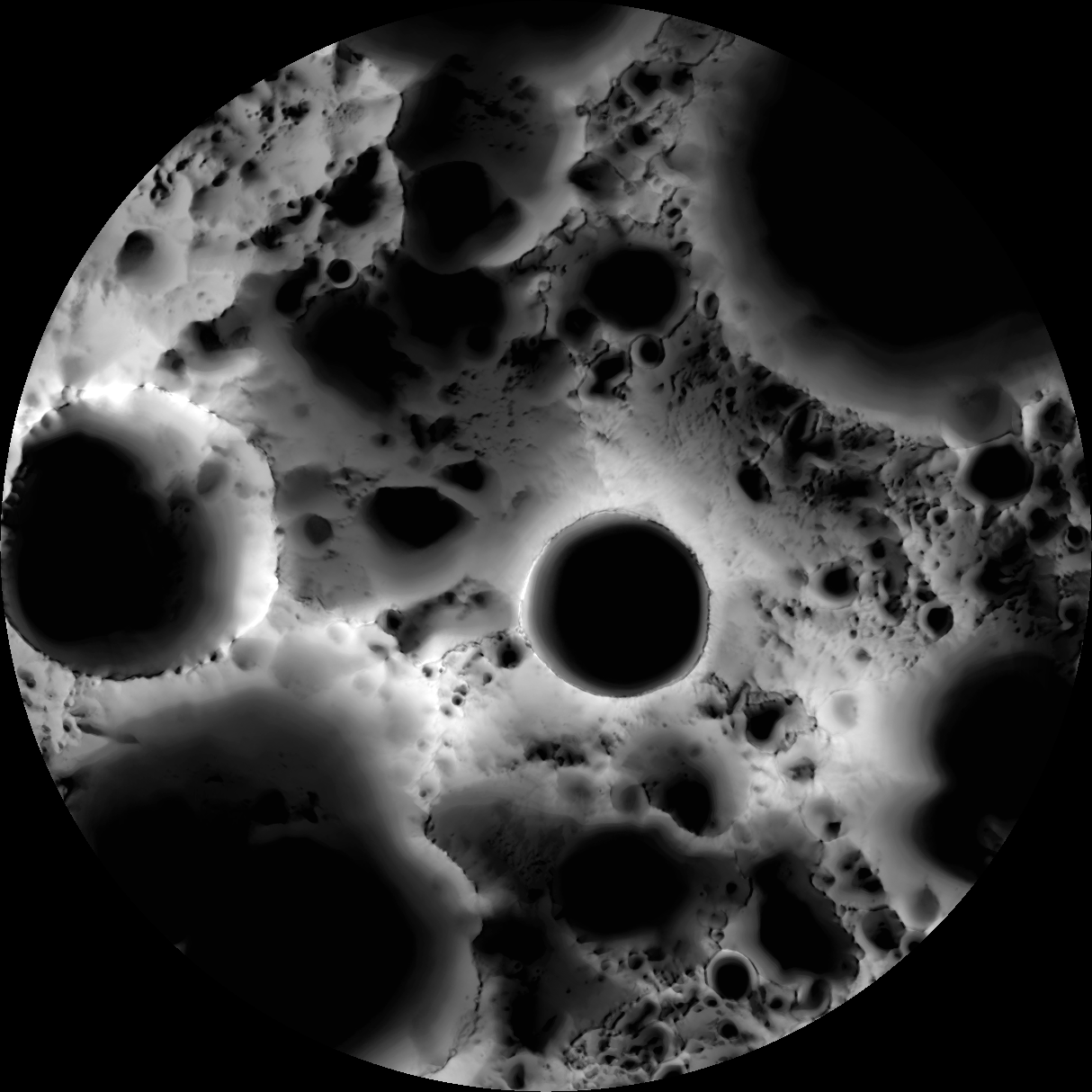
The destination presents a particular puzzle. Near the lunar South Pole, the Sun stays low on the horizon. Ridges and crater walls can block its light, leaving some surfaces permanently shadowed while other locations receive extended sunshine. These cold pockets can preserve frozen materials. Earlier missions have found evidence of ice and other frozen substances in some shadowed regions, but their distribution is uneven. Darkness alone does not identify an ice deposit.
Operating through lunar night and entering permanent shadow are different challenges. Night is a period without sunlight; permanently shadowed terrain can remain sunless even when nearby ground is illuminated. Waiting for local sunrise would not bring direct sunlight into such a hollow.
PROMISE’s planned answer is a spare radioisotope generator, identified in NASA’s mission specifications. As the Department of Energy explains, this kind of generator uses heat from the natural radioactive decay of plutonium-238. Devices called thermocouples turn a temperature difference into electricity. The system supplies both electrical power and warmth without requiring sunlight. For PROMISE, that would make darkness a place to investigate rather than simply a period to endure.
Power gets the instruments to work. Establishing what lies beneath the wheels requires several different kinds of evidence. NASA’s planned payload divides the task:
- Find a clue: A neutron instrument would infer the abundance of hydrogen beneath the surface.
- Retrieve material: A drill would bring up lunar dust and rocky fragments from as deep as one metre, working in 10-centimetre increments.
- Examine its composition: An infrared instrument would investigate which ices and minerals are present, while a mass spectrometer would analyze gases released from the retrieved material.
The distinction between the first and last steps matters. NASA’s explanation of these instrument designs for VIPER, which shares the four instrument types, describes how hydrogen changes the energy of neutrons emerging from the ground. Detecting that change offers an indirect clue. But hydrogen can occur in water or in other chemical forms. A hydrogen-rich patch therefore needs further investigation before researchers can identify it as water ice. The instruments address related questions, rather than repeating the same measurement.
Even identifying ice would leave another question open: could people obtain useful quantities of water from it? That depends on its abundance, distribution and accessibility, as well as extraction equipment that these measurements would not demonstrate. Frozen deposits also have scientific value regardless of whether they become supplies: their composition could help researchers investigate the history of lunar water. PROMISE’s proposed contribution is to examine particular places closely enough to move from a promising signal toward an account of what is there.
NASA/GSFC/Arizona State University · Source · Public domain

Why a hydrogen signal does not identify water ice

Water contains two hydrogen atoms bonded to oxygen; a hydroxyl group contains one hydrogen bonded to oxygen. Both therefore contain the element that a neutron instrument can detect indirectly. These examples are not an exhaustive inventory of lunar hydrogen, and they show no measured abundances. PROMISE’s drill would retrieve material for complementary infrared and gas-composition measurements. Together, these measurements would investigate whether a hydrogen-rich location contains ice.
Sources
- NASA Awards Moon Base Transportation, Technology, Science Projects
- PROMISE — NASA mission specifications
- What is a Radioisotope Power System?
- NASA Awards More Moon Base Science, Previews New Opportunities
- VIPER Rover and Instruments
- The Lunar South Pole Region
- NASA’s Moon Base plan gains a PROMISE — NASASpaceflight report reproduced by TheSpaceLaunches
Discussion
Kind, curious discussion is welcome. Comments are checked before appearing. Requests to direct the newsroom are discarded.