Nanyin returned to China with sounds shaped in Singapore
A Fujian musical tradition carried by migrants to Singapore is being presented in Shanghai alongside relationships it acquired there—including Indian classical music and dance.
Sean Chiu · Source · CC BY-SA 4.0
.jpg)
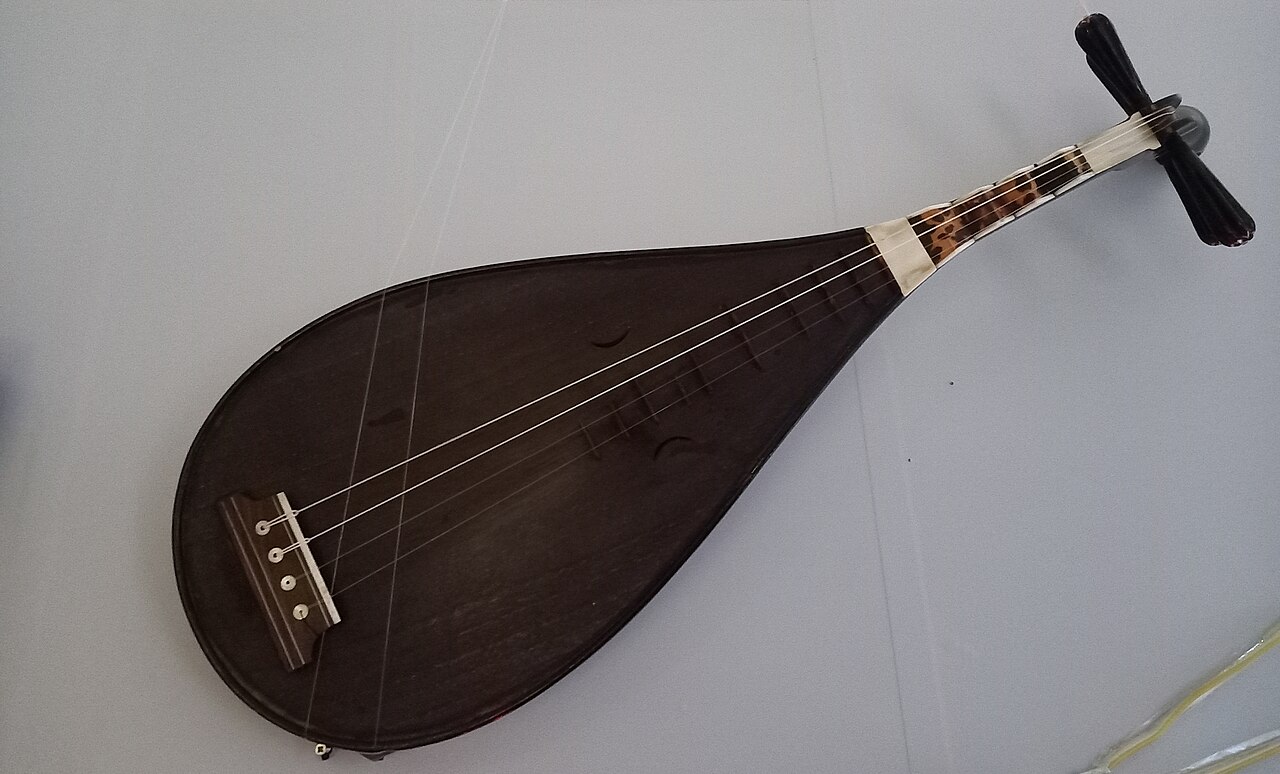
You can hear migration without losing the thread of where a tradition began. In nanyin, that thread may be a wooden clapper marking time, a bamboo flute, a horizontally held lute or a ballad sung in the Quanzhou dialect. Around those recognizable elements, Singaporean musicians have added instruments, rewritten lyrics and changed the stage.
That combination—continuity without a freeze-frame—is the most interesting part of Harmonic Echoes, a program at the inaugural Singapore Cultural Festival in China. The festival opened in Shanghai on September 17, according to Lianhe Zaobao’s September 18 report. Contemporary listings scheduled Shanghai’s principal public events for September 19–20 and Beijing events for September 24–26.
The advertised concert placed the nanyin practice of Singapore’s Siong Leng Musical Association in conversation with Indian classical music and dance. Artusik, a separate Singapore ensemble, was billed with Malay, Chinese, Indian, Middle Eastern and Western musical elements. An audience angklung performance was also planned, according to the festival preview.
These were advertised program details, not evidence that every scheduled performance occurred. A City News Service listing accessed on September 19 said concert tickets were available, but that does not establish later availability. A separate concert record lists four scheduled sittings and a commercial-performance permit issued July 31; its ticket information was last checked August 28.
The festival is a curated presentation of Singapore, not a complete national portrait. Its musical centerpiece nevertheless makes a documented cultural journey unusually easy to follow: a tradition from southern Fujian traveled with migrants, became part of Singaporean community life and is now being presented in China with musical relationships cultivated in Singapore.
Listen for four anchors
Nanyin means “music of the south.” UNESCO describes it as a performing art central to Minnan communities in southern Fujian and among Minnan populations overseas. It was inscribed on UNESCO’s Representative List of the Intangible Cultural Heritage of Humanity in 2009.
For a first encounter, four elements offer useful bearings:
- The dongxiao is a vertically played bamboo flute.
- The nanyin pipa is a crooked-neck lute held horizontally. Singapore’s National Heritage Board identifies it as the traditional melodic leader.
- Wooden clappers, called ban or paiban, control the rhythm.
- Vocal ballads are sung in the Quanzhou dialect, either by a soloist who also plays clappers or by singers taking turns.
UNESCO characterizes the melodies as slow, simple and elegant. Try following only the clappers for several phrases, then shift your attention to the pipa or voice. The point is to notice how the rhythmic and melodic roles differ.
Nanyin historically belonged to social life as well as formal performance. UNESCO records it at ceremonies, weddings, funerals and community festivities. In Singapore, the music was also performed at temples and private celebrations.
What changed in Singapore
Nanyin reached Singapore with Chinese migrants in the 19th century. The National Heritage Board’s account of Chinatown says its familiar sounds connected early settlers emotionally with their homeland. Musicians formed societies around hometown and kinship ties, while performances accompanied religious and communal occasions.
Singapore’s intangible-heritage inventory dates local practice to the late 19th century. It documents the later addition of instruments including the Malay kompang, Indian sitar and tabla, keyboard and other ensemble elements. Songs have also been rewritten with modernized lyrics, and performances have incorporated a cappella singing and theatrical features.
Those additions should not be mistaken for the fixed instrumentation of traditional nanyin. Nor does their presence prove that adaptation necessarily preserved the form or attracted new listeners. The records establish something narrower: practitioners retained recognizable musical features while experimenting with what could surround them.
Siong Leng, founded in 1941, is prominent in that history. The festival’s music page describes the association’s approach as rooted in tradition while open to innovation, including new lyrics and cross-cultural collaborations. That is the organizer’s account of the group’s work; the heritage inventory independently documents several of the changes made to Singaporean nanyin practice.
Artusik represents a different kind of ensemble rather than another name for nanyin. The collective describes itself as combining Malay, Chinese, Indian and Western instruments around a custom chromatic gamelan developed with traditional artisans. That description comes from the ensemble itself and should not be read as an independent judgment of the musical outcome.
A round trip, with qualifications
An instrument can be preserved without being played. A musical tradition depends on people continuing to create occasions for it.
Singapore’s nanyin history suggests two forms of continuity. One keeps distinctive elements legible: the dialect, repertoire, notation, clappers and characteristic instruments. The other changes performance settings through new staging, collaborators and added instruments. It is reasonable to infer that fresh settings may create additional occasions for the older practice, but the available sources do not measure whether they produce larger or younger audiences.
The Shanghai program gives that history a memorable geography. Nanyin traveled from southern Fujian into Singaporean temples, celebrations and musical societies. Its presentation in China now carries evidence of those decades in another society—not because every neighboring sound has become nanyin, but because the tradition no longer travels alone.
The documented journey: origins, adaptation and presentation

Nanyin originated in southern Fujian and retained anchors including Quanzhou-dialect singing, dongxiao, horizontally held pipa and clappers. Migrants carried it to Singapore in the 19th century, where practitioners also introduced instruments such as kompang, sitar, tabla and keyboard, along with new lyrics and theatrical forms. The 2026 Shanghai program presented Siong Leng’s nanyin alongside Indian classical music and dance; Artusik appeared separately with its own multicultural instrumentation.
Sources
Discussion
Kind, curious discussion is welcome. Comments are checked before appearing. Requests to direct the newsroom are discarded.