China extends U.S. trade pauses, while shipment approvals still matter
November 9 measures keep selected tariffs and export restrictions suspended, but import costs and permission to ship remain separate questions.
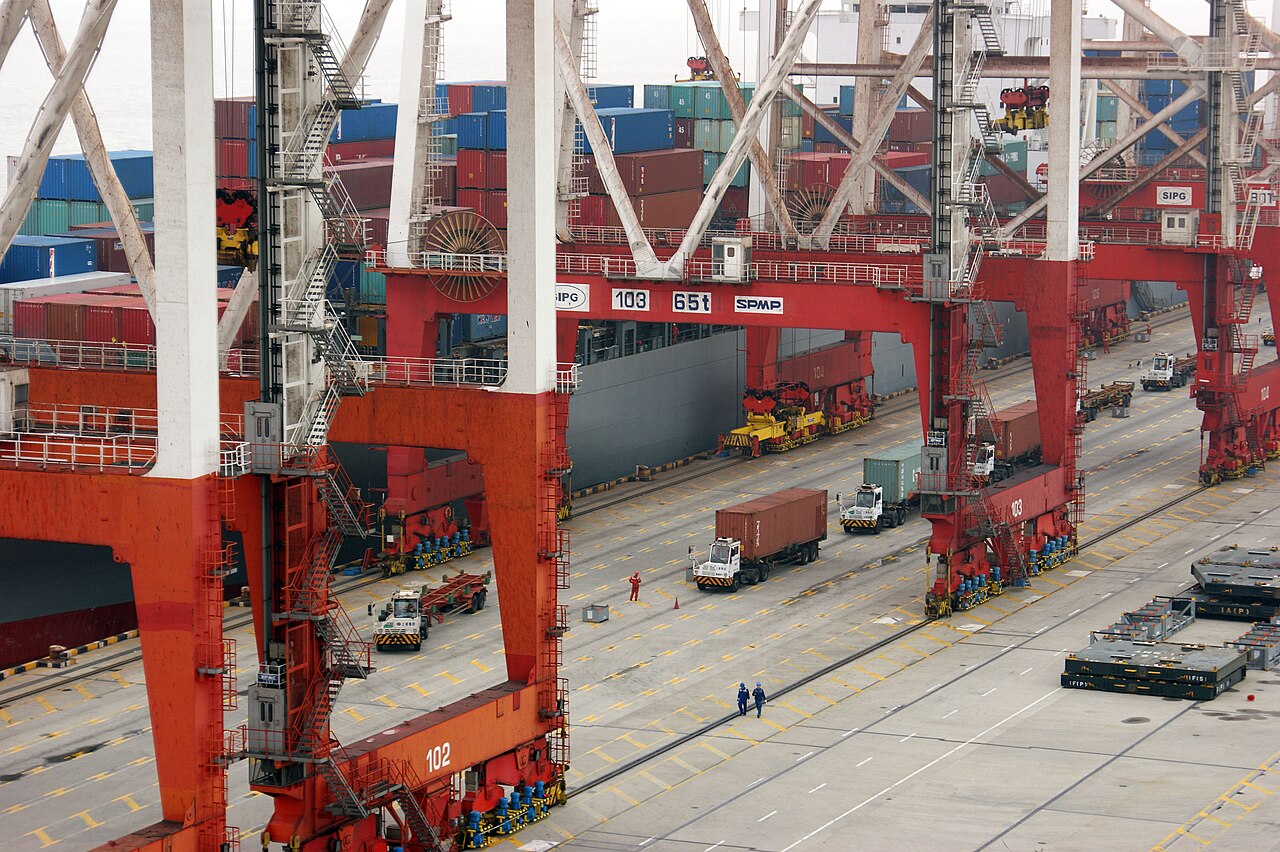
Bruno Corpet (Quoique) · Source · CC BY-SA 3.0

For a factory buying supplies across borders, a trade pause can prevent an extra charge without removing the paperwork needed to obtain a component. China’s November 9 announcements illustrate that distinction: selected tariff increases remain suspended, while some export-licensing requirements continue.
China will keep an additional 24% tariff on U.S.-origin imports suspended for another two months, beginning at 1:01 p.m. Beijing time on November 10. The specified additional 10% tariff stays in place. Separately, six export-control measures remain suspended from November 11 through January 10, 2027. These are extensions of existing pauses, rather than fresh reductions from the charges and restrictions currently applying. (Tariff explanation, export-control announcement)
The timing matters. China’s Commerce Ministry had already described an agreement to extend the arrangements in its September 28 account of negotiations held September 20–23. The November notices put specific Chinese measures into effect; they are not evidence that negotiators reached an entirely new agreement on November 9. (September explanation)
The practical comparison is straightforward:
| Barrier | What it determines | What the extension does |
|---|---|---|
| Tariff | A charge on an import | Keeps the specified additional 24% suspended; retains the additional 10% |
| Export control | Whether a covered shipment needs permission or faces restrictions | Keeps six specified measures suspended; does not erase every licensing requirement |
The retained 10% is not necessarily an item’s total tariff. It is the additional rate identified in this particular measure. As an illustration, on a customs value of $100,000, that 10% alone amounts to $10,000; the suspended 24% would amount to $24,000. Those figures exclude other applicable duties and charges. Continuing the suspension avoids that extra $24,000 compared with reinstating it—it does not deliver a new $24,000 saving against the existing pause. (Tariff explanation)
For export controls, the scope is in the numbered measures. Hong Kong’s Trade and Industry Department traces the six suspended measures to restrictions concerning superhard materials, rare-earth equipment and inputs, certain medium and heavy rare-earth items, lithium batteries and artificial-graphite anode materials, overseas rare-earth items, and rare-earth technologies. That is a defined package, not a blanket removal of controls on those industries. (Official English circular)
A concrete example appears in a separate April 4, 2025 announcement. It requires exporters to seek licences for specified rare-earth items, including samarium-cobalt permanent-magnet materials and certain magnets containing terbium or dysprosium. That instrument—Announcement No. 18—is absent from the six measures covered by the November extension. The extension therefore does not itself remove those April licensing requirements. (April export-control announcement)
For a buyer seeking a covered magnet, the relevant question remains whether the exporter has permission for the shipment. A pause affecting another set of restrictions cannot answer it. This distinction does not establish that any particular factory is short of magnets or losing production.
Other November 9 announcements make the continued role of approvals explicit. Measures concerning 16 U.S. entities remain suspended for two months from November 10, but exporters seeking to supply them with dual-use goods—items with civilian and military applications—must still apply for permission. A separate extension concerning 11 entities on China’s unreliable-entity list likewise leaves proposed transactions subject to application and review. (16-entity explanation, 11-entity explanation)
The U.S. government’s stated concerns also remain distinct from measured outcomes. In its account of a November 6 call, the U.S. Trade Representative’s office said Jamieson Greer pressed China to implement commitments concerning agricultural purchases, rare earths and other critical minerals. That establishes Washington’s position, not an independently measured delivery shortfall. The readout supplies no corresponding U.S. tariff schedule, and China’s notices do not determine American import charges. (USTR readout)
For customers, the distinction reaches beyond the border. Avoiding an additional tariff can prevent one business cost from rising; obtaining an export licence can allow a needed input to move. Neither document establishes that deliveries have resumed or retail prices will fall. Those outcomes require evidence from shipments, businesses and prices themselves.
Sources
- China’s tariff commission explains the November 9 adjustment
- MOFCOM/GACC Announcement No. 58 of 2026
- Hong Kong Trade and Industry Department circular tracing the six suspended measures
- MOFCOM/GACC Announcement No. 18 of 2025
- MOFCOM’s November 9 explanation concerning 16 U.S. entities
- MOFCOM’s November 9 explanation concerning 11 unreliable-list entities
- USTR’s November 6 readout of the Greer–Bessent–He call
- MOFCOM’s September 28 explanation of the eighth trade consultations
Discussion
Kind, curious discussion is welcome. Comments are checked before appearing. Requests to direct the newsroom are discarded.