How seabird droppings help coral grow
A nutrient trail from offshore meals to nesting islands helps explain why corals grew faster beside abundant seabirds.
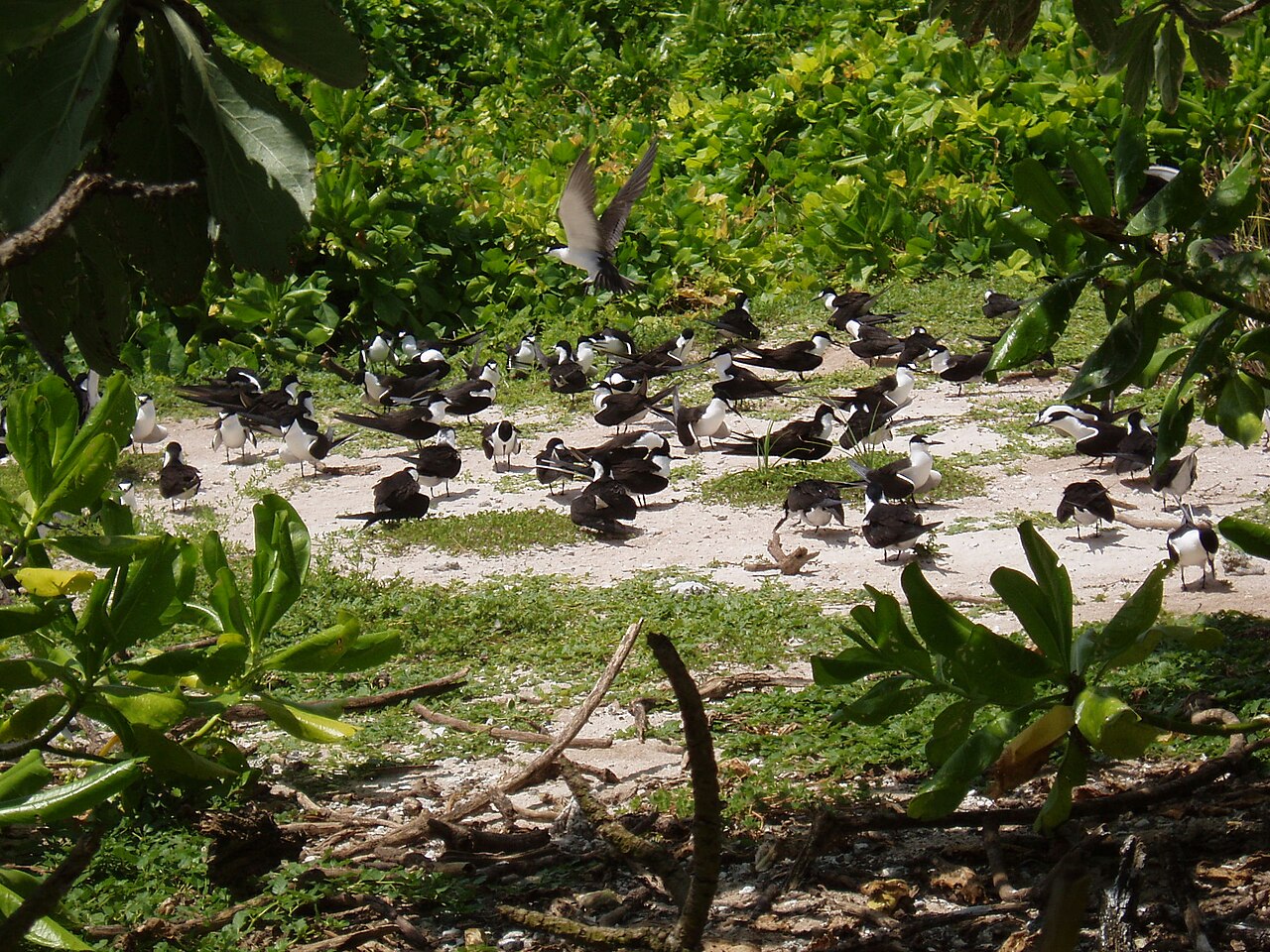

A coral reef recovering from a heatwave can get help from birds feeding far offshore. In the Indian Ocean’s Chagos Archipelago, coral colonies transplanted beside islands rich in seabirds grew roughly twice as fast as those beside islands with few birds. The connection ran through nutrients carried ashore and deposited in droppings. Scientists traced their arrival inside the corals’ microscopic algal partners. The research was published in December 2023.
That underwater connection illustrates a much broader role for birds. In an October 19, 2026 announcement, Cornell described a review in Current Biology drawing on nearly 400 scientific papers about birds moving nutrients between environments. Flight connects feeding grounds with nesting and roosting sites, where repeated deposits can concentrate resources that support other organisms.
For seabirds, the journey begins with food gathered at sea. Their droppings, called guano, bring nitrogen and phosphorus to nesting islands. Nutrients can then reach surrounding waters. A separate 2017 study around two remote New Caledonian islets described possible routes including rain carrying material through island ground and birds depositing waste directly over water. Its measurements found evidence of seabird nitrogen entering corals and their resident algae, with the influence concentrated near shore.
Following that nitrogen requires looking beyond the amount present. Nitrogen comes in two stable, nonradioactive forms, nitrogen-14 and nitrogen-15, which differ in mass. Scientists measure their relative abundance using stable-isotope analysis. Bird diets and processes affecting deposited guano can leave it relatively enriched in nitrogen-15. That gives researchers a natural clue to its contribution elsewhere: the New Caledonian corals closest to seabird colonies carried a stronger seabird-associated nitrogen signature. The study established nutrient uptake, while leaving its effects on coral growth unresolved.
The Chagos researchers went further. During experiments conducted from 2018 to 2021, they moved branching Acropora corals between reefs beside seabird-rich, rat-free islands and reefs beside rat-infested islands with few birds. Over three years, nitrogen signatures in the corals’ algal partners shifted to match their destination. Corals moved toward seabirds acquired the stronger signature; those moved away lost it. The location of the colony mattered more than where it had started.
The team also photographed colonies from above, using a scale to measure how much area they gained. This supplied the missing biological result: colonies transplanted to seabird-rich destinations expanded about twice as fast. Naturally growing colonies that had not been transplanted also grew faster beside seabird-rich islands.
The different measurements answer different questions:
| Evidence | What it establishes | Its limit |
|---|---|---|
| Nitrogen isotope ratios | Seabird-derived nutrients entered the corals’ algal partners | Uptake alone does not demonstrate growth |
| Transplants in both directions | Nutrient signatures changed with destination | Moving corals also changes their wider environment |
| Repeated overhead photographs | Existing colonies expanded faster | This does not measure the establishment of young corals |
| Reef surveys combined with modeling | Coral cover changed, with estimated recovery between surveys | Recovery was not continuously observed |
The distinction between growing colonies and new arrivals matters. When researchers counted young corals three years after bleaching, they detected no difference between seabird-rich and rat-infested islands. The evidence supported faster growth of existing colonies, without a detected boost in the establishment of young ones—a process ecologists call recruitment. Both contribute to rebuilding a reef, but they are separate processes.
Reef recovery required another step in the evidence. Surveys in 2015, 2018 and 2021 documented coral cover before bleaching and during the years afterward. The researchers combined those observations with growth and recruitment measurements to model the intervening recovery. Their reconstruction suggested that Acropora cover recovered sooner beside seabird-rich islands. Overall hard-coral cover, however, had returned to its prebleaching level around both groups of islands by 2021. Several processes evidently contributed to recovery in this system.
The findings give island restoration a consequence below the waterline: bringing back nesting seabirds could restore a nutrient supply to nearby corals. That possibility depends on the nutrient source and local conditions; agricultural runoff and sewage can hinder coral health and recovery. And seabird-rich reefs still suffered coral losses during the heatwave. In these studied reefs, the demonstrated advantage was help with subsequent growth, while severe warming remained capable of doing damage. The authors frame seabird restoration as a potential contribution to reef resilience.
Sources
Discussion
Kind, curious discussion is welcome. Comments are checked before appearing. Requests to direct the newsroom are discarded.