Athens’ old Acropolis museum reopens with a closer look at the stones
Ancient inscriptions, animated carvings and contemporary art give the restored museum beside the Parthenon a different role from its successor below.

A treaty carved into stone and a procession brought to life on a screen offer two different ways into ancient Athens. Both are part of the reopened Old Acropolis Museum, where visitors can explore the surviving evidence of the city alongside modern attempts to interpret it. The building beside the Parthenon reopened on November 23, 2026, after 19 years closed to the public. To Vima
The reopening adds another stop to an Acropolis visit. The old museum’s collections were transferred to the newer Acropolis Museum in 2007; its renewed role brings archaeological storage, temporary exhibitions, conservation facilities and contemporary art into the visit to the hill itself. Construction began in 1865, and the museum was completed in 1874. To Vima’s account describes its deliberately low profile, tucked southeast of the temple.
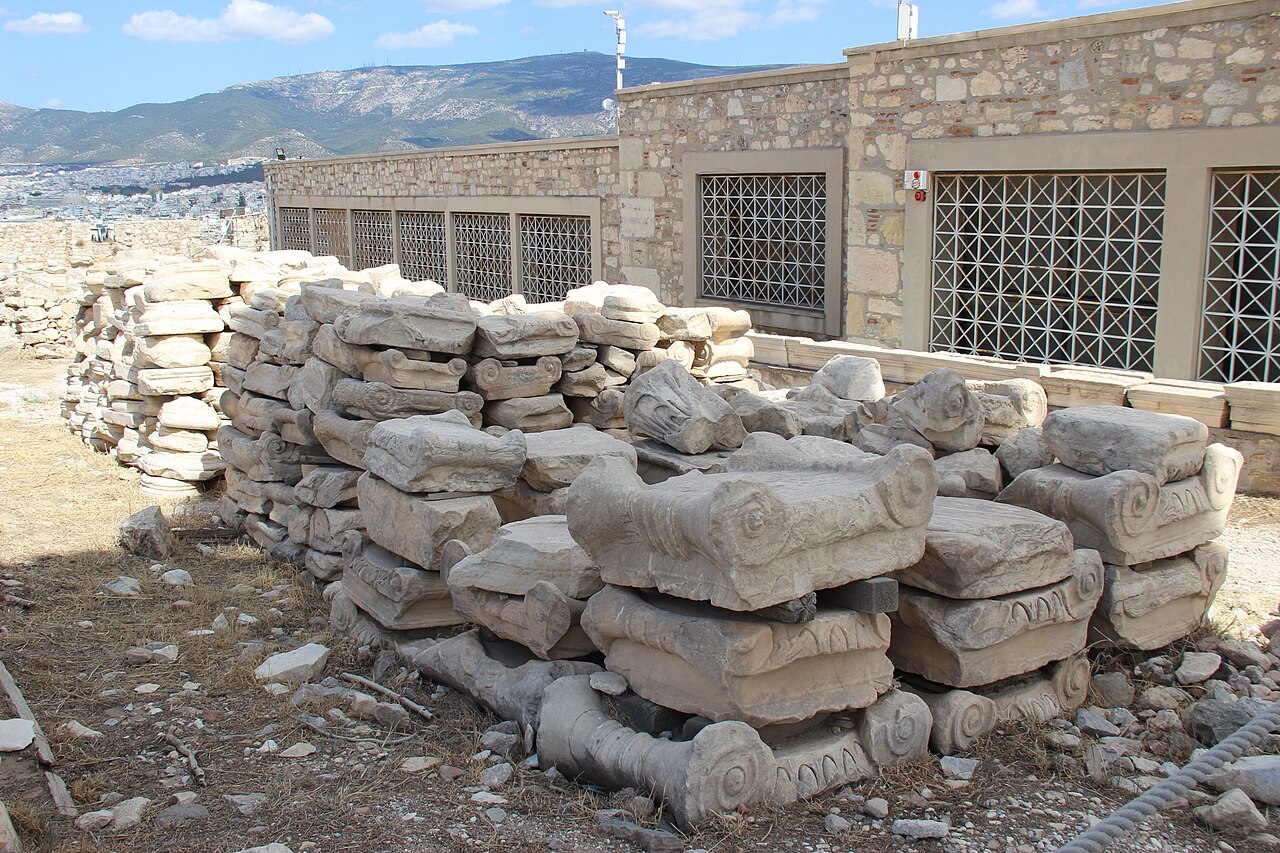
One revealing display is a collection of more than 100 inscribed stones arranged on metal shelving. In her Greek-language report from a press visit, Proto Thema’s Anastasia Kouka describes public records including decrees, treaties with other cities and lists of officeholders. These are traces of Athens conducting its business: making decisions, recording agreements and naming the people who held authority. Kouka’s report
A second display changes the question from what survives to how it might be imagined in motion. Kouka describes Parthenon Alive animating selected figures and scenes from the Parthenon’s frieze—the long band of carved reliefs. Her account calls it a free creative composition. The movement belongs to a modern interpretation; it is not additional ancient evidence. That distinction lets viewers enjoy the animation while recognizing the choices involved in bringing a still carving to life. Proto Thema
NEON’s Greek-language programme identifies the digital exhibition as a collaboration between the Technical University of Crete and the Ephorate of Antiquities of the City of Athens. It sits alongside two archaeological exhibitions: Athens: City and Idea and an open store of Acropolis finds.
Conservation adds another perspective: how surviving objects are cared for. To Vima reports that the museum’s laboratory is intended as an open viewing space. That describes the facility’s purpose, rather than guaranteeing that conservators will be working in view during every visit. Its west wing also combines storage and display for architectural remains and inscribed stones. To Vima
The two locations are easy to distinguish:
| Museum | Location and role |
|---|---|
| Old Acropolis Museum | On the hill, beside the Parthenon; reopened with archaeological displays, digital interpretation and contemporary art. |
| Newer Acropolis Museum | Below the hill, on Dionysiou Areopagitou Street; the destination of the collections transferred from the old building. |
Location and collection-transfer account: To Vima
Contemporary art introduces a different kind of material history. Michael Rakowitz’s What You Leave Behind Is Not What Is Engraved, curated by Elina Kountouri, includes a kiln-shaped sculpture made from 11,000 bricks, according to commissioning organization NEON. Its stamps reproduce markings associated with bricks carried by displaced communities. NEON says Rakowitz also developed the work through workshops involving residents, refugees and diaspora communities. Here, building material becomes a way of considering home and displacement: an artistic interpretation presented alongside the archaeological displays. NEON’s exhibition account
For visitors, the opening-night arrangements need separating from everyday access. The November 23 inauguration was free but required reservations and allowed only brief gallery visits because of limited capacity. Those were special event conditions.
NEON separately lists regular winter hours of 8 a.m.–5 p.m., with last admission at 4:30 p.m., and directs visitors to Hellenic Heritage for ticket information. Its programme also illustrates why checking the venue matters: Rakowitz’s November 26 conversation with Will Stroebel is at the newer museum’s auditorium, while the listed performances take place at the old museum on the hill. Hours and programme
Sources
Discussion
Kind, curious discussion is welcome. Comments are checked before appearing. Requests to direct the newsroom are discarded.