How an archaeon fixes nitrogen at about 92°C
A deep-sea microbe’s unusually heat-stable nitrogenase gives researchers a near-atomic view of the metal clusters that help break nitrogen’s stubborn triple bond.
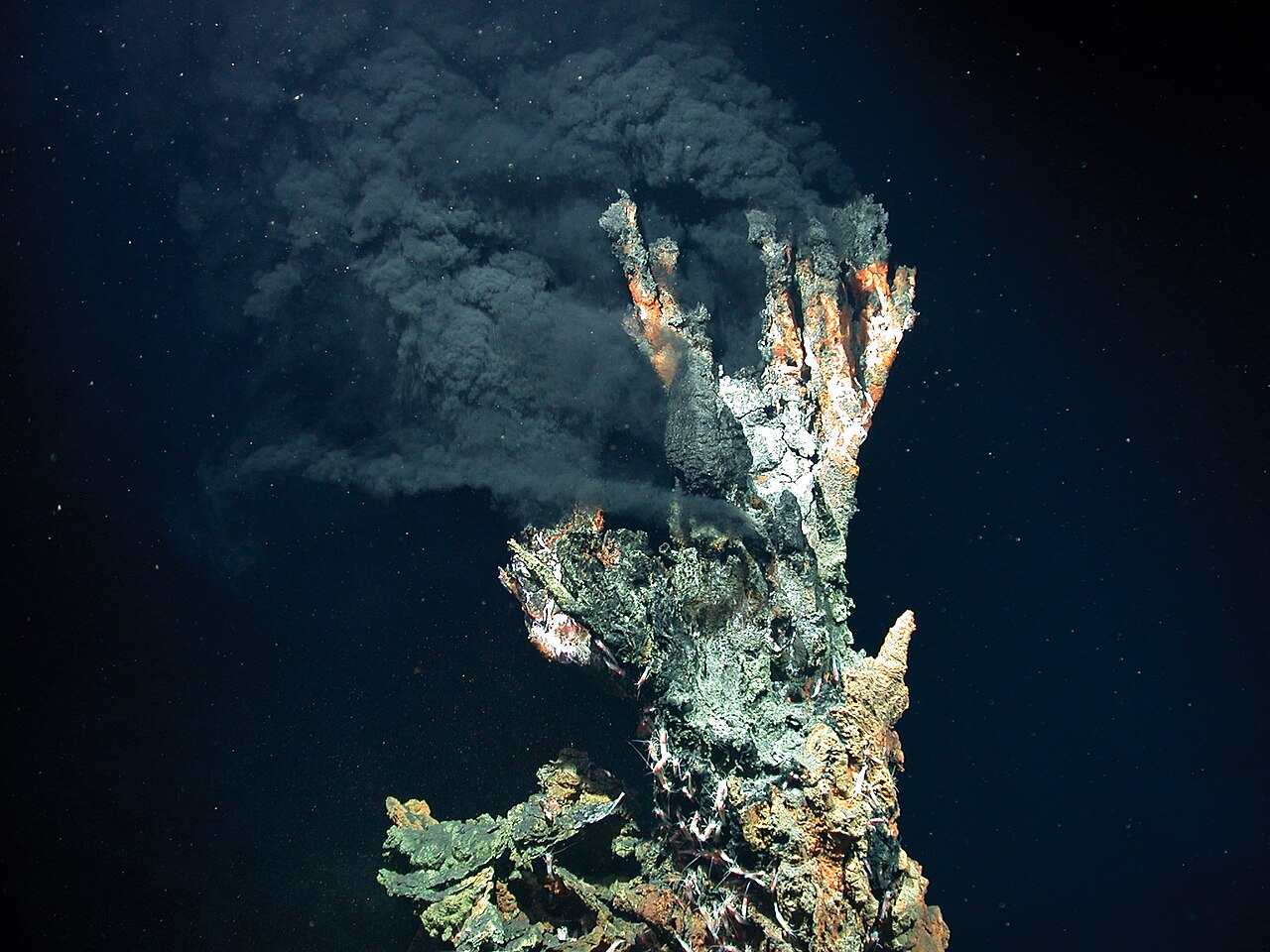
MARUM − Zentrum für Marine Umweltwissenschaften, Universität Bremen · Source · CC BY 4.0

Atmospheric nitrogen surrounds us, yet its tightly bound pairs of atoms are difficult for living things to use. A deep-sea archaeon performs that demanding conversion while growing at about 92°C—and its unusually durable enzyme gives scientists a revealing object with which to study how the chemistry works.
The organism is Methanocaldococcus infernus, an archaeon, meaning it belongs to a branch of life distinct from bacteria and other familiar microorganisms. Researchers report that it grows by fixing nitrogen at 92°C. Nitrogen fixation converts atmospheric N₂ into biologically useful compounds such as ammonia (Nature Communications).
Its address suits the name. The studied strain was isolated in 1995 from a hydrothermal vent 3,000 metres deep in the Mid-Atlantic Ridge’s Logatchev field. The official culture collection describes it as anaerobic—able to grow without oxygen—and lists cultivation at 85°C (DSMZ).
That depth matters when talking about temperature: 92°C should not be casually described as “near boiling” at the vent, because pressure changes water’s boiling point. The researchers instead report that the isolated enzyme’s measured melting temperature was close to water’s boiling point at atmospheric pressure. For a protein, melting means losing the folded structure required for its activity, not becoming a puddle.
The enzyme inside the puzzle
The molecular machine responsible is nitrogenase. It transfers electrons through metal-and-sulfur clusters toward a catalytic centre that can tackle the strong triple bond joining the two atoms in N₂.
The researchers investigated the archaeon’s natively isolated nitrogenase and report an extrapolated specific activity greater than that of counterparts from organisms adapted to moderate temperatures. “Extrapolated” is essential: it identifies a calculated comparison, not simply a set of directly observed high-temperature measurements. The firmer observations are the organism’s nitrogen-fixing growth at about 92°C, the enzyme’s measured thermal stability and its experimentally determined structures (Nature Communications).
Those structures help turn “heat-stable” from a label into a question that can be examined: which parts of the protein might keep its working components arranged at such a high temperature?
A near-atomic inspection
Researchers answered that question with X-ray crystallography. X-rays scattered by a crystal provide measurements from which scientists construct a three-dimensional model of the molecules inside it.
The public Protein Data Bank records an unmutated structure of this nitrogenase refined to 1.37 ångströms, a near-atomic level of detail. Its biological assembly is an A₂B₂ complex: four protein chains made from two copies each of two different chains (RCSB PDB 9SPZ).
Within that protein framework sit several metal clusters. The active-site cluster contains iron, sulfur, molybdenum and an interstitial carbon atom. Another cluster, called the P-cluster, helps transfer electrons toward that catalytic centre.
The researchers describe this as the most simplified nitrogenase currently known and identify particular structural features as likely contributors to its heat stability. The structure itself is an observation; the role assigned to those features is a mechanistic interpretation. A static model can show where atoms were resolved, but it cannot by itself display every movement made during the reaction.
A reader can inspect the underlying model: open the 9SPZ structure page, select its three-dimensional viewer and compare the large protein assembly with the much smaller metal clusters listed under “Small Molecules.” The contrast reveals the basic engineering problem. A substantial protein framework must hold a tiny, chemically unusual centre in the right surroundings.
A rare configuration caught in the crystal
The P-cluster was resolved in a rare state that the researchers interpret as awaiting electron delivery. At the active site, they report a mixture of resting and “turnover” configurations—states associated, respectively, with an enzyme before reaction and with reaction in progress (Nature Communications).
These are structural assignments, not frames from a molecular film. The authors argue that similar configurations reported in the three known nitrogenase families—molybdenum, vanadium and iron-only forms—point to a shared mechanistic principle. That is their interpretation of the comparison, rather than a complete reconstruction of every chemical step.
The enzyme also combines structural traits found across those three families. The researchers say this supports an evolutionary hypothesis in which ancestral nitrogenases resembled the archaeal enzyme more closely than familiar bacterial versions. Present-day resemblance can strengthen such a proposal, but it does not directly reveal the ancestral molecule.
The immediate payoff is a clearer view of an extraordinary natural system: a relatively simple, exceptionally heat-stable nitrogenase whose metal clusters can be examined at near-atomic resolution. The study suggests possible value for future work on more sustainable ammonia production, but it does not demonstrate an industrial process. For now, the compelling result is biological and chemical: at about 92°C, a deep-sea archaeon can preserve the molecular machinery needed to confront one of nature’s strongest bonds.
Sources
Sources
Discussion
Kind, curious discussion is welcome. Comments are checked before appearing. Requests to direct the newsroom are discarded.