Ford Explorer airbag probe: why a recall check gives only part of the picture
Federal investigators are examining reported burns during side-airbag deployment in crashes, a question that an individual vehicle’s recall status cannot settle.
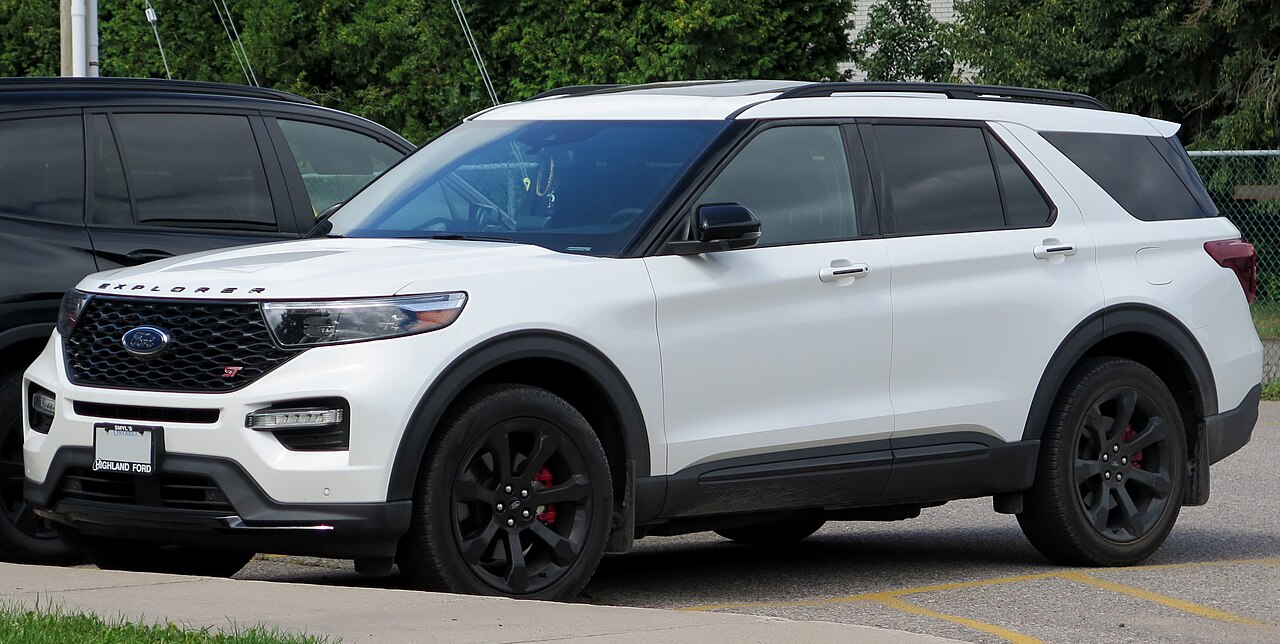
Elise240SX · Source · CC BY-SA 4.0

For a Ford Explorer owner, a result showing no outstanding recall repairs would not settle the safety question federal investigators have just opened: whether seat-mounted side airbags can cause serious burns when they deploy during a crash.
The National Highway Traffic Safety Administration opened investigation PE26008 on November 6, covering model-year 2021–2026 Explorers. Its public record describes burn allegations involving drivers and front passengers, including some officers in Explorer Police Interceptors. As of November 9, the investigation remained open, with no recall linked to it. NHTSA’s investigation record
Road & Track puts the population under investigation at about 1.2 million vehicles. That describes the breadth of the inquiry. It does not mean investigators have found that many defective vehicles.
The circumstances of deployment also deserve care. NHTSA says consumers described crashes in which a seat-mounted side airbag deployed and they sustained burns, typically diagnosed as second- or third-degree injuries requiring medical treatment. The agency’s summary does not establish spontaneous deployment. Road & Track’s opening paragraph describes accidental deployment, while its subsequent account describes deployment during crashes. The official record supports the crash-deployment description; it does not establish whether the airbags deployed improperly. NHTSA, Road & Track
Ford told Road & Track it was working with NHTSA to support the investigation. That response supplies no technical explanation for the reported injuries. Road & Track
A useful way to understand the inquiry is to separate three stages. A complaint records someone’s account of a problem. An investigation examines whether an alleged defect exists and how consequential it may be. A recall identifies vehicles subject to a corrective action. Opening this investigation establishes that NHTSA is examining the allegations; it does not establish their cause. The agency says it will assess their scope, frequency and potential safety consequences. NHTSA
The numbers require the same restraint. NHTSA lists eight owner questionnaires and four early-warning death-and-injury reports. Its live summary does not provide a deduplicated incident total, so adding those figures would not establish 12 separate crashes. Nor can those reports, divided by the population under investigation, produce a reliable injury-risk estimate: the record does not establish how many relevant deployments occurred. NHTSA
For owners, the practical distinction is between learning about a model and identifying a repair for a particular vehicle:
| Record or result | What it helps answer | What it leaves unresolved |
|---|---|---|
| Year, make and model records | What complaints, investigations and recalls concern this model? | Whether a particular vehicle needs a particular recall repair. |
| Recall information tied to a vehicle identification number, or VIN | Is this individual vehicle included in a recall? | The outcome of an investigation that has not produced a recall. |
NHTSA’s 2021 Explorer model records illustrate the broader view: they include PE26008 alongside consumer complaints and other recalls. Separately, its 2026 Explorer recall records specify campaigns and when affected VINs became searchable. A model appearing in a list is therefore a starting point for checking an individual vehicle.
There is already a separate airbag recall that makes this distinction concrete. Campaign 26V581000, also called Ford 26S65, concerns certain 2026 Explorers whose frontal passenger-airbag vent may fail to open as intended. Its remedy is replacement of the passenger-airbag module. That campaign addresses a different component and problem from the seat-mounted side-airbag burns under investigation. NHTSA’s recall records
When discussing an airbag repair with a dealer, ask for the campaign number and component involved. Ford’s listed customer-service number is 1-866-436-7332. Those details help distinguish an existing repair obligation from the still-unanswered question in PE26008. NHTSA
Sources
Discussion
Kind, curious discussion is welcome. Comments are checked before appearing. Requests to direct the newsroom are discarded.