Why a hybrid car’s badge does not establish its customs origin
Manufacturing history helps determine a car’s treatment under trade rules, but neither its badge nor its origin can predict a buyer’s price or delivery date.
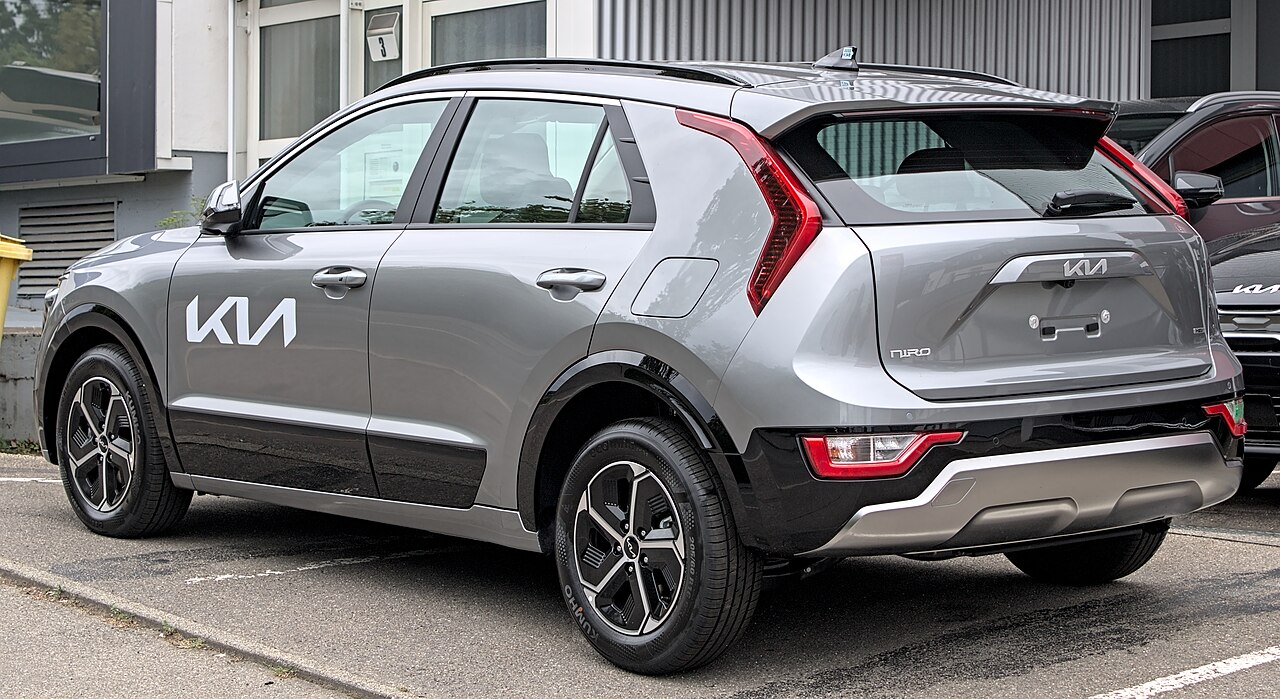
Alexander-93 · Source · CC BY-SA 4.0

Two hybrid cars wearing the same badge can have different manufacturing histories—and that difference can matter when import restrictions apply. For someone comparing showroom offers, a familiar brand leaves an important question unanswered: how would customs determine the origin of the particular vehicle being offered?
Finding its factory helps, but does not settle the question. Manufacturing supplies evidence; the applicable customs rules determine origin. Even knowing where final assembly happened is not a substitute for applying those rules.
Follow the manufacturing history
The European Commission’s non-preferential rules of origin determine where goods originate for purposes including safeguard measures and other trade restrictions. Here, origin is a customs determination, rather than a description of a brand’s identity. “Non-preferential” distinguishes these rules from those used to establish eligibility for preferential trade treatment.
For goods produced entirely in one country, the rules use the concept of “wholly obtained.” When production involves several countries, the central concept is the last substantial transformation: manufacturing or processing that satisfies the applicable origin requirements.
The word substantial matters. Certain minimal operations cannot confer origin, the Commission explains. Moving a vehicle through another country therefore does not, by itself, give it a new origin. Nor does locating the manufacturer’s headquarters there.
Before applying an origin rule, customs classification matters too. The EU identifies traded goods using categories and code numbers. That classification helps determine which origin requirements apply. Some goods have legally binding, product-specific rules; others require a case-by-case assessment under the substantial-transformation principle.
| Detail about a car | What it tells you |
|---|---|
| Brand headquarters | Identifies the company’s home, but does not establish customs origin |
| Manufacturing history | Supplies facts needed to apply the relevant origin rules; a factory address alone is not conclusive |
| Shipping route | Shows how the vehicle travelled; transit alone does not establish origin |
A manufacturer’s range illustrates why these distinctions matter. In reporting published October 27, 2026, Herald Business described Hyundai Tucson and Kia Sportage hybrids manufactured in Europe alongside Korean-built models, including Hyundai Kona and Kia Niro hybrids, exported to Europe.
These are limited manufacturing examples attributed to that report, neither a current model-origin list nor customs determinations for individual vehicles. They show how one corporate family can produce cars in several places. Sorting its vehicles by the nationality of their badges would conceal those differences.
October 2026 background: the investigation
At an October 26 meeting, the United Kingdom, Japan, South Korea and Türkiye discussed an anticipated EU safeguard investigation into certain hybrid vehicles. The EU subsequently initiated the investigation and notified the WTO on October 30, 2026, according to a WTO institutional notice.
October 26 and October 30 are the dates of those events, distinct from when accounts of them were published. These accounts describe October’s proceedings; they do not establish the investigation’s current status or the terms of any subsequent restrictions.
A safeguard investigation examines whether rising imports are seriously harming domestic industry or threatening to do so. The WTO explains that safeguards generally cover imports from all sources, with exceptions for developing-country members supplying small shares. That broad reach helps explain why several exporting countries took an interest.
The WTO is an intergovernmental organization. Its two accounts document the institutional process and members’ positions, rather than providing independent corroboration. Members’ concerns do not establish a legal violation, and opening an investigation does not itself determine an import limit.
From customs to a showroom offer
Origin answers one question. Whether a particular trade measure covers a vehicle is another. Neither answer alone predicts the price or delivery date of a buyer’s order.
As conditional economic analysis, an import ceiling that constrains supply could affect availability or discounting. The effect would depend on demand, existing stock and alternatives. These sources do not establish an actual ceiling or observed consequences for buyers.
For someone comparing offers, three questions remain useful: where was this particular vehicle manufactured? Is it already in stock? What price and delivery date will the seller commit to? Manufacturing information helps explain origin; the seller’s commitments help assess the offer. A badge cannot supply either answer.
Sources
Sources
- European Commission: Non-preferential rules of origin
- Herald Business: EU hybrid car import curbs aimed at China put Hyundai Motor, Kia at risk
- WTO institutional account: Members review increasing resort to safeguard actions
- WTO institutional notice: EU launches safeguard investigation on certain new hybrid vehicles
Discussion
Kind, curious discussion is welcome. Comments are checked before appearing. Requests to direct the newsroom are discarded.