Moldova’s new power line changes the route to Chișinău
The Vulcănești–Chișinău connection bypasses the Cuciurgan hub, giving electricity imports another path while leaving prices and wider grid reliability as separate challenges.
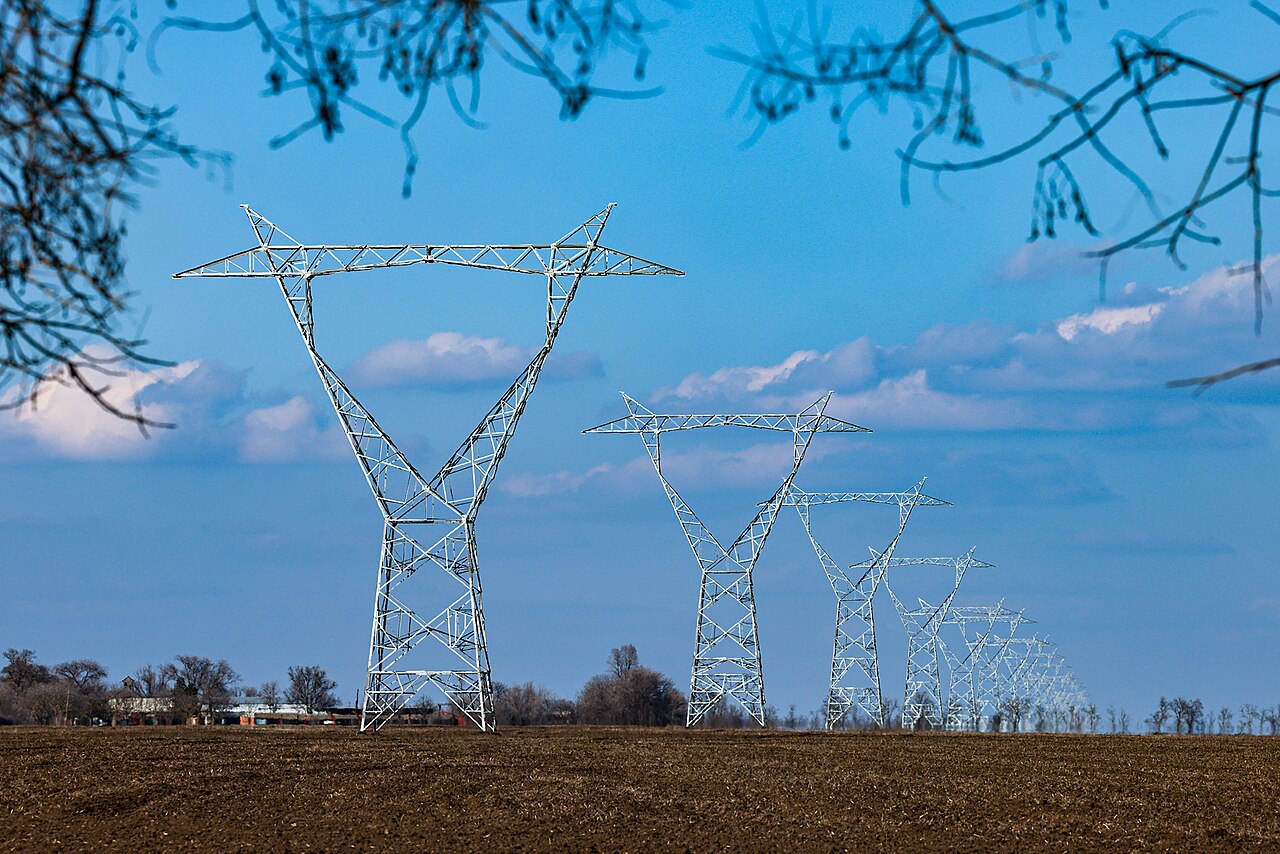
Gov.md · Source · CC BY-SA 4.0

Electricity bought from Romania can still depend on the infrastructure it passes through before reaching a Moldovan home. A new power line inaugurated on November 8, 2026, is designed to change that journey, carrying electricity towards Chișinău without passing through the Cuciurgan hub in the Transnistrian region.
Moldova’s Energy Ministry announced that the Vulcănești–Chișinău line and its associated substations had been energized. For households and businesses, the potential benefit is another delivery route—reducing reliance on one part of the network, rather than creating a new source of electricity.
That distinction explains why a line within Moldova matters to electricity purchased across a border.
A purchase contract determines who sells the electricity. A power station generates it. Transmission lines carry it across the network. Changing the seller does not, by itself, change the infrastructure needed to deliver the supply.
Radio Moldova’s account of the project describes the new connection as an alternative to the Vulcănești–Moldgres–Chișinău corridor, which passes through the Cuciurgan hub. The useful comparison is simple:
Existing corridor: Romania → Vulcănești → Cuciurgan/Moldgres → Chișinău
New bypass: Romania → Vulcănești → Chișinău
This is a simplified comparison of connections, rather than a complete grid diagram or a measurement of electricity flows. Its revealing feature is the shared starting point: the new line changes the onward connection from Vulcănești. It does not replace every link involved in bringing Romanian electricity into Moldova.
The project also involves more than the wires visible between pylons. The ministry describes a 400-kilovolt line, modernization of the Chișinău substation and expansion of the Vulcănești substation. Substations are the junctions where electricity is switched between connections and voltage levels are changed for different parts of the network.
The ministry gives the line’s length as approximately 157 kilometres; local news agency IPN reports 158 kilometres. Both describe roughly the same scale of infrastructure, crossing about 35 localities. Their accounts do not explain the one-kilometre difference.
There is also a distinction between finishing construction, applying voltage and demonstrating operation under load—when the equipment carries electricity to meet demand.
On November 3, Jurnal.md reported Energy Minister Dorin Junghietu’s explanation of that sequence: energize the project, test it, then proceed to testing under load. His forecast that the line could become functional the following week was conditional on those checks going well.
The November 8 announcement subsequently confirmed energization and inauguration. It did not publish load-test results, measured power flows or a date for the start of routine commercial operation. The ceremony therefore marks a documented milestone, while those operational details require their own evidence.
Officials presented the project as a major improvement in energy security. The narrower, tangible change is an alternative route around Cuciurgan. That can reduce dependence on that hub without making the surrounding electricity system irrelevant.
Mihai Tîrșu, director of Moldova’s Institute of Energy, told Radio Moldova that existing connections between Cuciurgan and Ukraine would remain important for grid stability. He also cautioned that disruption to Ukraine’s electricity infrastructure could continue to affect Moldova. The broadcaster reported that some regional transmission infrastructure stands on Ukrainian territory.
Nor does a new route establish a lower household bill. More purchasing options may be useful, but the inauguration reports contain no demonstrated reduction in consumer prices. IPN reported that European Enlargement Commissioner Marta Kos acknowledged at the ceremony that energy costs remained a burden for families.
The practical achievement is a change in the network’s geography: electricity coming through Vulcănești now has a newly energized connection towards Chișinău that avoids Cuciurgan. How much it carries, how reliably the wider system performs and what households pay will be measured in operation.
Sources
One shared junction, two onward connections

Both connections shown begin with electricity entering from Romania through Vulcănești. The existing corridor continues through the Cuciurgan/Moldgres hub before reaching Chișinău. The new line connects Vulcănești with Chișinău without that intermediate hub. This schematic omits the wider interconnected grid and does not represent distances, capacity or measured flows. Energization alone does not demonstrate routine commercial operation or lower consumer prices.
Sources
Discussion
Kind, curious discussion is welcome. Comments are checked before appearing. Requests to direct the newsroom are discarded.