Can a federal prisoner seek damages for denied medical care?
Nielsen v. Watanabe asks whether a federal prisoner can seek damages over allegedly denied care—a separate question from whether an official violated his rights.
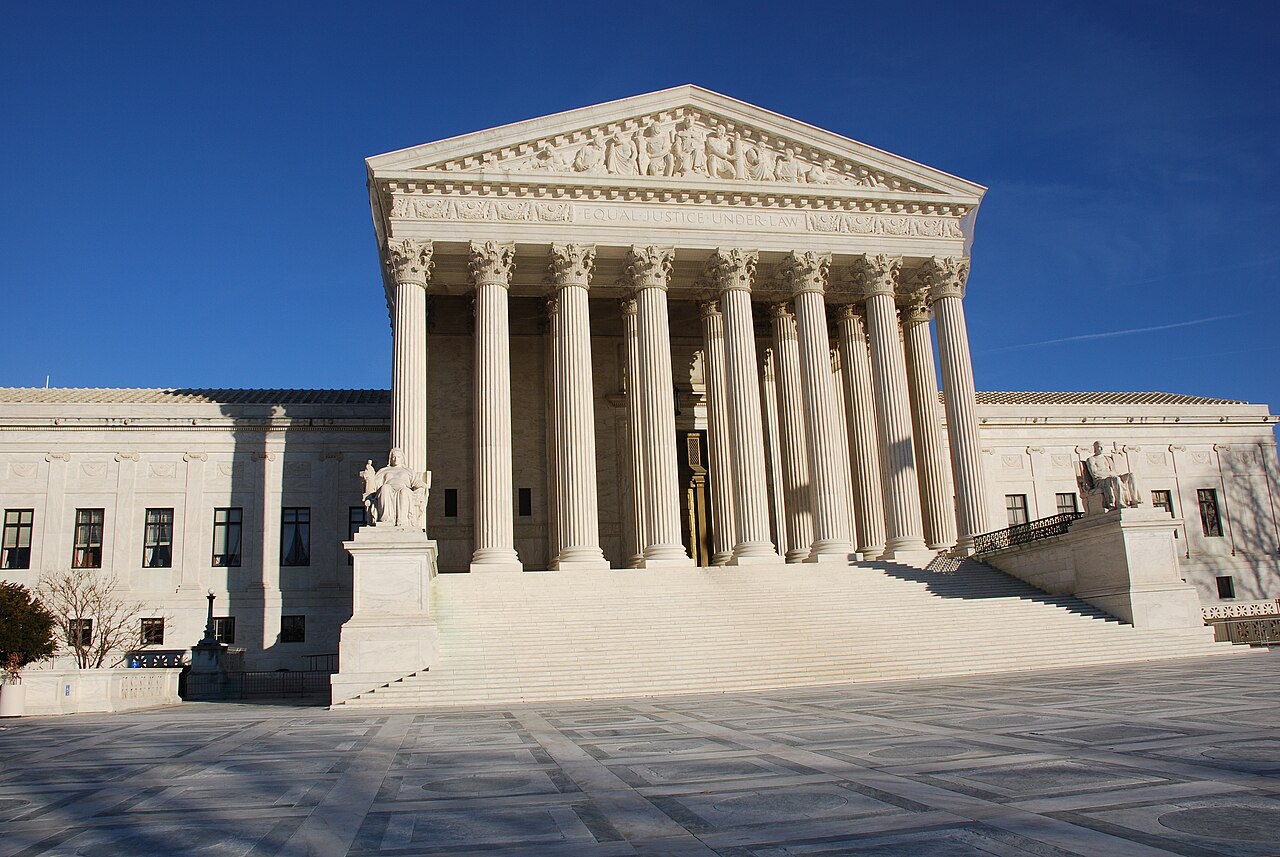
Jarek Tuszyński / CC-BY-SA-3.0 & GDFL · Source · CC BY-SA 3.0

A constitutional protection against denied medical care does not automatically give a federal prisoner a way to recover money for the harm. That gap is at the center of Nielsen v. Watanabe, scheduled for argument at the Supreme Court on Monday, November 9. The case concerns whether a lawsuit can proceed against an individual prison medical worker, before any final determination that he violated the Constitution. The official court docket confirms the scheduled hearing.
The events behind it began more than five years ago. Kekai Watanabe alleges that, after an assault at Honolulu’s federal detention center in July 2021, he reported severe back pain and was refused hospital treatment. A fractured tailbone was diagnosed roughly seven months later. His brief says repeated requests brought intermittent pain treatment rather than adequate care for the injury. These are allegations being considered at the dismissal stage, not findings after a trial. Watanabe’s September 23 brief presents his account.
Francis Nielsen, the defendant, identifies himself in his brief as a paramedic, although the complaint calls him a nurse. His lawyers say medical records show that he consulted a physician, gave an anti-inflammatory injection and prescribed pain medication. That account underscores why the legal route to a lawsuit and the eventual assessment of care are different questions. Nielsen’s August 14 brief sets out his position.
Three questions help separate what the case could establish:
| Question | What it means here |
|---|---|
| What does the Constitution protect? | The Eighth Amendment’s ban on cruel and unusual punishment prohibits deliberate indifference to a prisoner’s serious medical needs. |
| Is this damages lawsuit available? | Can Watanabe use an existing court-recognized remedy to seek money from Nielsen personally? This is the threshold dispute before the justices. |
| Has a violation been proved? | Watanabe would still need evidence establishing unconstitutional conduct and Nielsen’s responsibility. Inadequate care alone does not automatically establish deliberate indifference. |
The lower-court decisions collected on the docket identify another separate issue: Nielsen asserted qualified immunity, a defense against personal liability. The district court did not decide it because it dismissed the damages claim on the threshold ground. Permission to proceed would therefore establish neither liability nor an entitlement to compensation.
The existing medical-care precedent is Carlson v. Green, decided in 1980. It allowed a deceased federal prisoner’s estate to seek damages over alleged mistreatment of a fatal asthma attack. Carlson belongs to the small family of constitutional damages actions associated with Bivens, the Supreme Court’s 1971 decision allowing a suit against federal narcotics agents. The federal government’s August 21 brief describes that history.
Nielsen argues that Watanabe’s injuries differed meaningfully in severity and urgency from the fatal emergency in Carlson. His lawyers also point to administrative grievance procedures and other avenues for relief, arguing that Congress should decide whether additional damages remedies are warranted. The legal test concerns meaningful differences from precedent; it does not simply demand identical facts. Those arguments appear in Nielsen’s brief.
Watanabe answers that both cases concern the same essential wrong: a federal prison official’s deliberate indifference to serious medical needs. The Ninth Circuit agreed that his claim could proceed, rejecting the idea that a prisoner must die or suffer a life-threatening injury to fit Carlson. His lawyers also argue that Congress has legislated in reliance on these suits continuing to exist. The appeals decision is an official judicial record; Watanabe’s brief advances his legal position.
The proposed outcomes extend beyond that comparison. Nielsen asks the court to overrule Bivens. The federal government proposes a different approach: hold that subsequent legal developments foreclose further Carlson claims, while leaving reconsideration of Bivens itself for a case closer to its original circumstances. These are positions advanced in Nielsen’s brief and the government’s amicus brief, a submission offering its view as a nonparty. Neither is a ruling by the court.
There is also a practical difference between ordering care and compensating someone for past harm. Watanabe’s brief says he left federal custody in 2024 and argues that an order requiring prison treatment can no longer help him. In NPR’s independent reporting, attorney Gregory Cui emphasizes compensation: money can help someone pay for medical care or rebuild a life. NPR separately reports supporters’ argument that damages can deter misconduct. Former Justice Department lawyer Mary Hampton Mason argues that institutional failures and Bivens’s limited effectiveness call for another approach, including overruling the precedent.
NPR places the dispute alongside concerns about immigration enforcement. Its reach there will depend on what the justices actually decide: a ruling about prison medical claims would not, by itself, resolve every lawsuit against an immigration officer.
Sources
Discussion
Kind, curious discussion is welcome. Comments are checked before appearing. Requests to direct the newsroom are discarded.