Supreme Court lifts Big Bend construction injunction while lawsuit continues
The stay removes a legal obstacle, but park infrastructure, steel walls elsewhere and a separately documented contract suspension remain different parts of the story.
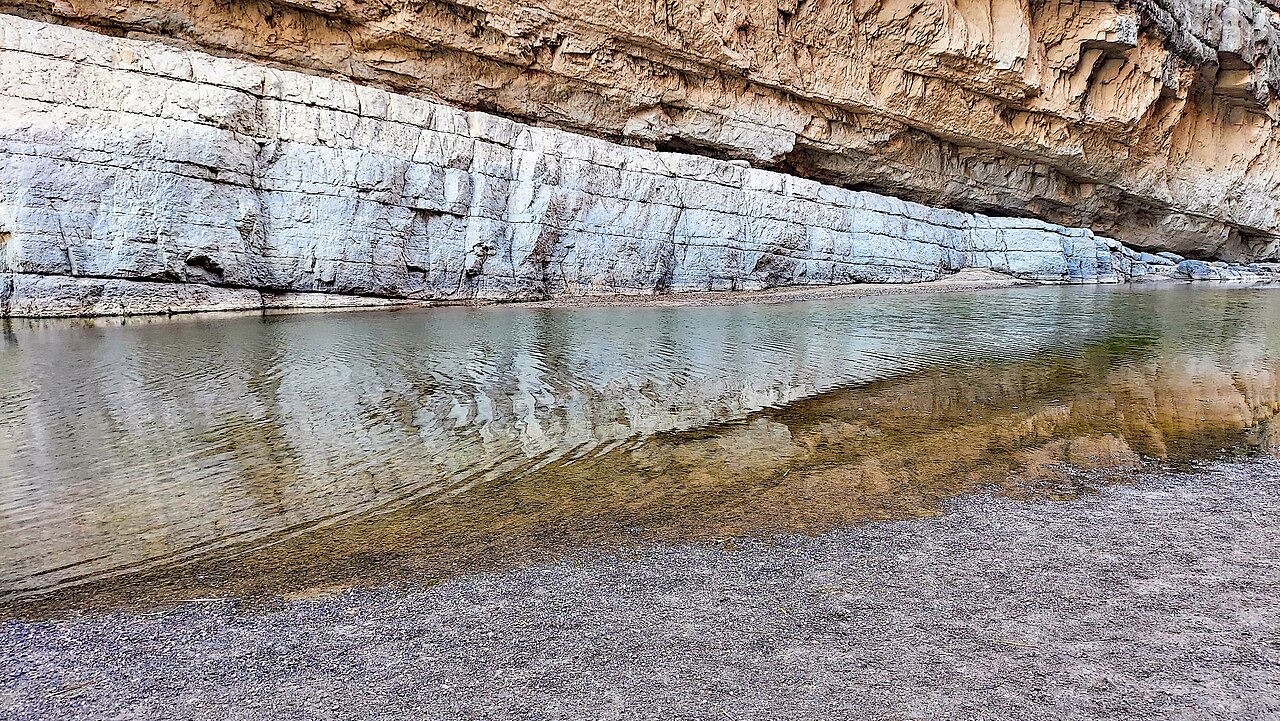

For landowners, river guides and visitors to West Texas’s Big Bend, the Supreme Court’s November 9 decision removes a legal obstacle to border construction affecting private property and historic landscapes. The justices suspended an injunction blocking the work while the government seeks further review. The decision does not finally resolve the lawsuit or establish that crews have restarted. Supreme Court docket
What could be built depends on the location. Big Bend National Park and the wider Border Patrol sector share a name, but their plans differ: roads and surveillance infrastructure inside the park, with tall steel barriers proposed elsewhere in the region.
The Court’s reasoning turns on a narrower question than whether those projects are desirable: whether the district court had authority to hear the particular challenge supporting its injunction.
Section 102 of the 1996 immigration law, as amended, gives the Homeland Security secretary broad power to waive legal requirements to accelerate border-barrier and road construction. Congress also restricted challenges to those waiver decisions: claims must allege a constitutional violation. Appellate review is available only through a request to the Supreme Court, bypassing the usual federal appeals court. The provision appears under “Improvement of Barriers at Border” in the statutory notes reproduced by Cornell.
The challengers—Friends of the Ruidosa Church, the Center for Biological Diversity and a local river guide—invoke the “major questions” doctrine. That doctrine requires clear congressional authorization for certain exceptionally consequential agency decisions. They argue that the secretary assumed sweeping powers Congress did not clearly grant, violating the constitutional division of authority between Congress and the executive. That is their legal argument, rather than an established finding. Challengers’ filing on the Court docket
The Court itself considered the government “exceedingly likely” to prevail on its jurisdictional argument. Its reasoning was that the major-questions claim concerns the scope of statutory authority, rather than a constitutional violation, and therefore falls outside the law’s restricted judicial-review provision. In everyday terms, a claim that an official exceeded powers granted by legislation does not automatically become a constitutional claim. Court decision and case record
The stay depends on the government filing a timely petition asking the Court to review the case. If the justices deny review, it ends automatically. If they accept review, it lasts until their judgment is formally sent down. Justice Ketanji Brown Jackson would have denied the stay. This is interim relief, rather than a final resolution of the lawsuit. November 9 order
For people concerned about particular stretches of river or parkland, the construction descriptions matter alongside that legal ruling:
| Location | What the plans describe |
|---|---|
| Big Bend National Park | CBP says it plans no 30-foot steel wall, describing cameras, sensors and limited low-profile vehicle barriers instead. Marfa Public Radio’s November 5 reporting also describes proposed patrol-road work, utility trenches and surveillance towers. |
| Big Bend Ranch State Park and Black Gap Wildlife Management Area | CBP likewise excludes 30-foot steel walls, describing technology and strategically placed low-profile vehicle barriers. |
| Other parts of the wider Big Bend sector | CBP lists three primary-wall projects. Marfa’s October 21 reporting, republished by Texas Standard, describes 30-foot steel walls planned on private property. |
These are CBP’s stated plans and dated accounts from October 21 and November 5, rather than confirmation of final alignments or present construction activity.
CBP lists the three primary-wall projects at 47.3, 62.2 and 56.3 miles: 47.3 + 62.2 + 56.3 = 165.8 miles. That calculation measures listed project lengths—not completed construction, park-road mileage or work resumed after the ruling. The agency cautions that designs and alignments can change. CBP project table
The archaeological concern is specific. Former park archaeologist Tom Alex told Marfa Public Radio that a proposed road would cross a site near Mariscal Mountain containing foundations of about 45 stone-circle dwellings. His account identifies anticipated damage, rather than establishing that it has occurred. CBP says it is working with the National Park Service to identify sensitive resources, minimize impacts and maintain river and trail access. Alex’s account, published November 5, CBP’s position
Work resumption after the November 9 ruling remains unconfirmed. A separate construction suspension also predates the judge’s injunction: according to emails reported by Marfa Public Radio, CBP suspended Big Bend 3 on September 24 over land and road access problems and a contractor’s request for additional payment. An October 28 email documented that suspension’s continuation. Those records concern one project and do not establish its status after November 9. Removing the court injunction does not itself resolve the access and contract problems described in those emails. Marfa’s document-based reporting
Sources
- Supreme Court docket 26A560: official judicial action and parties’ filings
- Cornell’s reproduction of Section 102 border-construction authority in the statutory notes
- CBP’s official Smart Wall plans, positions and project mileage
- Marfa Public Radio’s October 21 reporting, republished by Texas Standard
- Marfa Public Radio’s email-based reporting on the separate Big Bend 3 suspension
- Marfa Public Radio’s November 5 reporting on Tom Alex’s archaeological concerns
Discussion
Kind, curious discussion is welcome. Comments are checked before appearing. Requests to direct the newsroom are discarded.