Supreme Court takes up immigration detention: what a bond hearing decides
Getting a bond hearing, winning release and gaining permission to remain in the United States are separate decisions.
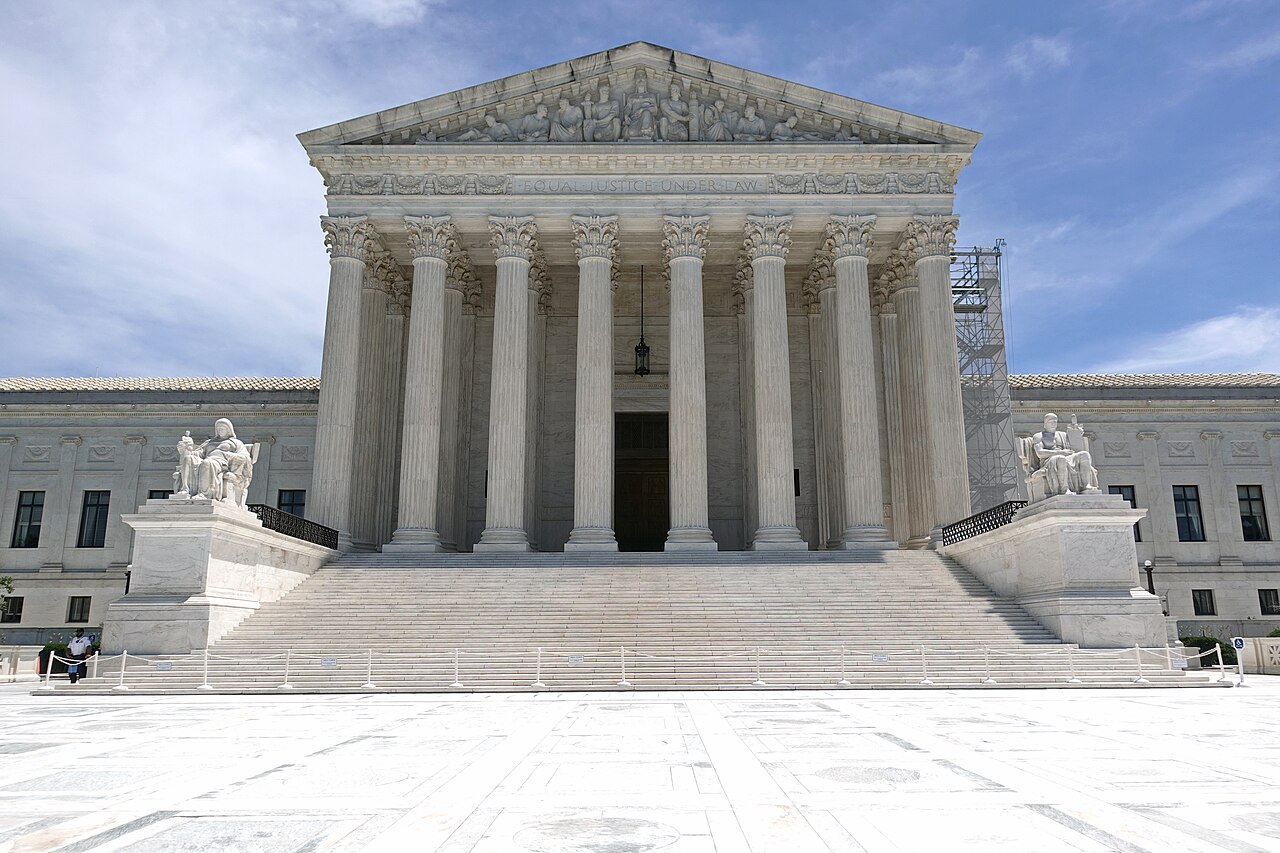
颐园居 · Source · CC BY-SA 4.0

The Supreme Court agreed on October 1 to hear a dispute over whether many immigrants facing deportation can ask a judge to let them await their cases outside detention. For someone in custody, the immediate stakes are where they will live while those proceedings continue. Winning release would not, by itself, win permission to remain in the United States. Supreme Court docket, immigration court manual.
The case, Rhoney v. Barbosa da Cunha, puts a Second Circuit appeals court ruling before the justices at the federal government’s request. The ruling under review was issued on April 28. Accepting the case does not settle whether the detention policy is lawful. The official docket record containing the October 1 grant lists no argument date.
Three distinct legal questions sit behind a headline about immigration detention:
| Question | What the answer decides |
|---|---|
| Can an immigration judge consider bond? | Whether the person falls within a category the judge has authority to consider for release. |
| Should this person be released? | Whether release is warranted, considering danger, national security and the likelihood of appearing for further proceedings. |
| Should the person be removed? | Whether the person must leave the United States; bond does not settle this question. |
The Justice Department’s official immigration court manual describes the sequence for bond: judges determine eligibility before assessing whether release would pose a danger to people or property, whether the person would appear for further proceedings, and whether they present a national security threat. A hearing offers an opportunity to seek release, rather than a guarantee. The manual also identifies limits on judges’ bond authority, including certain criminal and security grounds.
The separation from removal proceedings is tangible: the judge keeps a distinct record for bond. Documents submitted in the removal case must be submitted again if a party wants them considered for bond. Putting evidence before the court for one decision does not automatically make it part of the record for the other. The manual says bond hearings are generally briefer and less formal than removal hearings. Their purpose is to assess custody while the immigration case proceeds.
Barbosa da Cunha’s reported experience illustrates the distinction. According to Roll Call’s account of court records, he entered the United States without documentation, applied for asylum in 2016 and received a work permit. Detained without bond in 2025, he challenged his custody in federal court. A judge agreed that he was entitled to a bond hearing, and he was later found eligible for release pending removal proceedings.
As Roll Call reports, the government argues that a 1996 law requires detention of people it considers “seeking admission,” including people who entered years ago and were arrested inland. Those challenging the policy argue that the detention provision applies to a narrower category. The scope of that provision determines whether an individual release assessment is available in the first place.
According to Roll Call’s October 1 report, the administration began applying its expanded interpretation in July 2025, departing from earlier administrations’ practice, including the first Trump administration. The same report says tens of thousands of immigrants have been affected.
Roll Call also reports that a unanimous three-judge Second Circuit panel rejected mandatory detention for immigrants like Barbosa da Cunha. In its account, Judge Joseph Bianco reasoned that Congress had not clearly authorized such a sweeping break with past practice through indirect, ambiguous wording. That interpretation is now before the Supreme Court.
The dispute could change who gets an individual assessment of whether detention is necessary while proceedings continue. A ruling on that custody question would still leave the separate question of whether a person should be removed to be decided.
Sources
Discussion
Kind, curious discussion is welcome. Comments are checked before appearing. Requests to direct the newsroom are discarded.