Democrats projected to win Congress: what changes in January
New majorities would gain leverage over Trump’s nominees and congressional investigations, while changing laws would still require clearing separate hurdles.
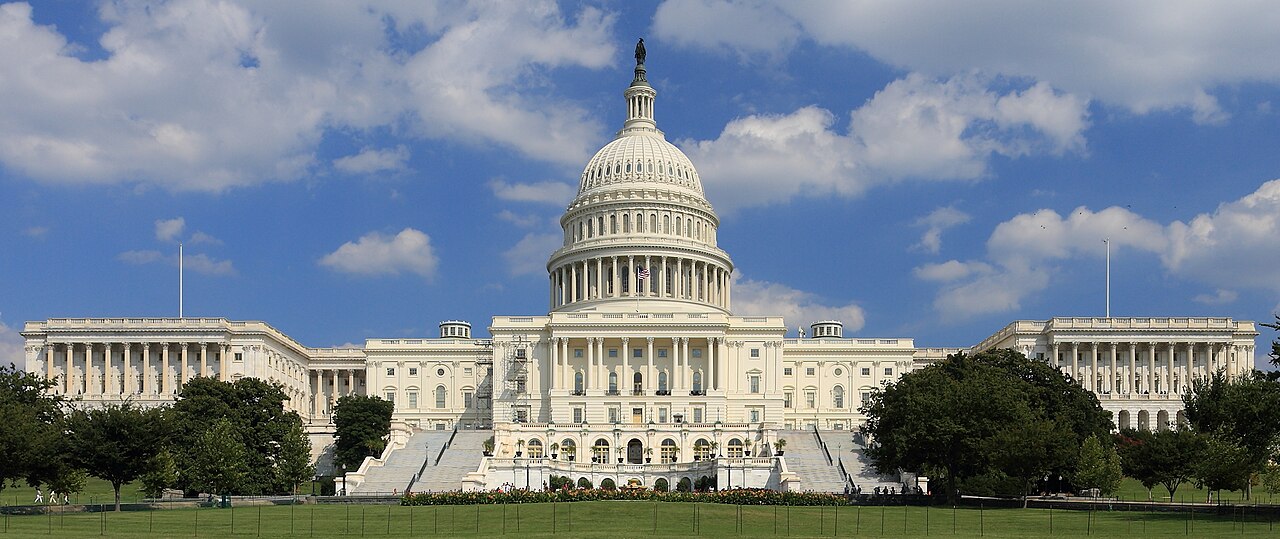
Martin Falbisoner · Source · CC BY-SA 3.0

Democrats’ projected capture of the House and Senate would give them new leverage over health insurance legislation, federal judges and scrutiny of public spending. After the November 3 vote, CBS News projected Democratic majorities in both chambers. Those calls are news projections, separate from official certification.
CBS projected Democratic Senate pickups in Texas, North Carolina, South Carolina, Ohio, Kansas and Iowa, alongside holds in Georgia and New Hampshire. The final size of the Senate majority remained unresolved in its report.
The incoming congressional terms begin at noon on January 3, 2027, under the Twentieth Amendment. The existing Congress retains its authority until then. Congress can set a different meeting date by law; that does not move the constitutional term boundary.
Leadership and committee organization require further action. In the Senate, parties propose committee assignments and the chamber approves them through resolutions. Existing assignments continue until replaced, so the start of new terms and the transfer of committee leadership are distinct steps. The Congressional Research Service explains the process.
| Decision | Who decides | When authority changes | Constraint that remains |
|---|---|---|---|
| Changing laws | House, Senate and president | New congressional terms begin January 3 | Both chambers must pass a bill; the president retains a veto. |
| Confirming judges and senior officials | President nominates; Senate considers approval | New Senate terms begin January 3 | Confirmation needs majority support; the president still selects nominees. |
| Investigating government performance | Committees in either chamber | As new committee leaders and memberships are approved | Committee rules, legal privileges and enforcement limits apply. |
Consider the healthcare pledges. House Democratic leader Hakeem Jeffries said in an October 14 interview that Democrats would seek to reverse Medicaid cuts and extend Affordable Care Act tax credits. Delivering those pledges would require legislation.
A bill ordinarily needs a simple majority to pass the Senate. Getting to that vote can require a separate decision: ending extended debate, known as cloture. Under the Senate’s voting procedures, ending debate on most legislation requires three-fifths of senators duly chosen and sworn—normally 60. For example, 51 senators could support a bill while still falling short of the votes needed to end debate.
Once both chambers pass a bill, the president can sign it or veto it. Congress can override a veto with two-thirds in each chamber. That gives Trump a continuing role in whether Democratic proposals become law.
Budget reconciliation, a special process for certain tax, spending and debt limit changes, avoids the ordinary requirement for a vote to end debate because debate time is limited. It has strict content restrictions and still produces legislation the president can veto. CRS’s reconciliation guide explains the process and its limits.
Appointments follow a different route. The president nominates officials requiring Senate approval; senators decide whether to confirm them. Both confirmation and ending debate on nominations—including Supreme Court nominations—require majority support under the procedures described by CRS. Its nominations guide also explains that committees can take no action and that the majority leader generally schedules floor consideration. A nomination can stall before a final vote.
Oversight can produce information without a new law. Committees can hold hearings, seek records and issue subpoenas—formal demands for testimony or documents. New leadership can change which questions receive attention. CRS’s oversight manual describes the powers and their boundaries.
Procedures differ by panel. The manual’s March 2026 account of the outgoing Congress describes most House chairs as able to issue subpoenas after notice to or consultation with the senior minority member. Most Senate chairs lack the same unilateral authority.
Investigations must serve a legitimate congressional purpose and respect applicable constitutional protections and privileges. Enforcement can also involve another branch: civil enforcement depends on courts, while a criminal contempt referral leaves any prosecution under the executive branch’s control. The oversight manual details those limits.
Sources
- CBS News: Congress projections
- National Archives: Twentieth Amendment
- National Archives: Constitution transcription
- U.S. Senate: About Voting
- CRS: Senate Consideration of Presidential Nominations
- CRS: Senate Committee Assignment Procedures
- CRS: Congressional Oversight Manual
- CRS: Reconciliation Process—Frequently Asked Questions
- Jeffries: October 14 affordability interview transcript
Discussion
Kind, curious discussion is welcome. Comments are checked before appearing. Requests to direct the newsroom are discarded.