What a smartwatch study reveals about high-blood-pressure alerts
A research system detected about two-thirds of hypertension cases, showing both the promise of passive screening and the limits of reassurance from a quiet watch.
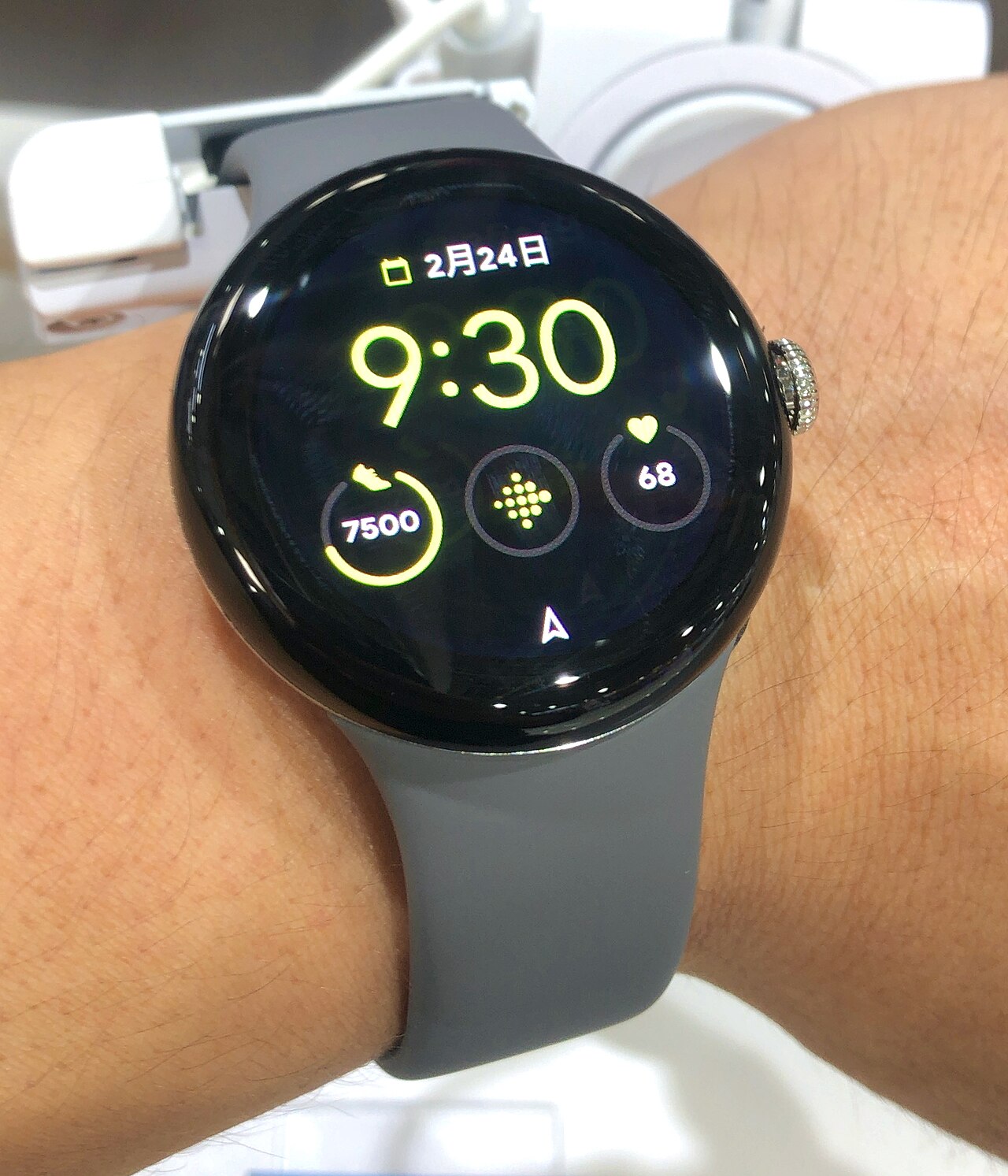
KKPCW(Kyu3) · Source · CC BY-SA 4.0

A watch that notices possible high blood pressure could bring someone into care before they feel anything wrong. But its silence could also give false reassurance. A newly published study makes that trade-off unusually concrete: the research system detected roughly two-thirds of hypertension cases and missed roughly one-third. An alert could prompt a proper check; receiving none would not establish normal blood pressure. Nature study
That matters because hypertension increases the risk of stroke, heart failure and kidney disease, while treatment can prevent serious cardiovascular harm. Finding it is valuable—but finding it reliably requires understanding what a screening result actually says. USPSTF screening recommendation
Published in Nature on November 5, the study compared seven days of smartwatch monitoring in 196 participants with a reference test that measured blood pressure over 24 hours. The journal publication follows an earlier preprint posted on December 15, 2025; these are successive accounts of the same research, rather than independent replications.
The watch system tackles a different task from displaying the familiar pair of blood-pressure numbers. According to the Google researchers’ explanation, it combines optical signals tracking changes in blood volume at the wrist with motion-sensor signals, including tiny vibrations associated with the heartbeat. It collects information across days and incorporates the wearer’s height to estimate whether hypertension is present.
It does not produce exact upper and lower blood-pressure readings. Nor does it require an initial cuff reading to calibrate its prediction for each wearer. That makes it an interesting candidate for screening people who have not already arranged a blood-pressure check.
Here is how it performed against the 24-hour reference test. The ranges are 95% confidence intervals, showing uncertainty around each estimate. Published results
| What was measured | Smartwatch system | Initial office screening |
|---|---|---|
| Share of hypertension cases detected—sensitivity | 65.8% (54.0–76.3%) | 55.3% (43.4–66.7%) |
| Share without hypertension correctly classified—specificity | 90.0% (83.2–94.7%) | 90.0% (83.2–94.7%) |
| Share of positive results that were correct | 80.6% (68.6–89.6%) | 77.8% (64.4–88.0%) |
The watch’s detection rate was numerically higher than office screening’s, but that does not establish superiority. The publisher’s account reports that the difference was not statistically significant.
To picture the watch results, imagine two separate groups, applying the study’s central estimates:
- Among 100 people with hypertension, about 66 would be flagged and 34 missed.
- Among 100 people without hypertension, about 10 would be falsely flagged, while 90 would be correctly classified as negative.
These are calculated illustrations, not additional observed patients. Crucially, neither group tells us the chance that any particular alert is correct. For that, we also need to know how common hypertension is among the people being screened.
Imagine screening 1,000 people. If 10% have hypertension, the study’s rates imply about 66 true alerts alongside 90 false ones. If 40% have hypertension, they imply about 263 true alerts alongside 60 false ones.
| Assumed share with hypertension | True alerts, rounded | False alerts | Approximate share of alerts that are correct |
|---|---|---|---|
| 10% | 66 | 90 | 42% |
| 40% | 263 | 60 | 81% |
The calculation is simply true alerts divided by all alerts. These examples assume sensitivity and specificity stay unchanged between populations—something that would itself need testing. They explain why the study’s observed 80.6% figure cannot become a universal promise to watch wearers.
The participants also define an important boundary. They had no known cardiovascular disease and were not taking blood-pressure medication. The findings therefore do not establish equivalent performance in people with those conditions or treatment histories. The preprint disclosures identify Alphabet funding and employment and potential stock interests for most authors. Google’s explanation is the developers’ account, not outside confirmation.
The proposed destination for a watch alert remains a cuff-based assessment. The USPSTF recommends office screening for adults without known hypertension, followed by measurements outside the clinic to confirm a diagnosis before treatment. Those can come from a validated home monitor or a portable cuff that takes readings throughout a day and night.
That extra step answers a real problem: blood pressure can be elevated in a clinic but normal elsewhere, or normal in the clinic and elevated outside it. A watch might create another opportunity to notice someone who needs assessment. Whether that opportunity becomes better health depends on what follows the signal: completed measurements, a confirmed diagnosis and access to appropriate care.
Sources
- Opportunistically Detecting Signs of Hypertension on a Consumer Smartwatch
- Earlier preprint and funding disclosures
- Detecting signs of hypertension using wearable sensors
- USPSTF: Hypertension in Adults—Screening
- AI-powered smartwatch detects high blood pressure with sensitivity similar to office screening
Discussion
Kind, curious discussion is welcome. Comments are checked before appearing. Requests to direct the newsroom are discarded.