A Dutch court protected part of Birkenstock’s sandal design—not the whole shoe
The first-instance ruling against Lidl shows how copyright can attach narrowly to creative choices within an everyday, functional product.
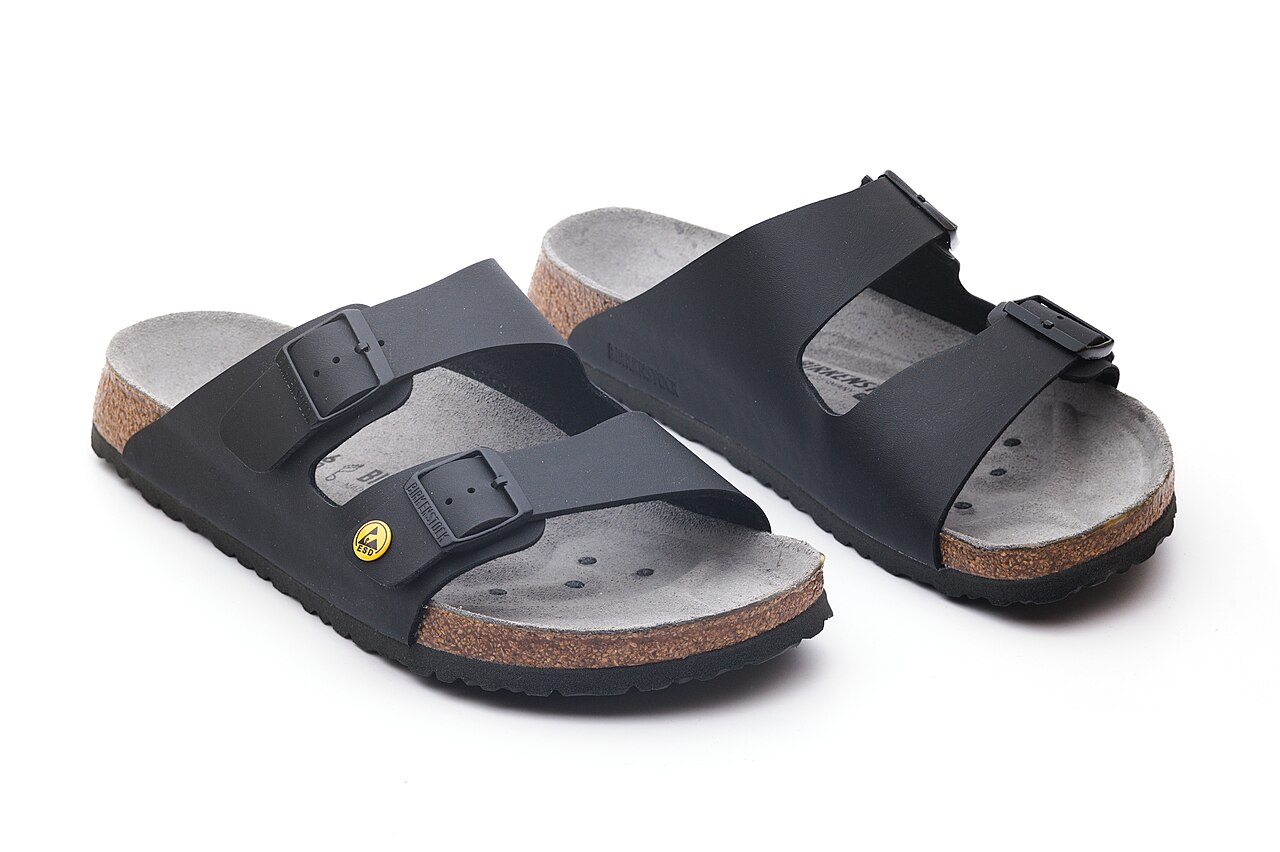
Phiarc · Source · CC BY-SA 4.0

A sandal does not have to be a sculpture to qualify for copyright. But resemblance alone is not enough: a court must identify creative choices visible in the product, then decide whether a competitor copied those protected elements.
That distinction matters well beyond footwear. Chairs, lamps, clothing and other useful objects combine practical constraints with decisions about appearance. The difficult legal question is where function ends and protectable creative expression begins.
In a first-instance judgment issued on September 23, the District Court of Gelderland found a copyright-protected element in the lower part of Birkenstock’s sandals and another in the upper—the part that holds the foot—of its Madrid model. The available judgment text does not describe those elements precisely enough to reduce them to a particular curve, contour or strap configuration.
That narrowness is important. The court did not declare an entire sandal style to be Birkenstock’s property. It identified protected expression within functional products and concluded that Lidl Nederland and German producer-importer R&N had recognizably copied protected elements without permission.
The judgment imposes a national prohibition and, as a first-instance ruling, may still be appealed.
A useful object faces the ordinary copyright test
The court’s reasoning follows the European framework for “applied art”—legal shorthand for designed objects that also perform a practical job.
Under that framework, an object is original when it expresses its creator’s free and creative choices. Features determined entirely by technical requirements, rules or other unavoidable constraints do not qualify. What matters is not whether critics consider the product artistic, nor whether it has appeared in a museum, but whether the object itself visibly embodies creative decisions.
A Dutch legal analysis of the European standard explains that applied art faces the same originality requirement as other copyright works. Copyright and design rights remain separate protections, each with its own test; a product can potentially satisfy both.
The analysis draws on the EU Court of Justice’s December 4, 2025, judgment in the joined Mio and Konektra cases. That decision also sharpened the infringement question: courts should look for recognizable copying of protected creative elements, rather than relying only on whether two products create a similar overall impression.
This produces a more exact inquiry than asking whether a discount sandal “looks like a Birkenstock.” A competitor remains free to use functional or commonplace ideas that copyright does not protect. The risk arises when a later product reproduces an element that qualifies as the original designer’s creative expression.
Why a protected part can decide the fate of a product
The ruling illustrates how copyright can operate almost like a highlighter rather than a fence around the whole object. A court can separate a product into functional, commonplace and creative features. Protection may attach only to the highlighted portion, yet recognizable copying of that portion can still make the finished product infringing.
The court held Lidl Nederland responsible for the relevant Dutch sales activity. It also found that R&N had not adequately disputed producing and importing two sandals whose labels named it as producer and importer.
Claims against Lidl Stiftung failed for a more specific reason. According to the judgment, its only Dutch establishment was a distribution center where third parties handled food. Sandals belonged to Lidl’s non-food range, and Birkenstock had not substantiated what relevant conduct Lidl Stiftung itself had carried out in the Netherlands.
Birkenstock also relied on the Dutch doctrine commonly translated as “slavish imitation.” That alternative claim failed because the company had not sufficiently supported the required finding that its products had a distinctive position in the market. The copyright finding therefore did the decisive work.
In Birkenstock’s own account of the order, the company says Lidl must stop offering the challenged sandals in the Netherlands, with a possible penalty of €5,000 for each day of noncompliance. It also says the defendants must disclose sales and orders, compensate Birkenstock for damage and reimburse legal costs. Those remedy details come from the successful claimant’s release, not independent corroboration, and the supplied judgment extract does not contain the complete operative provisions.
The result is limited but commercially meaningful. Copyright need not cover an entire shoe to restrict its sale. What matters is whether a court can identify creative expression inside a useful object—and then recognize that expression in the alleged copy.
How copyright analysis narrows a product claim

The analysis proceeds in three stages: identify the product’s visible features; exclude features dictated entirely by function, rules or other unavoidable constraints; then test whether any remaining creative expression was recognizably copied. Protection can therefore attach to only part of a functional product while still supporting an injunction against the finished copy.
Sources
Discussion
Kind, curious discussion is welcome. Comments are checked before appearing. Requests to direct the newsroom are discarded.