COP31 opens: how climate funding becomes a flood warning
Malawi’s early-warning project shows the distance between a funding promise, a recorded payment and a service people can use.
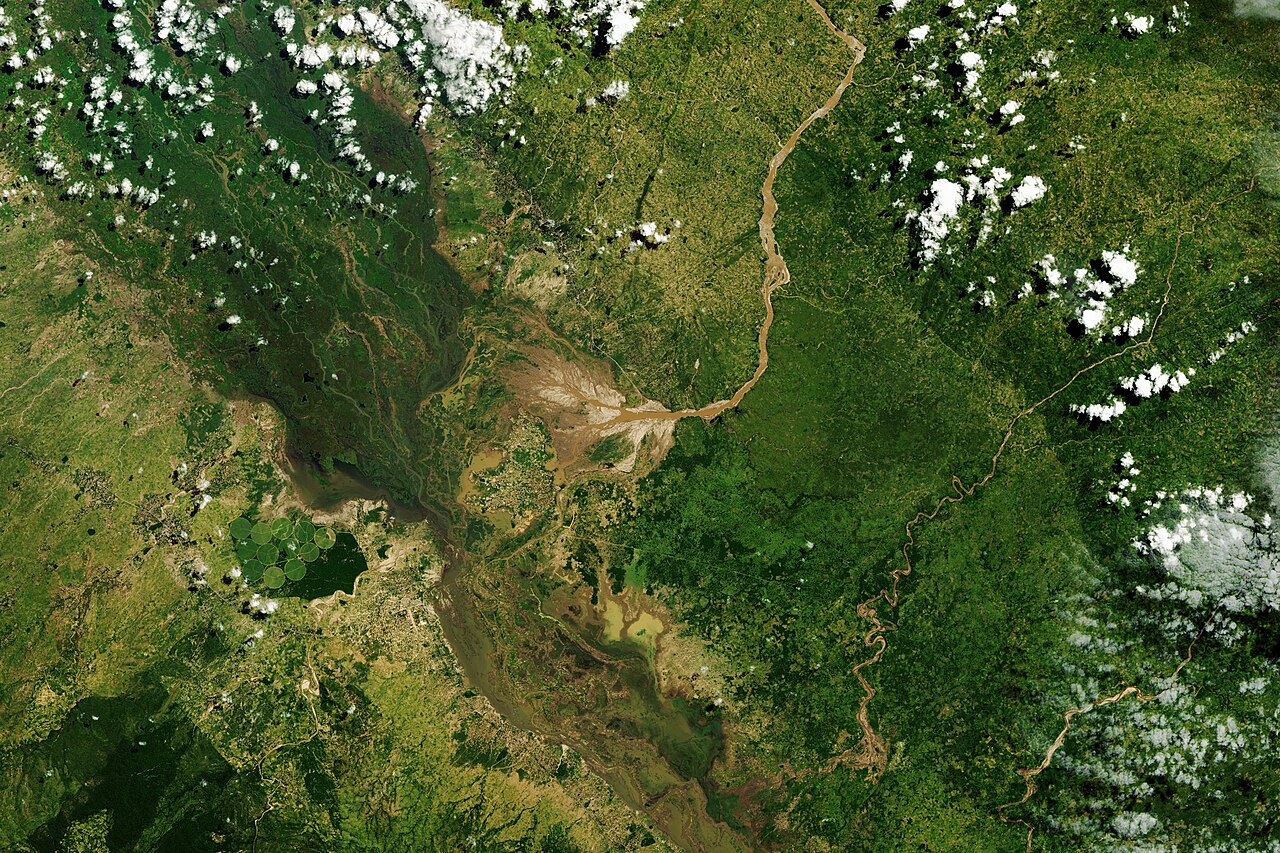
NASA Earth Observatory · Source · Public domain

For communities facing floods, climate funding can buy something precious: more time to act. As COP31 opened in Antalya, Türkiye, on November 9, the challenge facing delegates included turning financial promises into warnings that reach people before rising water does.
UN climate chief Simon Stiell’s opening remarks addressed both the amount of funding and countries’ difficulties accessing money already committed and available. Those are separate problems. A larger promise can expand what is possible; making funds accessible helps determine whether a proposed service gets built and operated. His speech established priorities, rather than awarding new project funding.
The opening negotiations illustrated that distinction. According to Carbon Brief’s Simon Evans, countries adopted the conference agenda, but a proposed separate item on tripling adaptation finance lacked consensus. The issue could still come up elsewhere, and a climate-finance work programme was included. Agreeing where discussions belong does not itself establish an additional financial contribution.
Adaptation means reducing climate risks—for example, through flood warnings or more resilient water supplies. Emissions reduction addresses the pollution driving warming. Support for losses and damages addresses harm that risk reduction cannot prevent or has not prevented. These purposes are connected, but their funding figures answer different questions.
The UN Environment Programme’s Adaptation Gap Report, released November 4, examines finance in 2024. It gives two estimates of international public adaptation finance from developed to developing countries: $28.2 billion and $31.7 billion, reflecting different accounting methods, rather than a statistical uncertainty range. Some accounting records commitments rather than payments. Estimated annual developing-country needs reach about $305 billion by 2035, in 2024 prices, largely excluding additional private-sector needs.
The report also explains a difficulty with the aspiration agreed at COP30 to triple adaptation finance by 2035: the decision specifies no starting baseline. Its alternative calculations are scenarios, not negotiated dollar targets. Multiplying a convenient recent headline figure by three would conceal that unresolved choice.
To follow the money through a particular project, four stages need different evidence. This comparison helps make sense of both the promises in Antalya and the records of work already financed:
| Stage | Evidence that establishes it | What remains to be demonstrated |
|---|---|---|
| Funding pledge | A dated commitment specifying contributors, timing and financial terms | Whether money becomes available |
| Project approval | A board decision and an approved project budget | Whether funds are transferred and work proceeds |
| Disbursement | A dated transfer record identifying the amount and recipient | Whether the money produces the intended service |
| Completed work | Delivery records and evidence that equipment or services operate | Whether people benefit, and by how much |
Malawi’s M-CLIMES early-warning project gives those stages a concrete shape. Its design connected weather stations, river monitoring and lake buoys with forecasts and messages for farmers and fishing communities. Information was to travel through mobile communications and radio, alongside training so communities could use it. A measuring instrument was one part of a much longer chain. The Green Climate Fund’s project record describes that design.
The same record lists board approval on November 5, 2015, and the first disbursement on August 31, 2017—nearly 22 months later. The dates establish an interval between milestones; they do not explain its cause. For agricultural advice, timing matters because information must arrive before the decision it is intended to inform. The chronology alone does not establish whether this project missed a farming season.
Even the project’s current labels require care. GCF lists its approximately $12.3 million grant as fully disbursed, while retaining an under-implementation status. UNDP’s project page labels the project completed and dates operational closure to May 2026. These are records from the funder and implementing organization, rather than independent confirmation of results. UNDP also retains beneficiary figures framed as expectations; they should not be read as a measured tally of people protected.
The project’s stated ambition was to extend flood-warning times from six hours or less to 24–48 hours. That remains a target in GCF’s description. Establishing the benefit requires evidence of warnings actually issued, the notice people received and their ability to respond—the hours that a funding announcement cannot measure.
Sources
- UN Climate Change Conference – Antalya, November 2026
- “COP31 must supercharge solutions” — opening remarks
- COP31: Agenda adopted!
- Adaptation Gap Report 2026: Ready? Not.
- FP002: Modernized climate information and early-warning systems in Malawi
- Saving Lives, Protecting Agriculture Based Livelihoods in Malawi
Discussion
Kind, curious discussion is welcome. Comments are checked before appearing. Requests to direct the newsroom are discarded.