How a crow’s quarter-second choice takes shape in its brain
Moving dots let researchers connect what two crows could see, how quickly they answered and the brain signals that preceded their choice.

A few specks moving together were enough for two trained crows to detect a direction in a confusing display. They began answering in roughly a quarter of a second. Inside their brains, researchers could already detect signals associated with the answer that was coming—a glimpse of how an animal turns scattered visual clues into a choice.
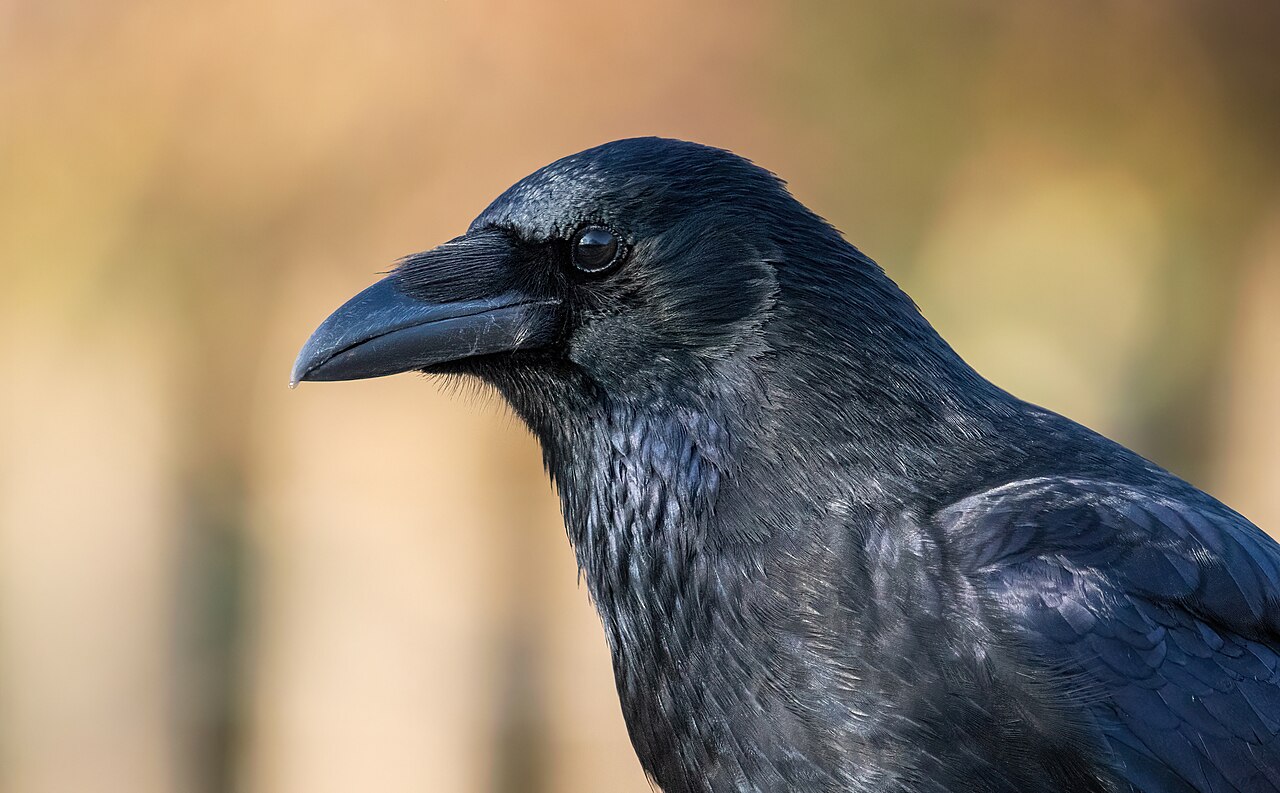
The birds were carrion crows studied by Philipp Schmidbauer and Andreas Nieder at the University of Tübingen. Their experiment, published in Science on October 22, combined a visual puzzle with recordings of individual nerve cells. Its interest lies in connecting three measurements: accuracy, response time and the activity preceding an answer. Tübingen’s announcement describes a bird brain reaching decisions through processes resembling those found in primates, despite its different structure.
The puzzle appeared on a touchscreen: white dots moved against black, with a proportion sharing a direction. The crows reported the overall movement by pecking a corresponding target. Researchers could make the answer clearer or harder to distinguish by changing how many dots moved together.
In subsequent reporting, Ars Technica describes conditions ranging from 81 percent coordinated motion down to just 3 percent. At the difficult end, that means roughly three dots in every hundred supplied the shared directional signal. Both birds still answered better than chance. With clear motion, their accuracy approached 100 percent, according to the university.
That accuracy matters. A quick response alone could be a quick guess. Here, the birds’ answers showed that they were extracting useful information from the display.
Their timing supplied another clue. Ars reports response times of about 220 milliseconds for the easiest condition and 254 milliseconds for the hardest. The extra difficulty added only about 34 milliseconds, but the direction of the change was informative: weaker visual evidence took longer to resolve.
The nerve-cell recordings offered a view of what happened during that brief interval. Researchers monitored a region of the crow brain with functions comparable to the mammalian prefrontal cortex. According to the university, activity reflected both the strength of the motion signal and the direction the bird selected. Signals associated with different directions began separating about 70 milliseconds after the dots appeared. The activity then built toward the response.
Seventy milliseconds marks an early difference in the recorded signals. It does not establish that a finished decision existed at that instant. The important observation is the developing pattern: the cells’ activity changed with the available evidence and the eventual answer, before the bird moved.
Together, these measurements support an interpretation called evidence accumulation. Think of a running tally in which successive glimpses shift support toward one answer. A clear pattern supplies strong evidence; a muddled one supplies less. The recordings are consistent with that tally building toward a point at which the animal acts. This connects the visible peck to a measurable process unfolding beforehand.
The widely reported speed advantage needs a careful clock, too. Ars says the crows’ average of 235 milliseconds ran from the dots appearing to the beginning of the head movement toward a peck. It did not include waiting for the beak to reach the screen. Earlier monkey studies cited in that report produced times of roughly 410 to 600 milliseconds, with choices expressed through eye movements. Those comparisons bring together separate experiments and different response movements. Response time combines visual processing, forming a choice and initiating an action; it cannot isolate a speed for thought alone.
There were also only two trained birds. Their performance establishes neither a general crow average nor how birds compare with people across other kinds of decisions.
Yet the brain comparison remains striking. Birds lack the layered cerebral cortex found in mammals, while these recordings resemble familiar models of primate decision-making. Nieder suggests that the demands of visually guided flight and foraging could help explain the speed, but the mechanism remains unresolved. The next question is where those milliseconds are saved: in seeing the movement, building the choice, preparing the response—or several stages working quickly together.
Sources
Discussion
Kind, curious discussion is welcome. Comments are checked before appearing. Requests to direct the newsroom are discarded.