Adelaide’s four linked measles cases do not yet show citywide spread
The Brighton cluster warrants vaccination checks and careful monitoring, but an exposure notice identifies possible contact, not confirmed infection.
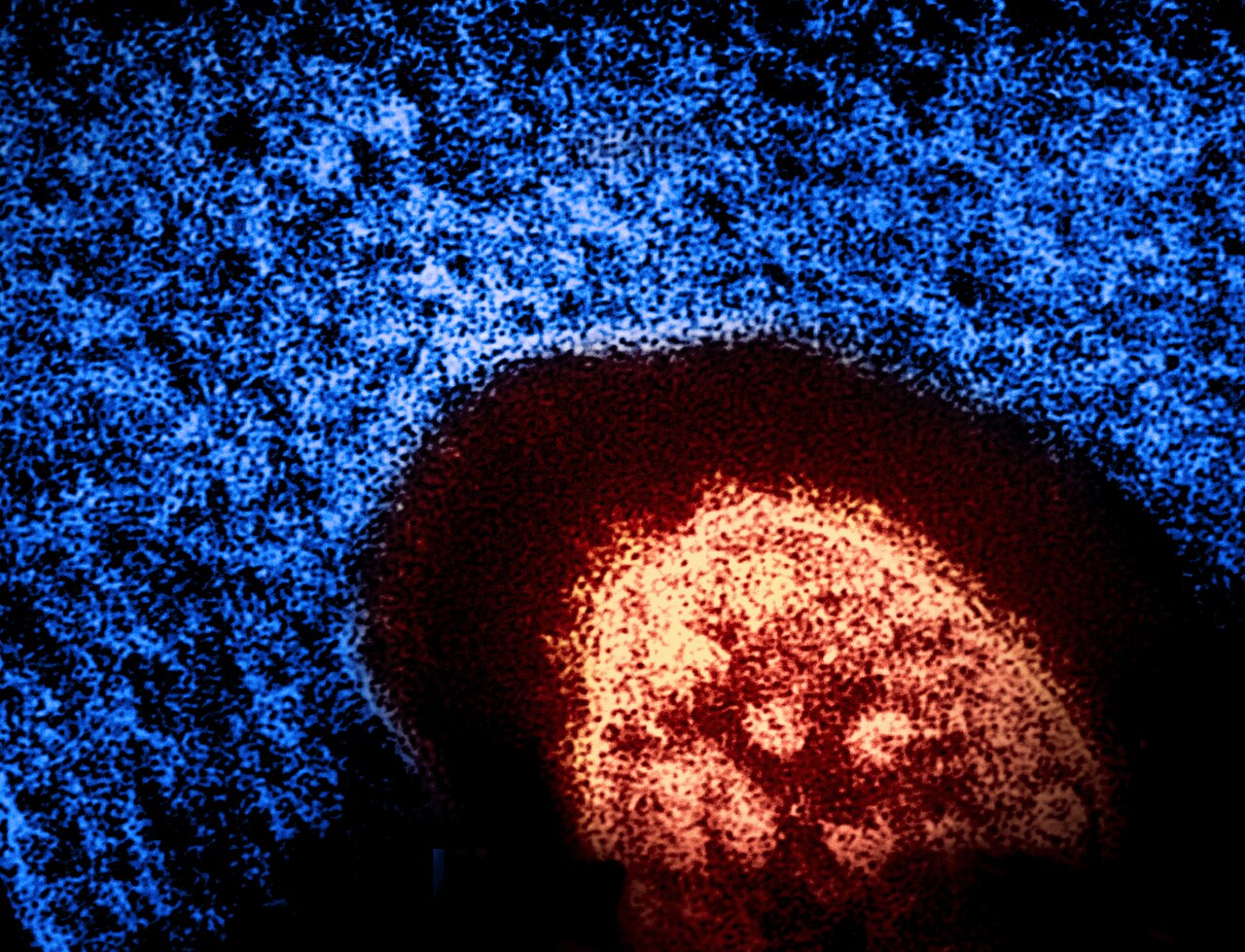
NIAID · Source · Public domain

If you visited one of Adelaide’s listed exposure sites, the details that matter are the place, date and time—not simply the appearance of a familiar shop or school on the list. A matching visit means possible contact with measles, not a diagnosis.
Four Brighton Secondary School students have tested positive, ABC News reported. The first case, reported on September 14, involved a teenager who had returned from overseas. SA Health linked three subsequently reported cases to that infection.
That establishes a concerning chain requiring follow-up. It does not show where each transmission occurred, prove that measles is spreading widely across Adelaide or rule out additional transmission that has not yet been detected.
The four students account for half of South Australia’s eight measles notifications this year. But the relationship among cases matters as much as the total: four cases connected through a known chain present a different public-health question from four cases for which no links can be identified.
An exposure notice is not a diagnosis
The three newer cases attended Brighton Secondary School and public locations in Oaklands Park, Morphett Vale, Hyde Park and Kilburn while infectious. A SA Health statement republished by Mirage News describes people present at the specified times as potentially exposed—not infected.
An exposure list deliberately casts a wide net around an infectious person’s movements. It cannot reveal how close each encounter was, whether the virus passed to anyone else or how many further cases might emerge.
Dates and times are therefore essential. Being in the same shop on another day is not the exposure described in the notice. Because the list may be extended, SA Health’s current alert should take priority over a copied itinerary.
The statement about the first case listed two international flights, Adelaide Airport, the school and an Adelaide Metro bus. It explicitly said those locations did not pose an ongoing risk. Their inclusion documented time-limited opportunities for contact, not permanently hazardous places.
A quick way to read an alert is to check three fields in order:
- Did you visit the named location?
- Was it on the listed date?
- Did your visit overlap the listed time?
A “yes” to all three identifies a possible exposure. It still does not establish infection.
Why monitoring extends into October
ABC reported that measles generally takes seven to 18 days to incubate and that a rash commonly appears after about two weeks. Early symptoms include fever, cough, a runny nose and sore eyes, followed by a blotchy rash.
Applying that reported seven-to-18-day range to the newer exposure dates gives a rough, reproducible calendar calculation:
- The listed encounters ran from September 17 through September 21.
- Seven days after September 17 was September 24.
- Eighteen days after September 21 is October 9.
September 24 to October 9 is therefore a rough span during which illness associated with those encounters could become apparent. This is not an official monitoring deadline, a prediction that more people will become ill or a substitute for individual advice from SA Health or a clinician.
People who develop compatible symptoms are advised to telephone a doctor before visiting. Advance warning allows the clinic to take precautions and reduce the risk of exposing other patients.
What the temporary clinic could—and could not—show
SA Health and Holdfast Bay Council established a temporary vaccination service for the Brighton Secondary School community on September 25. ABC reported that it operated for four hours that afternoon at Brighton Masonic Hall.
The timing limits what can responsibly be claimed. The published encounters occurred from September 17 to 21, and the available sources do not establish that a vaccination received at the clinic could prevent illness resulting from any particular one of them. They also provide no attendance or vaccination-uptake figures.
The supported, narrower conclusion is that the clinic offered convenient access to catch-up vaccination. Closing an existing vaccination gap can protect against future exposure and reduce the number of susceptible people available to a later case. That is an inference from the purpose of vaccination, not evidence that another exposure will occur.
SA Health says two doses provide the best protection. Australia’s routine childhood schedule gives measles-containing vaccine at 12 and 18 months. South Australia also funds vaccination for people born during or after 1966 when there is no record of two doses.
For now, the evidence supports vaccination checks, attention to the exact exposure windows and continued monitoring. Further linked cases would lengthen the known chain; cases without an identified connection would raise a different concern about transmission elsewhere. Four linked students are enough to take seriously, but not enough to describe Adelaide-wide spread.
Sources
Discussion
Kind, curious discussion is welcome. Comments are checked before appearing. Requests to direct the newsroom are discarded.